Articles
Every articles on Jobladderhq.

Breaking Into UX Design: A Step-by-Step Guide
There is no license to practice UX design in the United States. The closest federal occupational match is "Web and Digital Interface Designers" (ONET-SOC 15-1255.00), grouped by the U.S. Bureau of Labor Statistics under "Web Developers and Digital Designers," and hiring in it turns on what you can show: research you ran, screens you designed, and decisions you can explain.
Wyatt Holloway · 8 min read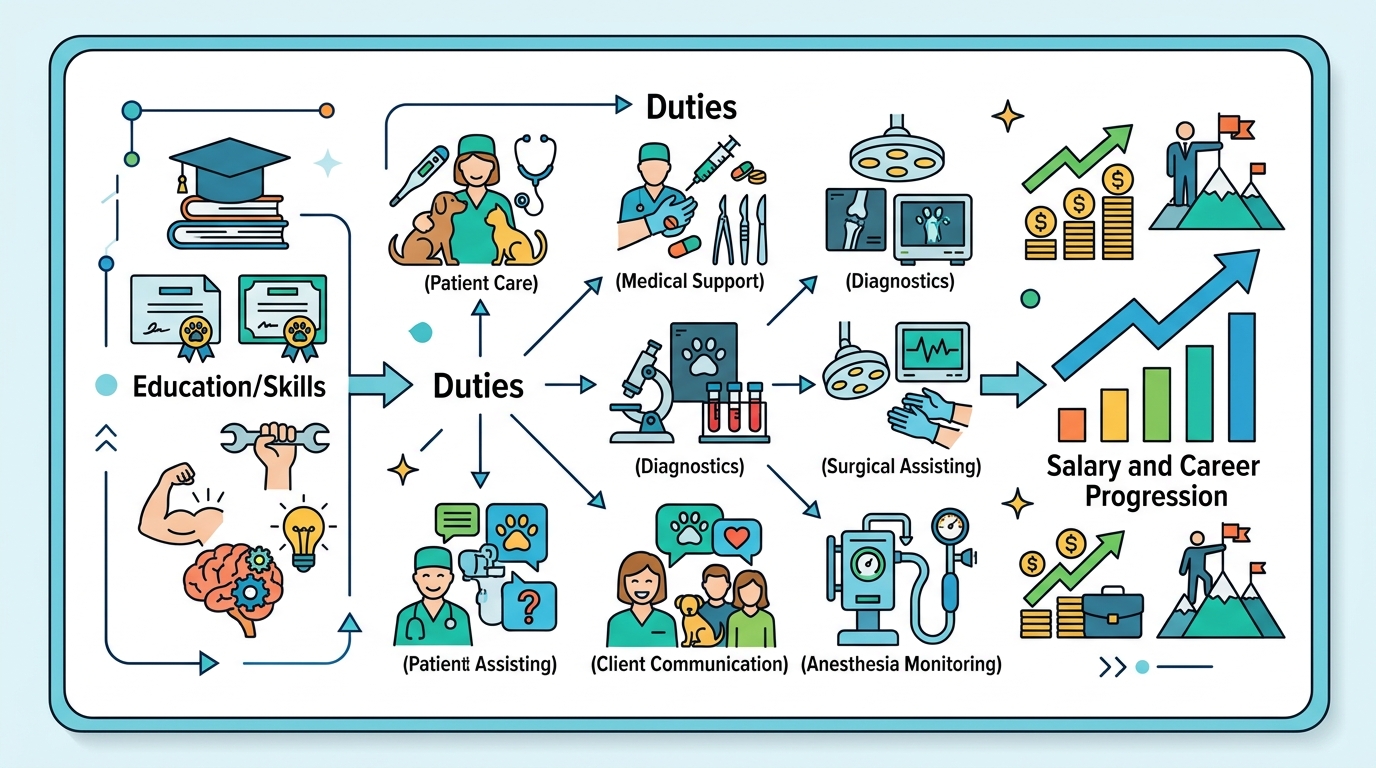
What Does a Vet Tech Do? Duties, Skills, and Salary Explained
A veterinary technologist or technician is the clinical support behind a veterinarian: you restrain and handle patients, draw blood, take radiographs, give and monitor anesthesia, prepare surgical instruments, and explain home care to owners. Most of the job is hands-on animal work in a clinic, plus a steady amount of charting in practice management software.
Marisol Tanaka-Reyes · 8 min read
PMP Certification: Requirements and How to Get Certified
The Project Management Professional (PMP) credential is issued by the Project Management Institute (PMI), not by any state agency. To earn it you document months of leading projects, complete 35 contact hours of formal project management education (or hold PMI's CAPM), pass PMI's eligibility review, and then pass the PMP exam.
Marisol Tanaka-Reyes · 8 min read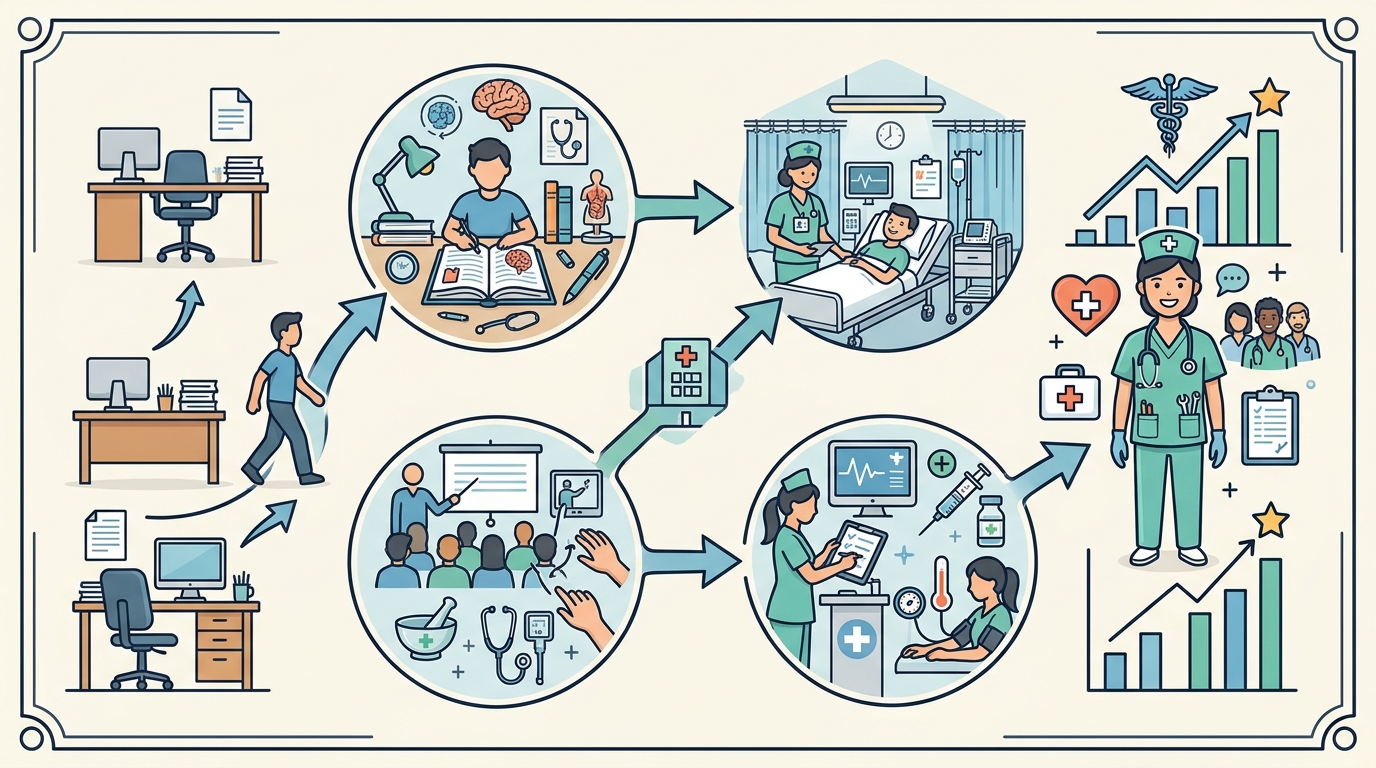
Nursing: A Guide for Career Changers
Nursing is one of the more structured mid-career switches available: the route is defined by your state's board of nursing, the credential is portable, and the demand is steady, with about 180,800 registered nurse openings projected each year on average from 2025 to 2035 (U.S. Bureau of Labor Statistics, 2025). The catch is front-loaded. You pay for school and complete 600-800 unpaid clinical hours before anyone pays you to nurse, and most career changers spend somewhere between 12 months and four years getting licensed depending on the path they pick.
Desmond Okafor · 10 min read
How to Negotiate a Higher Salary as a Remote Worker
Negotiating a raise as a remote worker works the way it does in an office — evidence, a number, a date — with one extra question to answer: how your employer prices distributed roles. Asking usually pays off: 82% of full-time workers who asked for a pay raise in the past year received one, against 66% of all full-time workers who got one whether they asked or not (LendingTree, 2024-11-18).
Desmond Okafor · 9 min read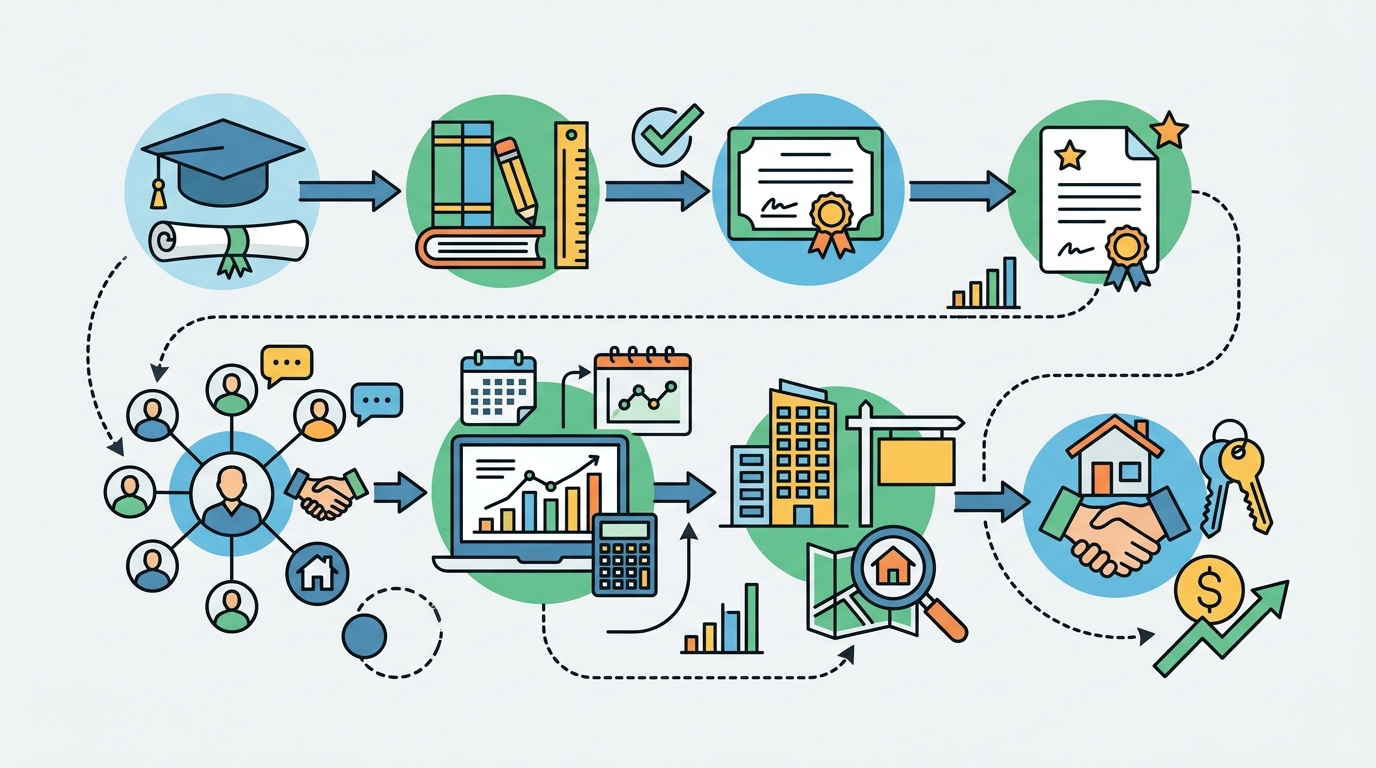
How to Start a Career as a Real Estate Agent
Becoming a real estate agent is one of the shorter licensing paths in the United States: the typical entry-level education is a high school diploma or equivalent (U.S. Bureau of Labor Statistics, 2025), and every state requires brokers and sales agents to be licensed, with minimum requirements that usually include being at least 18, holding a high school diploma or equivalent, completing prelicensing courses, and passing an exam (U.S. Bureau of Labor Statistics, 2025).
Desmond Okafor · 9 min read
Top 15 Behavioral Interview Questions and How to Answer Them
Behavioral questions ask you to describe something you have actually done, on the theory that past behavior predicts future performance — CareerOneStop, the U.S. Department of Labor's job-seeker service, calls them more probing and more specific than traditional questions (CareerOneStop, undated). Nearly all of them open with "Tell me about a time when," "Give me an example of," or "Describe a situation where you had to," which the University of Washington's Career & Internship Center lists as the standard stems.
Marisol Tanaka-Reyes · 8 min read
Truck Driver vs Registered Nurse Salary: Which Pays More?
Registered nursing pays more than heavy truck driving at every stage of the career. The U.S. Bureau of Labor Statistics put the median annual wage for registered nurses at $97,550 in May 2025, against $58,640 for heavy and tractor-trailer truck drivers in the same month (U.S. Bureau of Labor Statistics, 2025).
Marisol Tanaka-Reyes · 8 min read
How to Become a Project Manager
Project management specialists coordinate the budget, schedule, staffing and other details of a project (U.S. Bureau of Labor Statistics, 2025). The usual route in is a bachelor's degree in business, project management or a related field — some employers prefer a technical degree such as computer/IT or engineering — followed by a few years in a related job and on-the-job training as a trainee on small projects (U.S. Bureau of Labor Statistics, 2025).
Noor Abdallah · 9 min read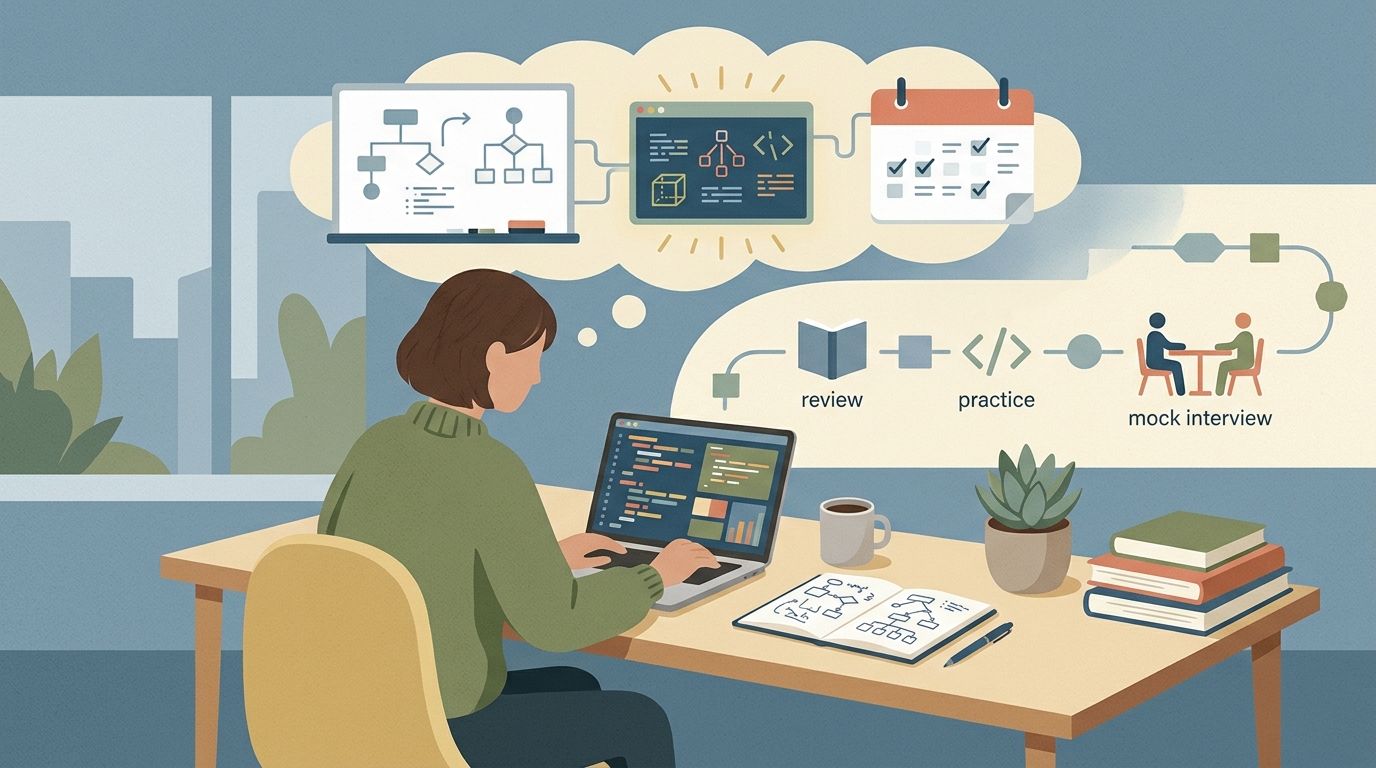
How to Prepare for a Software Engineer Interview
Preparing for a software engineer interview means three separate jobs: refreshing the technical fundamentals you'll be asked to code live, assembling concrete stories about work you've shipped, and handling the logistics so nothing goes wrong on the day. Most loops mix a coding exercise, a design or architecture discussion, and behavioral questions — employers use a mix of behavioral and hypothetical questions to assess things like leadership, how you get work done and how you collaborate (Google, undated).
Desmond Okafor · 7 min read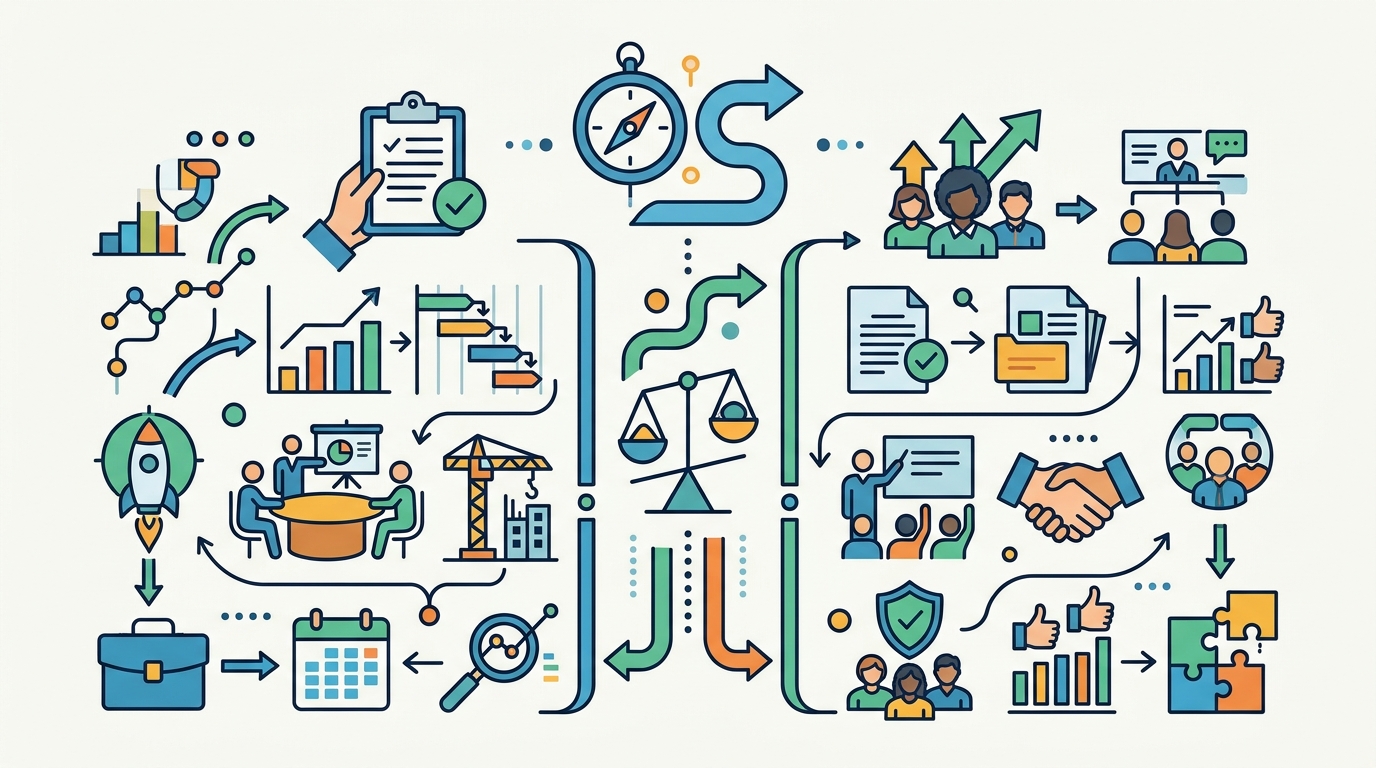
Project Management or Human Resources: A Second-Career Comparison
Project management and human resources are common landing spots for people changing careers in their forties and fifties, because both usually ask for a bachelor's degree plus relevant work experience rather than a fresh qualification. The U.S. Bureau of Labor Statistics (2025) lists a bachelor's degree as the typical entry-level education for both project management specialists and human resources specialists, and notes that project management specialist roles generally require work experience in a related occupation.
Desmond Okafor · 8 min read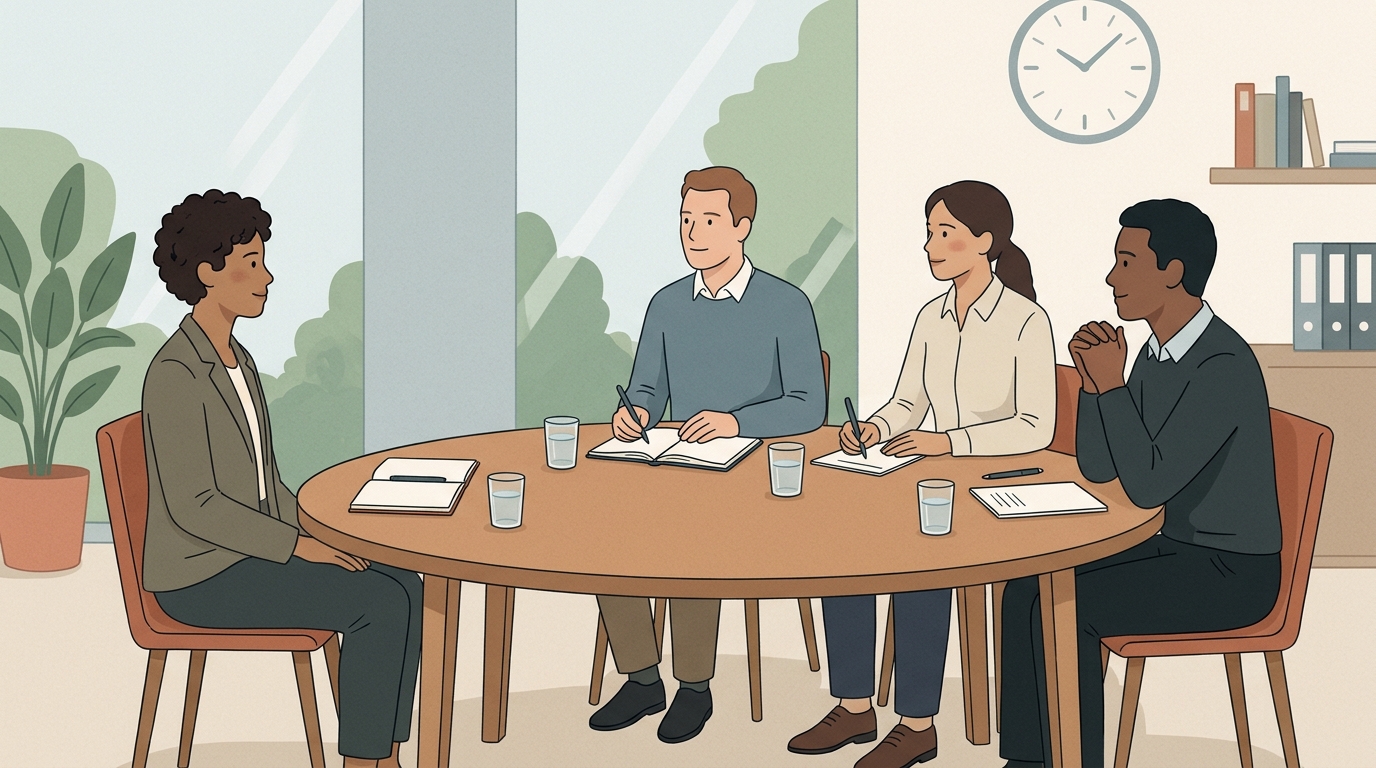
How to Prepare for a Panel Interview
A panel interview puts three or more people from different levels or departments in the room, each asking questions and judging how you would fit the team (CareerOneStop, undated). Preparing for one is the same work as preparing for a single interviewer, plus two extras: learning who is on the panel before you arrive, and practicing how you divide your attention between them while you answer.
Wyatt Holloway · 7 min read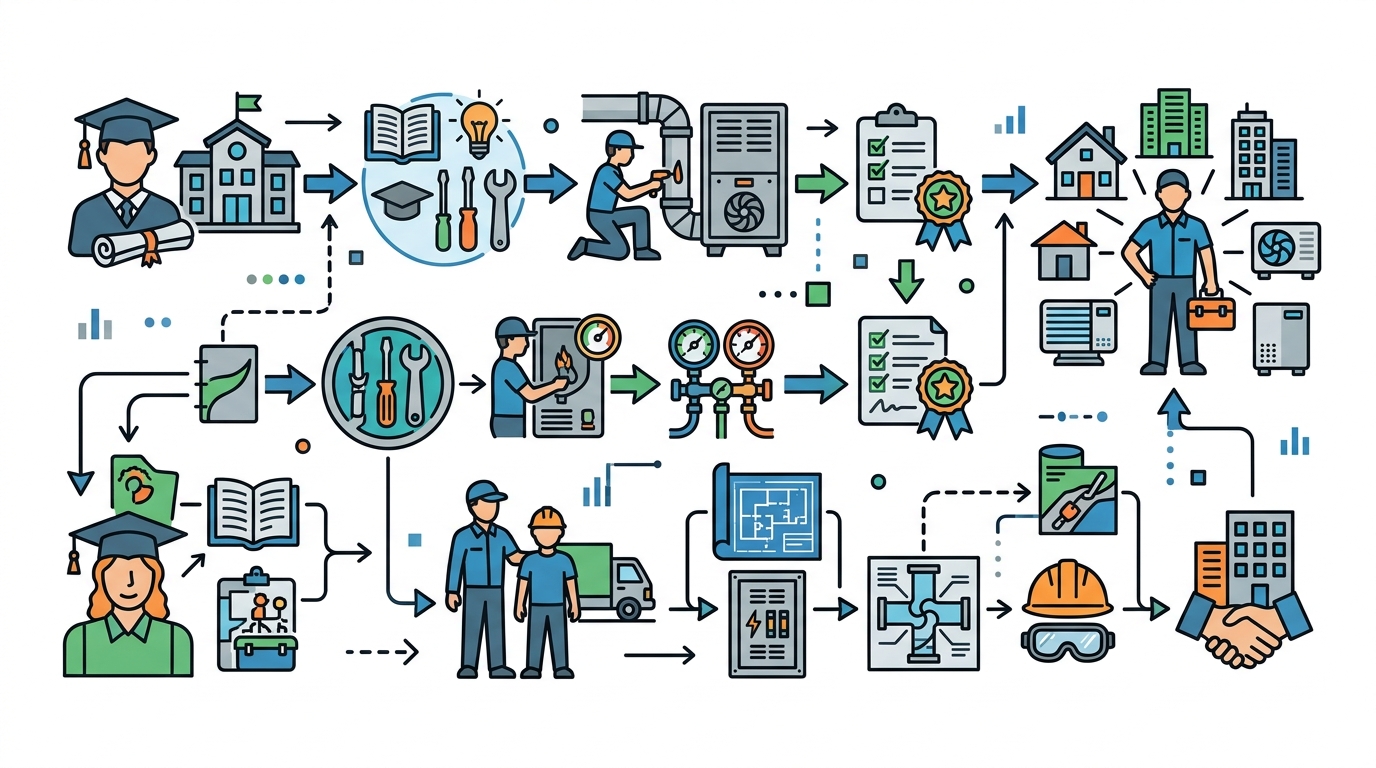
How to Become an HVAC Technician
Becoming an HVAC technician usually means finishing high school, completing either a postsecondary HVACR program or a registered apprenticeship, passing the EPA Section 608 refrigerant exam, and then learning the rest on the job. The U.S. Bureau of Labor Statistics (2025) lists a postsecondary nondegree award as the typical entry-level education and says no prior work experience in a related occupation is required.
Wyatt Holloway · 10 min read
Real Estate Career Change Roadmap for Working Adults
Switching into real estate from another job usually takes 9 to 18 months from first research to working full-time, and most of the early work — prelicensing coursework, the state exam, finding a sponsoring broker — can be done in evenings and weekends while you keep your current paycheck. Every state requires a license, and typical entry-level education is a high school diploma or equivalent (U.S. Bureau of Labor Statistics, 2025), so the barrier is rarely schooling. The barrier is cash flow: brokers and agents earn most of their income from commissions, and earnings can be irregular, especially for beginners (U.S. Bureau of Labor Statistics, 2025).
Marisol Tanaka-Reyes · 10 min read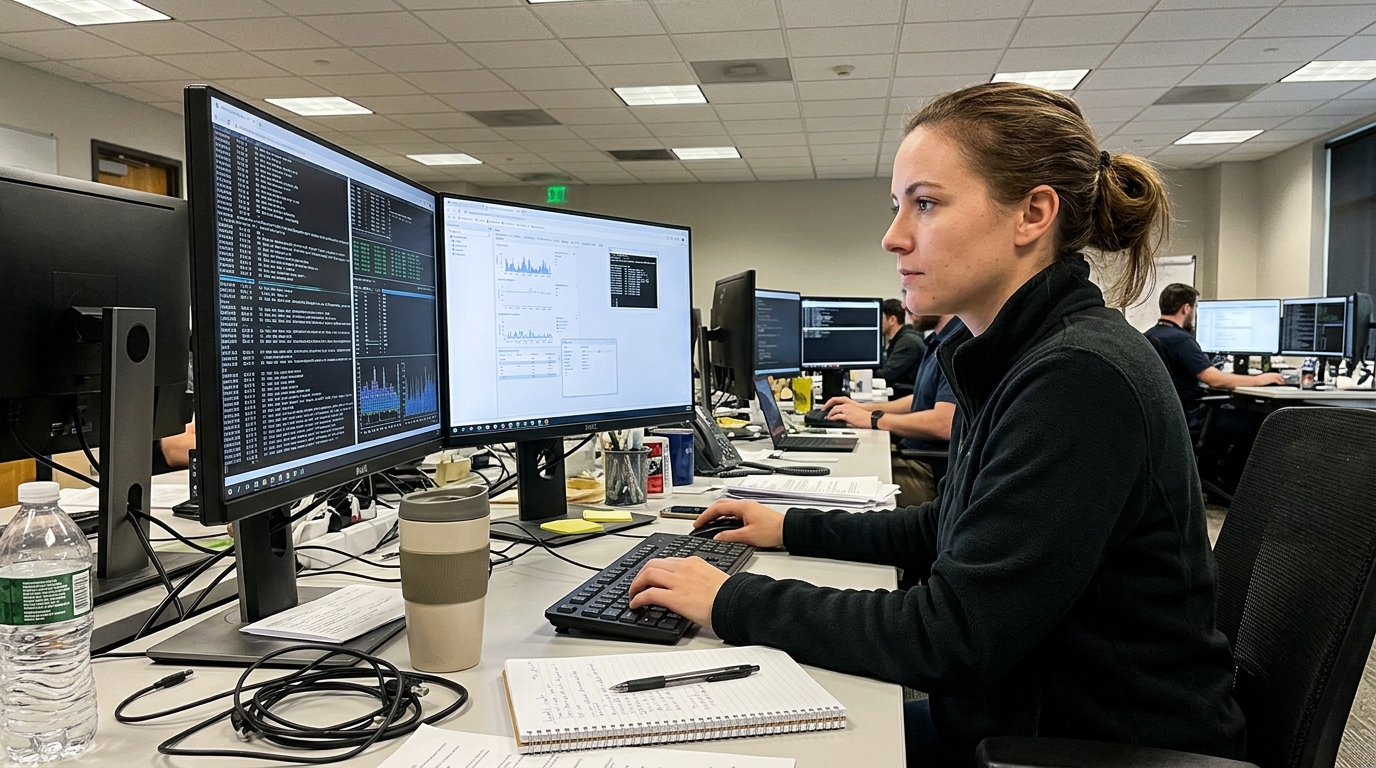
Becoming a Cybersecurity Analyst: Education, Licensing, and First-Job Steps
Most cybersecurity analyst jobs are filled by people who already worked in IT. The U.S. Bureau of Labor Statistics (2025) lists a bachelor's degree in computer and information technology — or a related field such as engineering or math — as the typical entry-level education for information security analysts, and notes that these workers typically need prior work experience in a related occupation. There is no state license for this job; instead, many employers prefer candidates who hold an information security certification (U.S. Bureau of Labor Statistics, 2025).
Marisol Tanaka-Reyes · 10 min read
How to Become a Licensed Real Estate Agent
Every state requires real estate sales agents to be licensed, and the route is broadly the same: meet basic eligibility, finish approved prelicensing courses, pass your state's exam, clear a background check, then hang your license with a broker. The U.S. Bureau of Labor Statistics (undated) says minimum requirements vary by state but typically include being at least 18, holding a high school diploma or equivalent, completing prelicensing courses and passing an exam.
Desmond Okafor · 8 min read
LPN or RN: Comparing Pay and Career Earnings
Registered nurses earn more than licensed practical nurses at every published point on the wage scale. The median pay for LPNs and LVNs was $64,400 per year in 2025, while the median for registered nurses was $97,550 per year (U.S. Bureau of Labor Statistics, 2025).
Desmond Okafor · 8 min read
How to Become an Electrician
Most people become an electrician by getting into a paid apprenticeship after high school, working 2,000 hours a year on the job alongside classroom instruction, then passing a state licensing exam to work as a journey worker (U.S. Bureau of Labor Statistics, 2025). That route normally runs four or five years, and some people start instead at a technical school (U.S. Bureau of Labor Statistics, 2025).
Marisol Tanaka-Reyes · 9 min read
Choosing Between Counseling and Social Work as a Career Changer
Counseling and social work overlap enough that career changers often apply to both, then find the real decision is about scope: counselors treat mental health, substance use and behavioral problems, while social workers help people prevent and cope with problems in their everyday lives (U.S. Bureau of Labor Statistics, 2025) — which often means housing, benefits, courts and family systems as well as therapy.
Priya Chandrasekaran · 8 min read
How to Become a Software Developer Without a Computer Science Degree
You can become a software developer without a computer science degree, but you are working against a default: the U.S. Bureau of Labor Statistics lists a bachelor's degree as the typical entry-level education for software developers, with no work experience or on-the-job training needed to enter (U.S. Bureau of Labor Statistics, 2025). What you cannot skip is proof of skill — working code someone else can read, and a route that puts you in front of employers who hire on evidence rather than transcripts.
Priya Chandrasekaran · 10 min read
EMT or Paramedic? Comparing Duties, Training, and Growth
EMT and paramedic are two rungs on the same ladder rather than two separate careers. An EMT finishes a shorter program and provides basic life support; a paramedic completes a longer program that usually requires EMT-Intermediate certification first, and treats patients with drugs, IV lines and cardiac interventions (U.S. Bureau of Labor Statistics, 2025).
Priya Chandrasekaran · 7 min read
How to Become a Medical Coder
Medical coders read clinical documentation and translate diagnoses, procedures and services into standardized codes from systems such as ICD and CPT so that records and claims are accurate. The U.S. Bureau of Labor Statistics groups this work under medical records specialists, and reports that typical entry-level education is a postsecondary nondegree award — a certificate — though some people qualify with a high school diploma plus healthcare experience and other roles call for an associate's or bachelor's degree (U.S. Bureau of Labor Statistics, 2025).
Priya Chandrasekaran · 9 min read
Electrician Pay: Average Salary, Range, and What Affects It
Electricians earned a median annual wage of $63,190, or $30.38 an hour, in May 2025 (U.S. Bureau of Labor Statistics, 2025-05). The spread is wide: the lowest-paid 10 percent earned less than $42,640 and the highest-paid 10 percent more than $108,510 in the same period (U.S. Bureau of Labor Statistics, 2025-05).
Wyatt Holloway · 9 min read
Medical Assistant Salary: What to Expect by Experience and Location
Medical assistant pay is published as both an hourly wage and an annual equivalent. The two figures that matter most are the national median in the Bureau of Labor Statistics Occupational Outlook Handbook pay summary (U.S. Bureau of Labor Statistics, 2025) and the full percentile table in the BLS Occupational Employment and Wage Statistics (OEWS) release for SOC 31-9092 (2023), which shows the 10th, 25th, 50th, 75th and 90th percentile annual wages.
Noor Abdallah · 9 min read
Data Analyst vs. Data Scientist: Key Differences Explained
A data analyst explains what has already happened in a business's data; a data scientist builds and tests models that estimate what will happen next. In federal statistics the two are not separated: Business Intelligence Analysts (15-2051.01) is listed as a specialty under the Data Scientists occupation (15-2051.00) in ONET.
Wyatt Holloway · 7 min read
UX Designer vs. Product Manager: Which Career Path Is Right for You?
UX design and product management sit next to each other on the same teams, but they are accountable for different things: a UX designer answers for whether the interface works for the person using it, while a product manager answers for what the team builds, in what order, and what gets cut. The design path usually starts with a bachelor's degree and a portfolio; the management path usually asks for a degree plus several years of related work first, which makes it hard to enter straight out of school.
Noor Abdallah · 9 min read
How to Become a Data Analyst: Step-by-Step Guide
Becoming a data analyst usually means pairing a credential employers recognise with proof that you can actually pull, clean and explain data. Most analyst job listings screen for a bachelor's degree — computer systems analysts and operations research analysts typically need one to enter the occupation (U.S. Bureau of Labor Statistics, 2025), and Business Intelligence Analysts sit in Job Zone Four, where most occupations require a four-year bachelor's degree but some do not (ONET OnLine, 2024).
Wyatt Holloway · 9 min read
Project Manager Interview Questions: What to Expect and How to Prepare
Project manager interviews are usually a sequence, not a single meeting: most run three to five rounds over about two to three weeks, and behavioral and situational rounds carry more weight in the final scoring than your certifications do (KORE1, undated). Expect to prove you ran the schedule, budget and stakeholders, not just attended the meetings.
Priya Chandrasekaran · 7 min read
How to Write a Resume for a Retail Job
A retail resume works best as a one-page, scannable document that proves three things fast: you can talk to customers, you can handle money and merchandise accurately, and you can work the shifts the store needs covered. Typical entry-level education for retail sales workers is a high school diploma or GED, with training given on the job over anything from a few days to a year (ONET OnLine, U.S. Department of Labor) — so your resume competes on specifics, not credentials.
Wyatt Holloway · 7 min read
How to Become an Electrician: Step-by-Step Guide
Becoming an electrician means getting hired into an apprenticeship, not graduating first and job-hunting after. Most electricians learn the trade in a 4- or 5-year apprenticeship that provides about 2,000 hours of paid on-the-job training each year plus technical instruction, and a high school diploma or equivalent is the baseline requirement (U.S. Bureau of Labor Statistics, 2025).
Noor Abdallah · 10 min read
How to Negotiate a Higher Salary as a New Graduate
Your starting offer is the most movable number of your early career, because every later percentage raise is calculated from it. Most U.S. workers who are not self-employed say they did not ask for more than the pay first offered the last time they were hired; among those who did ask, 28% were given the figure they asked for and 38% were given more than the original offer though less than they asked (Pew Research Center, 2023).
Noor Abdallah · 10 min read
Physician Assistant Career Overview: Is This the Right Path for You?
Physician assistants (also called physician associates) examine patients, order and interpret tests, diagnose illness, prescribe medicine and assist in procedures, working as part of a team with physicians and surgeons. It is a licensed clinical role that requires a master's degree from an accredited program plus a national certifying exam, so the entry route is long and structured rather than flexible.
Priya Chandrasekaran · 9 min read
How to Write a Resume With No Work Experience
A resume with no paid work history needs the same bones as any other: contact details, a short summary, dated entries with results, and a skills list matched to the posting. What changes is the content of the experience section — coursework, volunteering, internships, club roles, caregiving and projects, each with a month-and-year date range.
Priya Chandrasekaran · 7 min read
Truck Driver Pay: Average Salary, Range, and What Affects It
The U.S. Bureau of Labor Statistics publishes a median annual pay figure for heavy and tractor-trailer truck drivers (2025), and ONET OnLine publishes the 10th-to-90th and 25th-to-75th percentile annual wage ranges from U.S. Department of Labor data (2025). Those tables, not recruiting adverts, are the numbers to plan around — and this guide shows which table answers which question.
Priya Chandrasekaran · 9 min read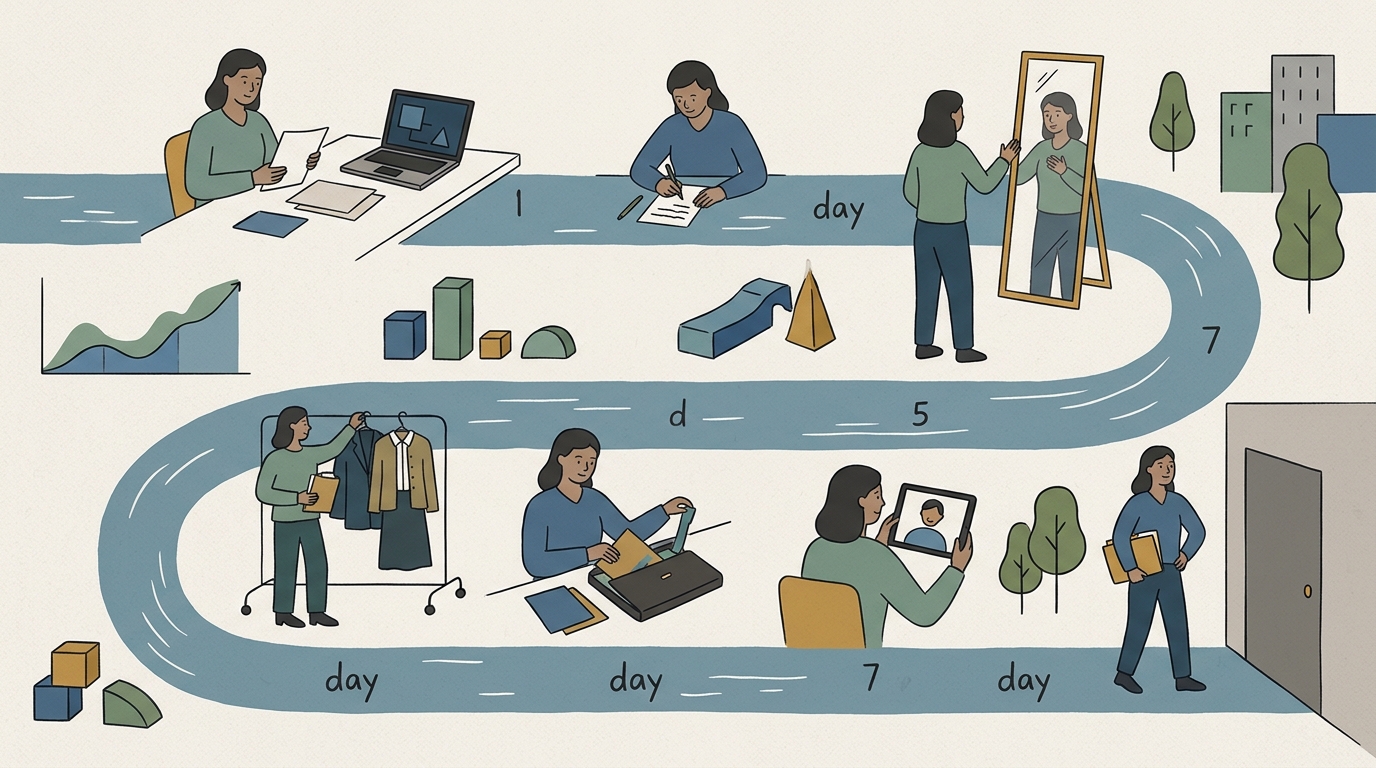
7-Day Plan to Prepare for Your Job Interview
Seven days is enough time to prepare properly if you spread the work out instead of cramming the night before. This plan gives you one task per day: build a requirements grid from the posting, research the employer, write and rehearse structured answers, test your technology or your route, and lay everything out the night before.
Noor Abdallah · 6 min read
Bookkeeper vs. Accountant: Which Career Fits You?
Bookkeeping, accounting, and auditing clerks record what happened to the money; accountants and auditors judge whether those records are accurate, legal and worth acting on. That difference drives everything else — clerks can usually enter the field without a four-year degree, while accountants are hired on the strength of a college accounting education, and the CPA licence on top of it requires 150 semester hours of coursework, 30 more than a typical bachelor's degree (U.S. Bureau of Labor Statistics, 2025).
Desmond Okafor · 7 min read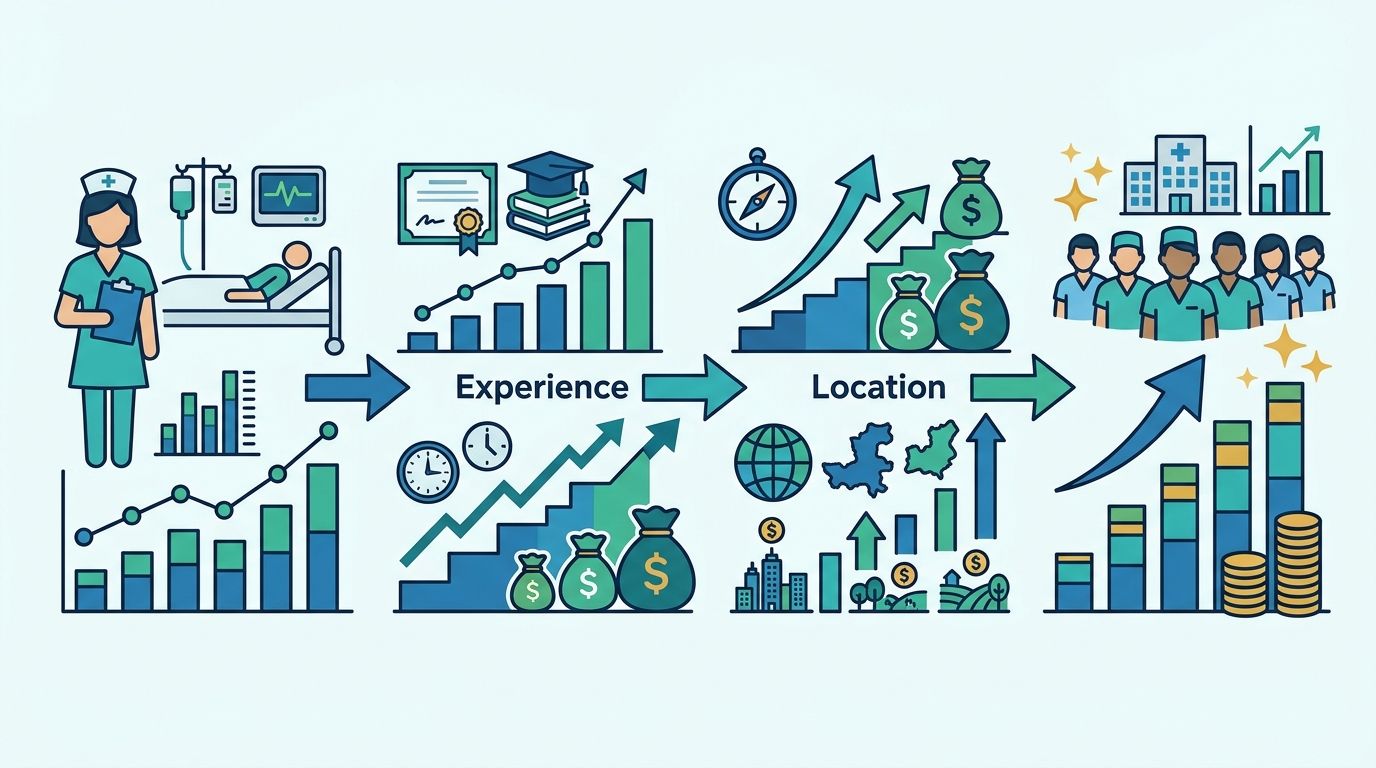
Registered Nurse Salary: What to Expect by Experience and Location
Registered nurses earned a median of $97,550 a year in May 2025, with the lowest-paid 10 percent under $68,940 and the highest-paid 10 percent above $137,470 (U.S. Bureau of Labor Statistics, 2025). That spread is wide, and most of it comes down to where you work, what kind of employer you work for, and how your hours are scheduled.
Desmond Okafor · 10 min read
Negotiating Pay in Skilled Trades: What Actually Works
Negotiating pay in the trades works differently from an office job. Your rate is tied to license or classification level, the hours and callouts you absorb, and in a union shop to an agreement that already sets scale for you. What works is evidence: what you are licensed to do, what you completed without supervision, and what published wage data says for your classification in your area.
Priya Chandrasekaran · 9 min read
Social Worker vs. Therapist: Which Career Path Is Right for You?
Social work and therapy overlap in the counselling room and diverge almost everywhere else. Social workers are trained to move between a person and the systems around them — benefits, housing, courts, schools, child protection — and can practise in some nonclinical roles with a bachelor's degree in social work, while every state licenses clinical social workers (U.S. Bureau of Labor Statistics, 2025). Therapists, including marriage and family therapists, need a master's degree and a state licence before they can see clients at all (U.S. Bureau of Labor Statistics, 2025).
Marisol Tanaka-Reyes · 10 min read
What It's Really Like to Work as a Project Manager
Project managers keep other people's work on schedule and on budget. The day is built around plans, status checks, cost reports and documents, with most of the technical output produced by engineers, builders, developers or analysts rather than by you. The U.S. Bureau of Labor Statistics reported a median annual wage of $102,320 for project management specialists in May 2025, and typical entry is a bachelor's degree plus experience in a related occupation.
Desmond Okafor · 9 min read
Resume Tips for Customer Service Jobs (With Examples)
A customer service resume gets sorted fast, so it has to show three things at a glance: the channels you have handled, the volume you handled them at, and the result. CareerOneStop (U.S. Department of Labor) puts the typical first look at under 30 seconds, and TheLadders' eye-tracking research reported an average scan of six seconds in 2012 and 7.4 seconds in a 2018 follow-up (ERE.net / TheLadders eye-tracking research, 2018).
Marisol Tanaka-Reyes · 7 min read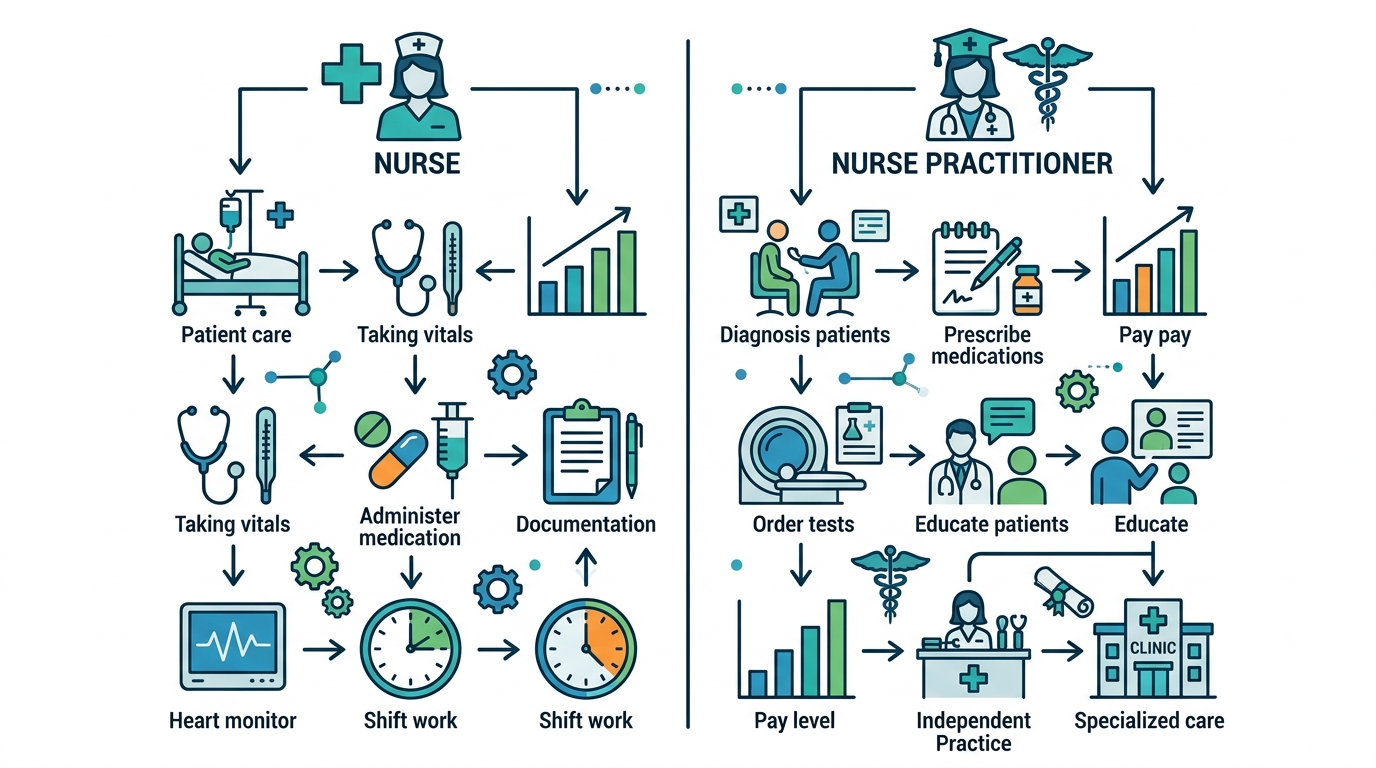
Nurse vs. Nurse Practitioner: Pay, Duties, and Day-to-Day Differences
A registered nurse assesses patients, administers medicines and treatments, and carries out and contributes to care plans; a nurse practitioner is an advanced practice registered nurse who diagnoses conditions, develops treatment plans, and delivers primary or specialty care (U.S. Bureau of Labor Statistics, 2025). The biggest practical split is authority and schooling: RNs enter with a bachelor's, associate's, or diploma nursing credential plus licensure, while NPs need at least a master's degree in an APRN role, state licensure, and a national certification exam (U.S. Bureau of Labor Statistics, 2025).
Priya Chandrasekaran · 9 min read
How to Ask for a Raise: A Guide for Teachers
Asking for a raise as a teacher works differently from most jobs. In most public school districts, base pay follows a fixed "step-and-lane" schedule — steps reward years of experience, lanes reward graduate credits and degrees (Education Week, April 2025) — and that base is set by the district rather than negotiated individually, with step increases arriving automatically with years of service (payraisecalculator.net).
Marisol Tanaka-Reyes · 9 min read
How to Get Your Phlebotomy Technician Certification
To work as a phlebotomy technician you usually need a certificate from a postsecondary phlebotomy program, though some people qualify with a high school diploma plus on-the-job training, and employers may prefer candidates who hold professional certification (U.S. Bureau of Labor Statistics, 2025). Those programs run at community colleges, vocational schools and technical schools and usually take less than 1 year, covering anatomy, physiology, medical terminology and laboratory work (U.S. Bureau of Labor Statistics, 2025).
Priya Chandrasekaran · 9 min read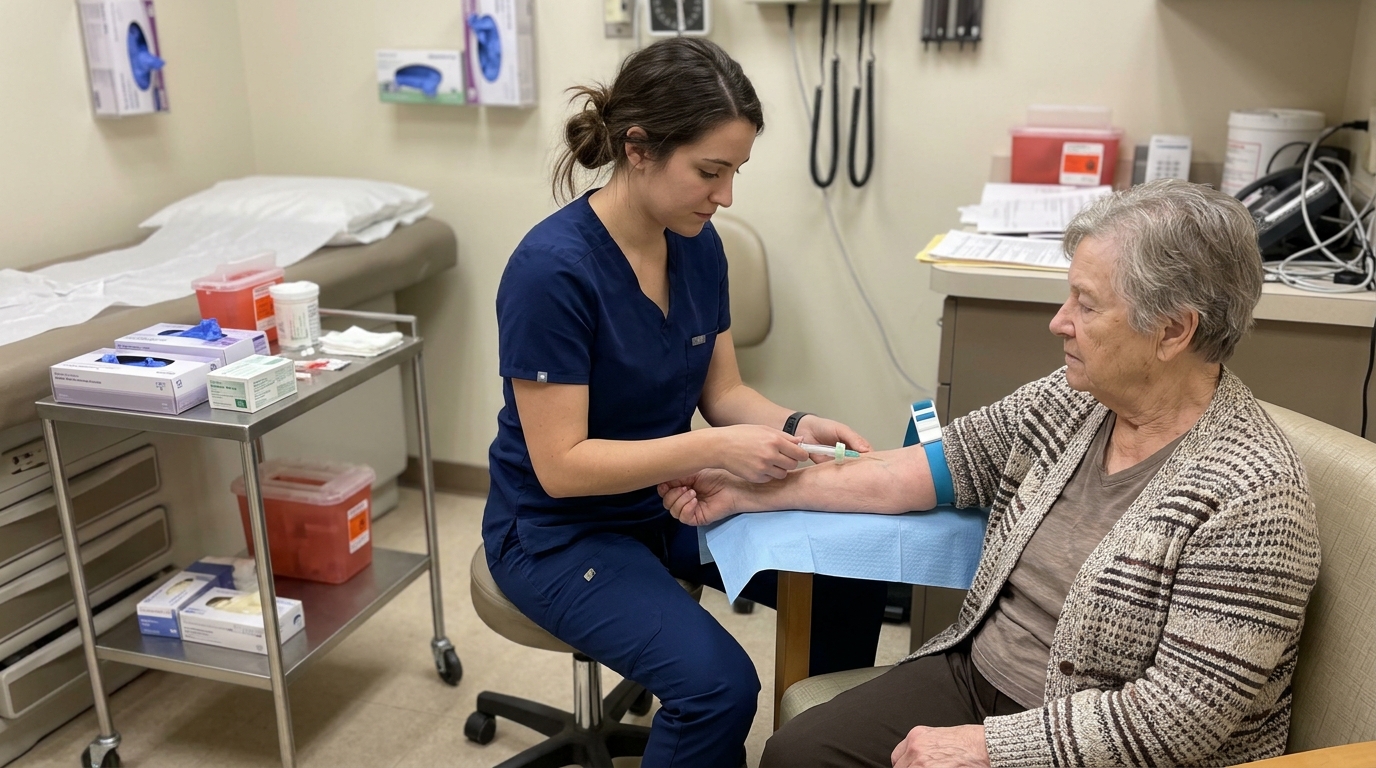
How to Become a Medical Assistant Without a Degree
You can enter medical assisting without a college degree. The U.S. Bureau of Labor Statistics (2025) states plainly that some workers enter the occupation with a high school diploma and learn through on-the-job training, and that medical assistants without postsecondary education may learn skills through on-the-job training or an apprenticeship taught by physicians or other medical assistants — training that, per BLS, "may take several months" depending on the facility.
Wyatt Holloway · 9 min read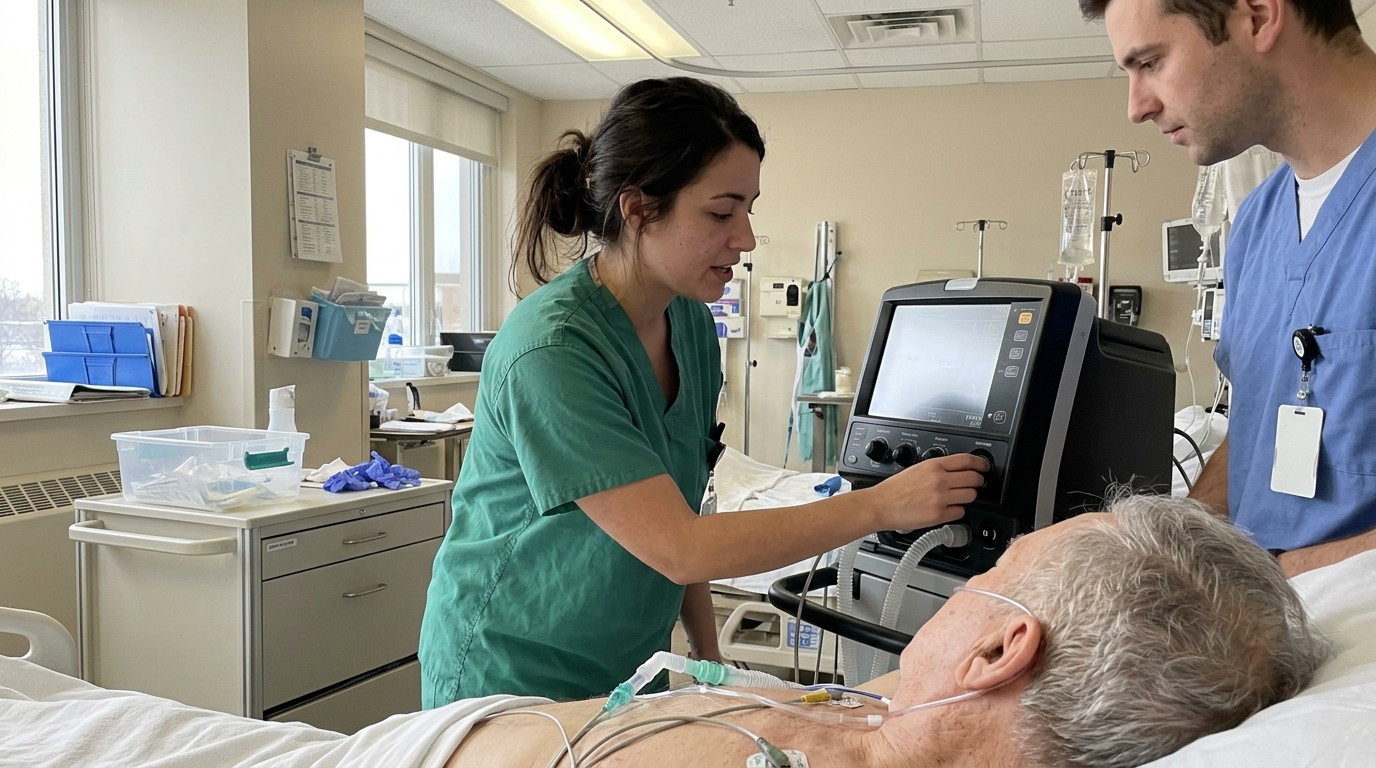
Respiratory Therapist Career Path: Education, Certifications, and Experience
Becoming a respiratory therapist usually means finishing an associate degree in respiratory care from a program accredited by the Commission on Accreditation for Respiratory Care, passing National Board for Respiratory Care credentialing exams, and then applying for a state license. The U.S. Bureau of Labor Statistics (2025) reports that respiratory therapists typically need an associate's degree, though some employers prefer a bachelor's.
Noor Abdallah · 9 min read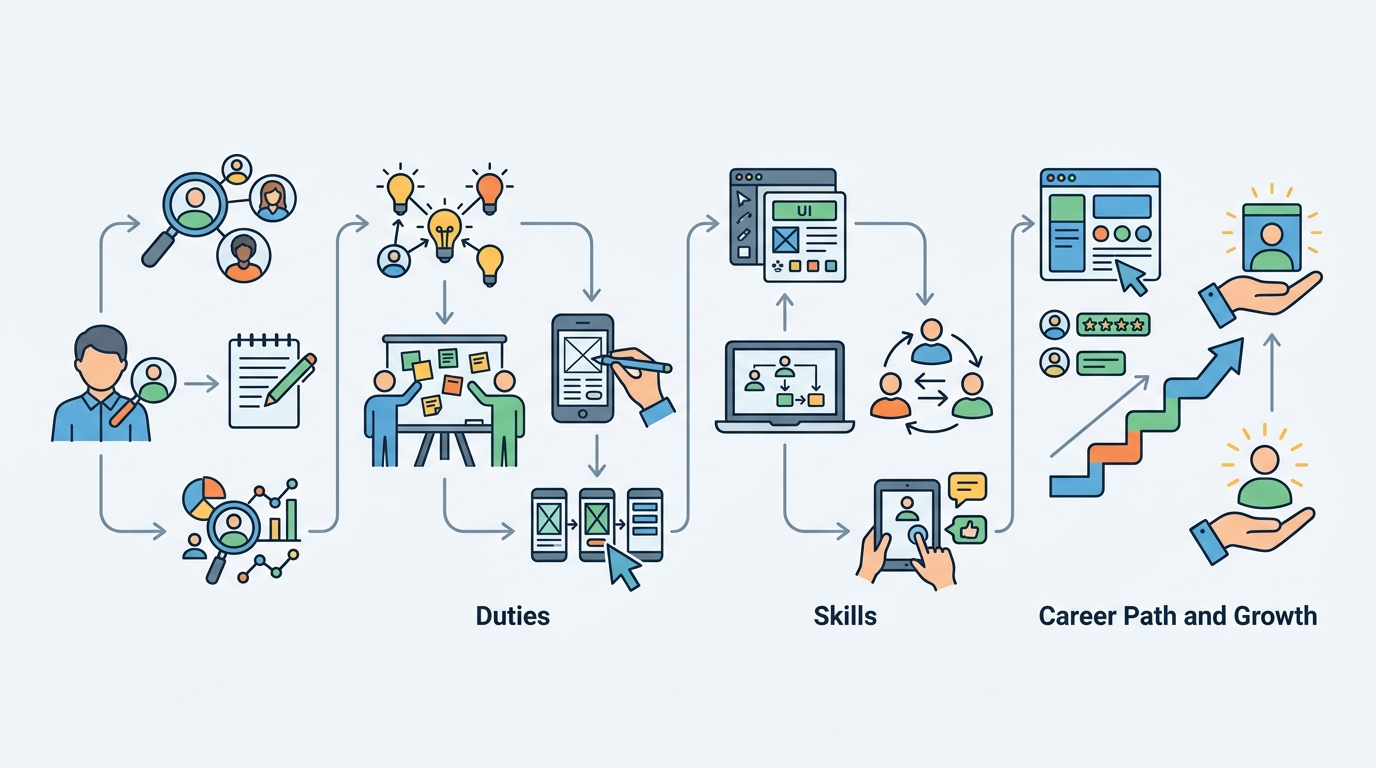
UX Designer Job Description: Duties, Skills, and Salary
A UX designer works out how a website, app or internal tool should behave so people can finish what they came to do, then proves it with research and testing before engineers build it. In U.S. federal data the role usually sits under Web and Digital Interface Designers (SOC 15-1255.00), grouped with web developers and digital designers by the Bureau of Labor Statistics.
Noor Abdallah · 8 min read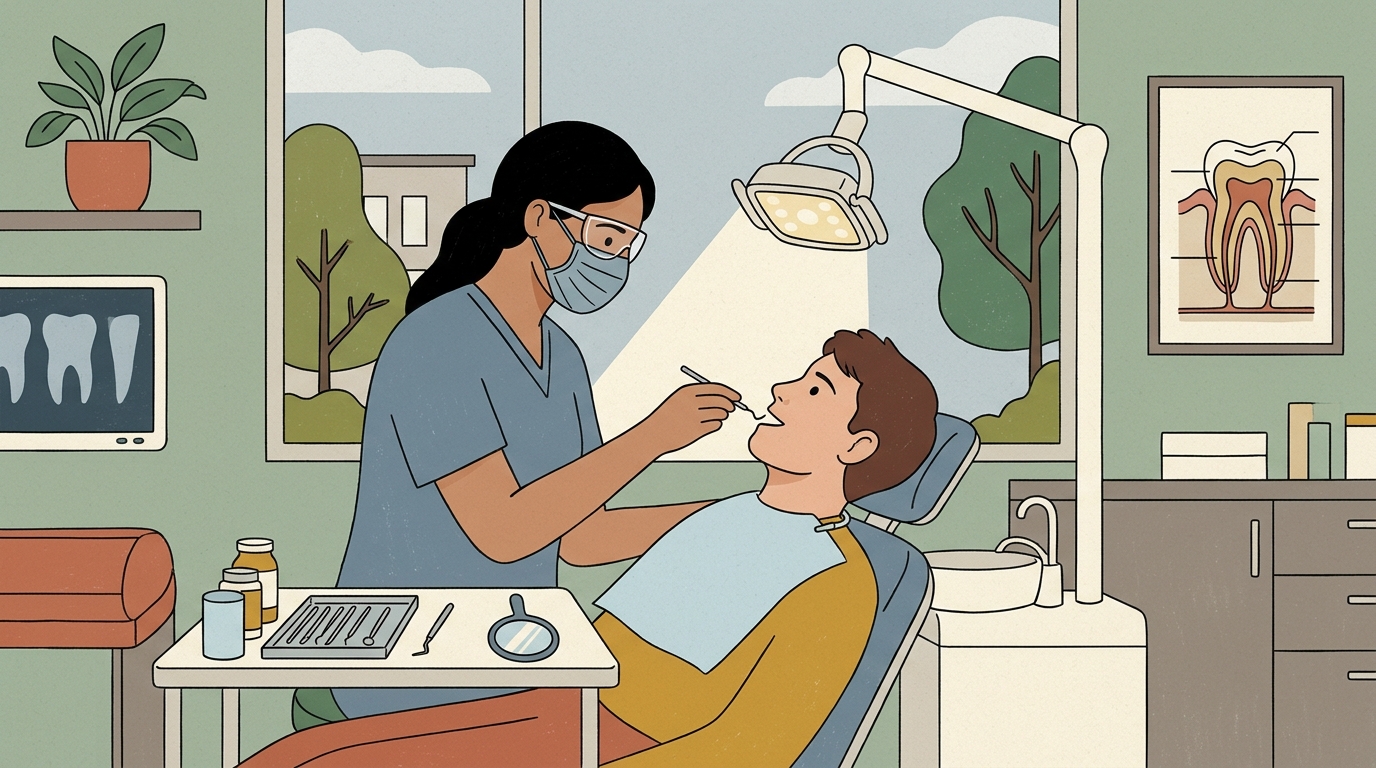
How to Become a Dental Hygienist
Becoming a dental hygienist means graduating from a dental hygiene program accredited by the American Dental Association's Commission on Dental Accreditation (CODA), passing the written National Board Dental Hygiene Examination, passing a state or regional clinical exam, and getting licensed in the state where you want to work (American Dental Hygienists' Association, undated). Most people enter with an associate's degree, which usually takes three years to complete (U.S. Bureau of Labor Statistics, undated).
Priya Chandrasekaran · 9 min read
HR Generalist Career Overview: Is This the Right Path for You?
An HR generalist handles a bit of everything in a human resources department: recruiting and interviewing applicants, placing new hires, and often compensation and benefits, training, and employee relations as well (U.S. Bureau of Labor Statistics, 2025). It suits people who like switching between forms, systems and difficult conversations in the same afternoon, and who can keep confidential information to themselves.
Wyatt Holloway · 9 min read
How to Switch to a Career in Teaching, Step by Step
Switching into teaching from another career usually takes 12 to 30 months from first research to your first full school year, and most of it can be done while you are still drawing a paycheck. A bachelor's degree in any subject is the usual starting point — it is the typical entry-level education for both high school and kindergarten and elementary teachers (U.S. Bureau of Labor Statistics, 2025), and every state offers an alternative route to certification for people who already hold a degree but lack education coursework (U.S. Bureau of Labor Statistics, 2025).
Priya Chandrasekaran · 11 min read
How to Become a Truck Driver With No Experience
You do not need a college degree to drive a tractor-trailer. Most heavy and tractor-trailer drivers have a high school diploma, attend a professional truck driving school, and must hold a commercial driver's license, or CDL (U.S. Bureau of Labor Statistics, 2025). The route in is a defined sequence: a medical exam, a Commercial Learner's Permit, federally mandated entry-level driver training, then the CDL skills test.
Marisol Tanaka-Reyes · 9 min read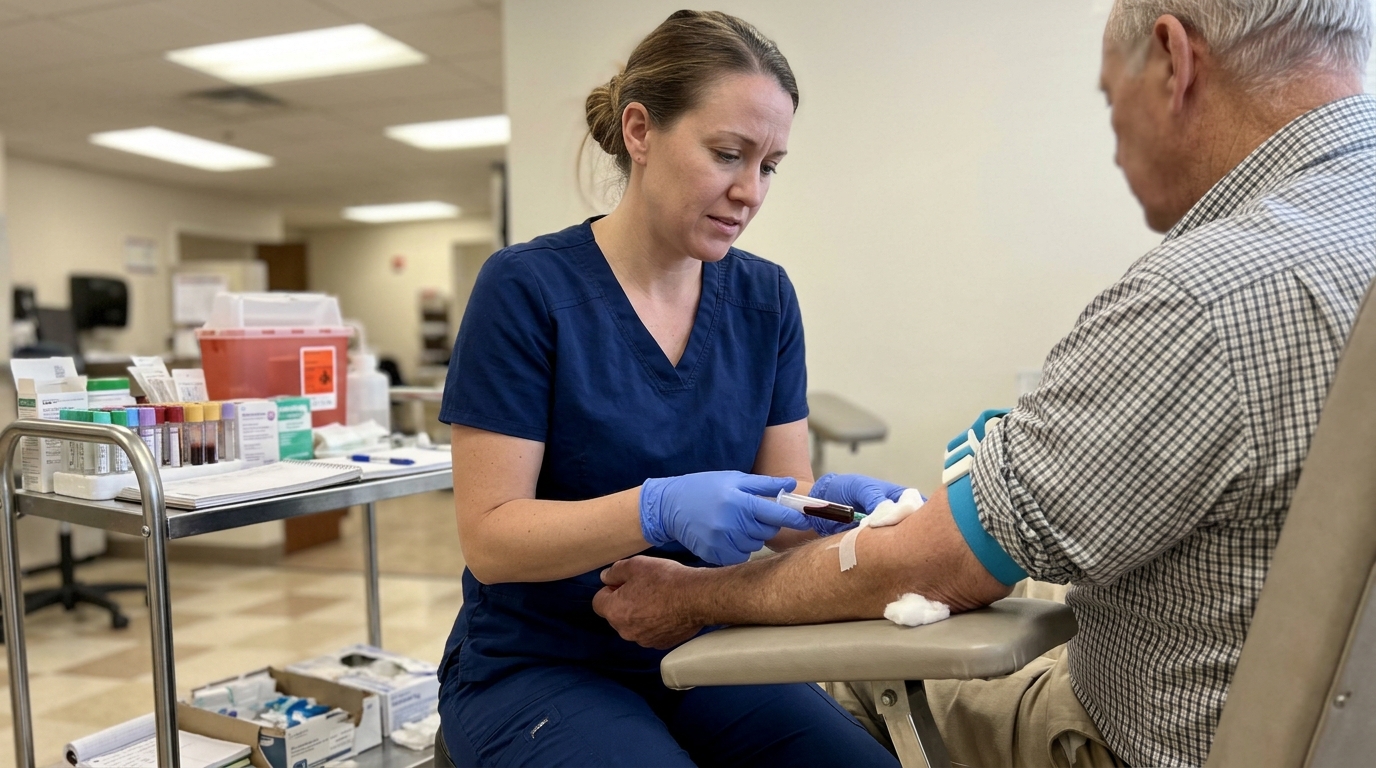
How to Become a Phlebotomist Without Experience
You can enter phlebotomy without having worked in healthcare before. The U.S. Bureau of Labor Statistics (2026-09-14) lists the typical entry-level education for phlebotomists as a postsecondary nondegree award, with both prior work experience in a related occupation and on-the-job training listed as "None" for typical entry. Most people get in by finishing a phlebotomy certificate program at a community college, vocational school or technical school, which usually takes less than one year (U.S. Bureau of Labor Statistics, 2026-09-14).
Desmond Okafor · 9 min read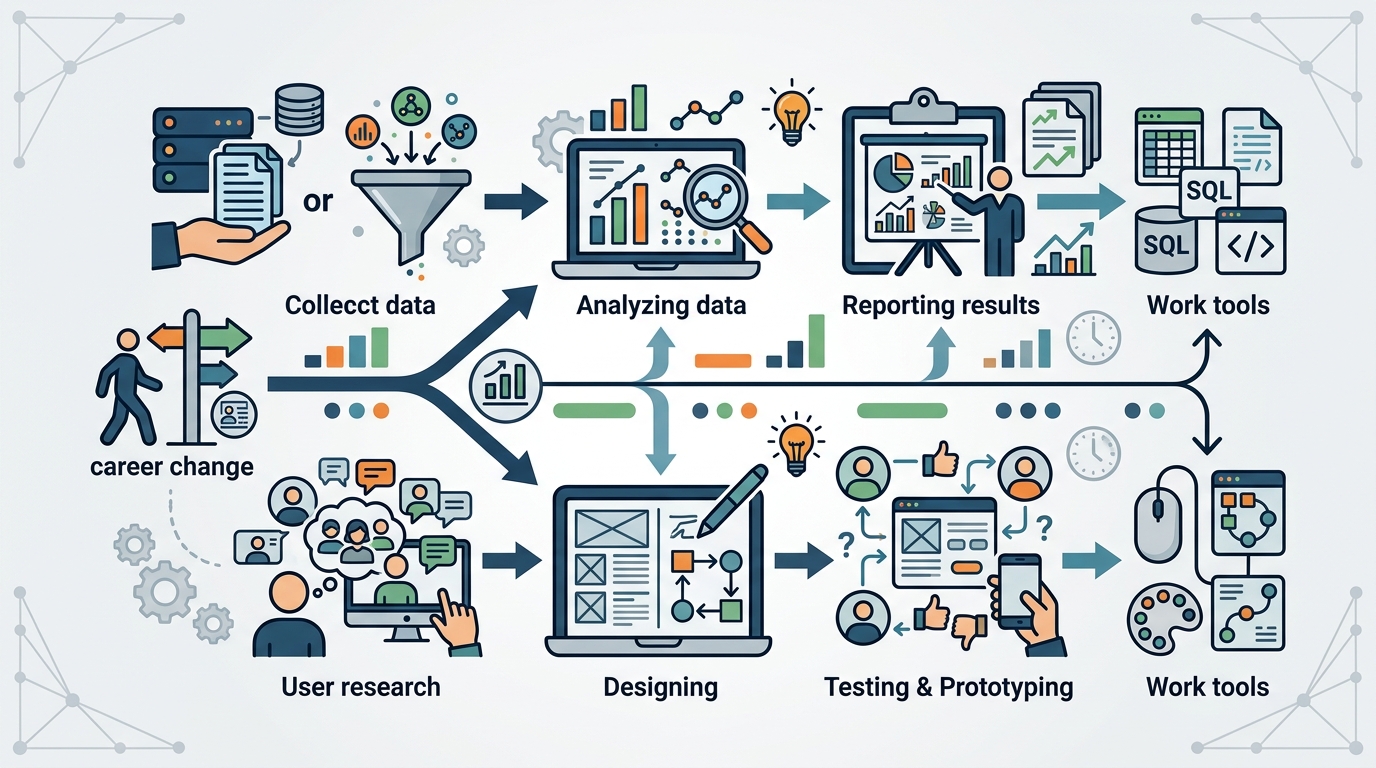
Data Analyst vs. UX Designer: A Second-Career Comparison
Both are desk careers built on a portfolio, both are commonly entered in your forties or fifties, and both sit in the same preparation tier: ONET places Data Scientists and Web and Digital Interface Designers in Job Zone Four, "Considerable Preparation Needed" (National Center for ONET Development, undated). Data pays more at the median — $120,230 for data scientists in May 2025 against $104,000 for web and digital interface designers (U.S. Bureau of Labor Statistics, 2025) — while design is more forgiving about credentials.
Marisol Tanaka-Reyes · 7 min read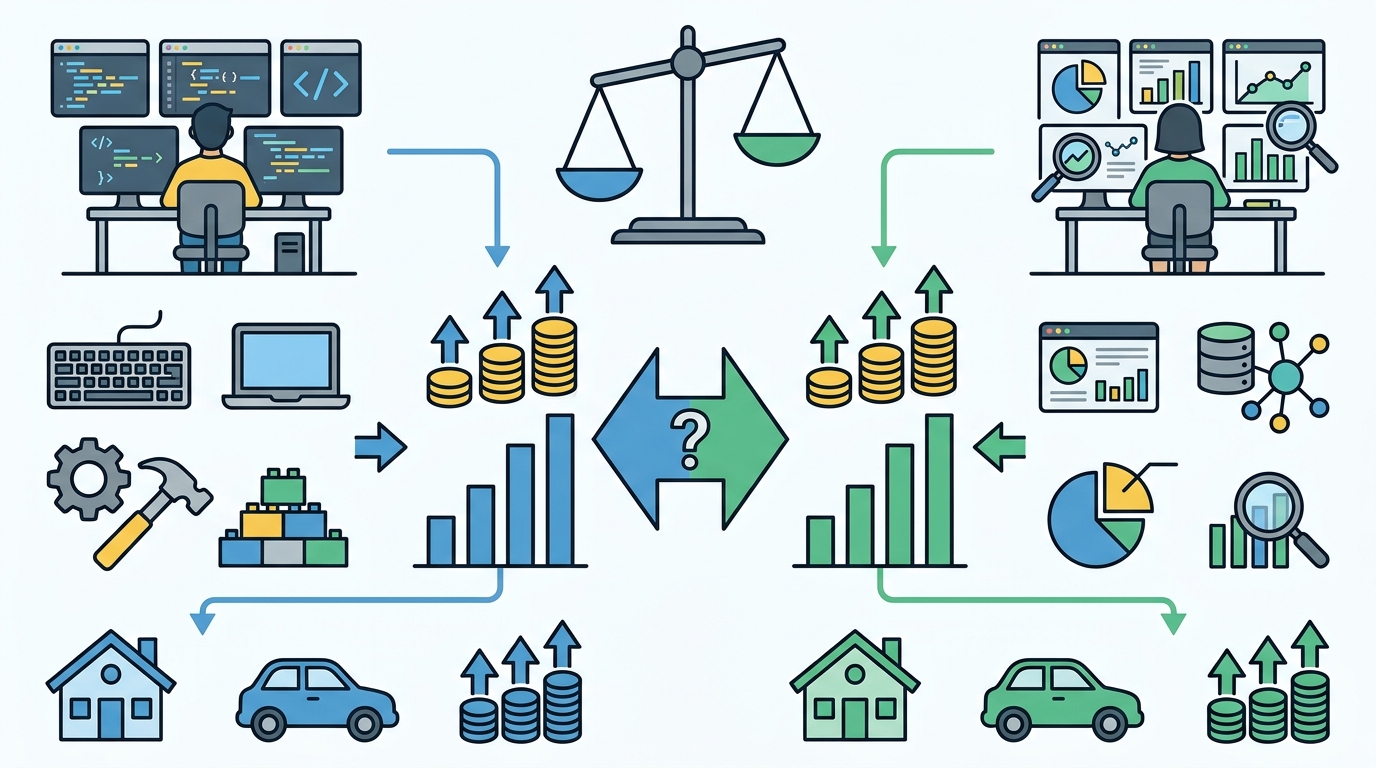
Software Developer vs Data Analyst Salary: Which Pays More?
Software developers and data scientists are tracked as separate occupations by the U.S. Bureau of Labor Statistics, which publishes a median annual wage plus a 10th-percentile and a 90th-percentile figure for each (BLS, May 2025). Which one pays more at the median depends on the release you are reading, so the honest answer is to open both BLS pages and compare the current median annual wage figures directly rather than trusting a number repeated second-hand.
Wyatt Holloway · 8 min read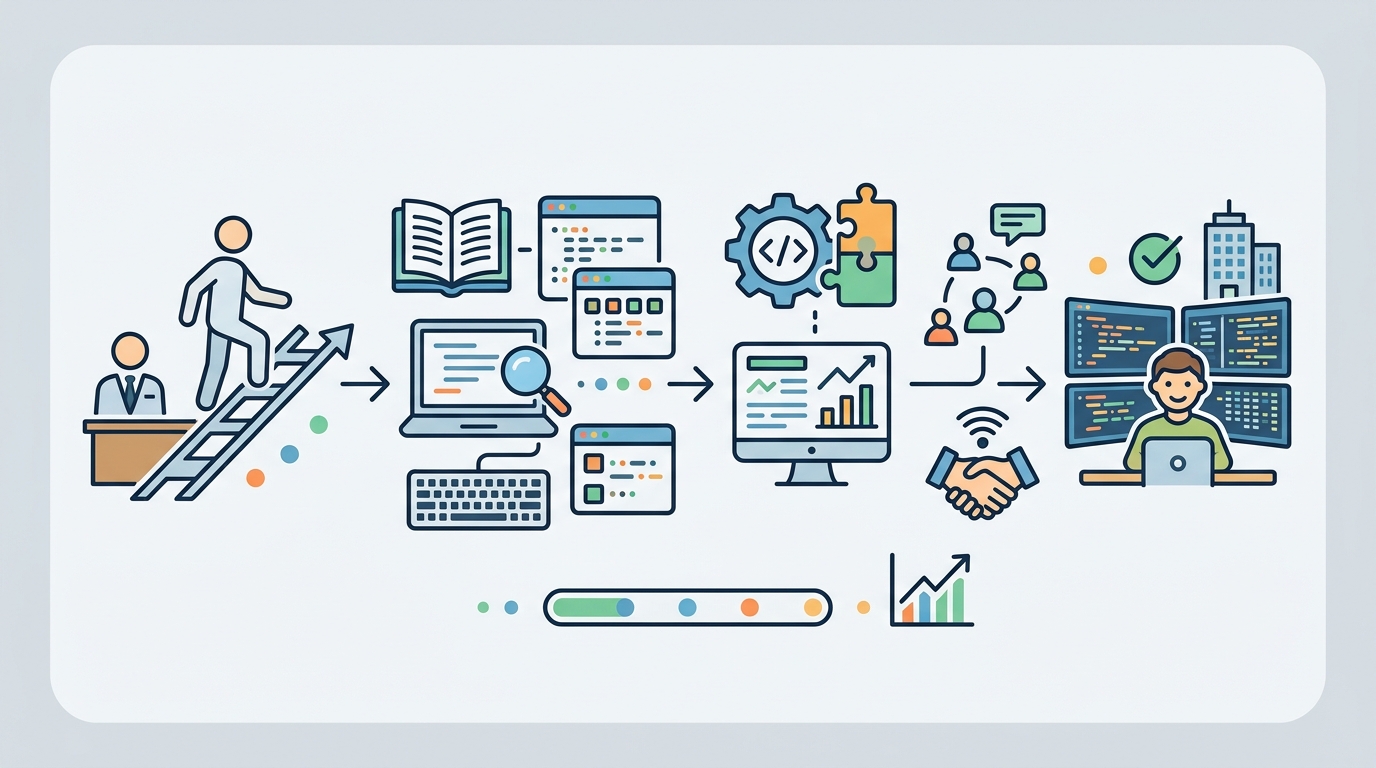
How to Switch Careers to Software Developer Without a Degree
You can move into software development without a degree, but you have to replace what a degree signals: that you can learn a technical subject in a structured way and finish things. The U.S. Bureau of Labor Statistics lists a bachelor's degree as the typical entry-level education for software developers, QA analysts and testers (2025), and some employers prefer a master's on top of that (U.S. Bureau of Labor Statistics, 2025) — but CareerOneStop (U.S. Dept. of Labor) lists no licensing requirement for the occupation, so nothing legally blocks a self-taught or apprenticeship-trained candidate.
Noor Abdallah · 8 min read
Nursing Cover Letter: Examples and How to Write One
A nursing cover letter has one job: to show a unit manager, in under a page, that you are licensed for their state, certified for their patients, and able to describe your clinical work in numbers. The strongest letters name the exact unit and shift in sentence one, put license and certifications in the first paragraph, then give two measurable examples from practice.
Noor Abdallah · 8 min read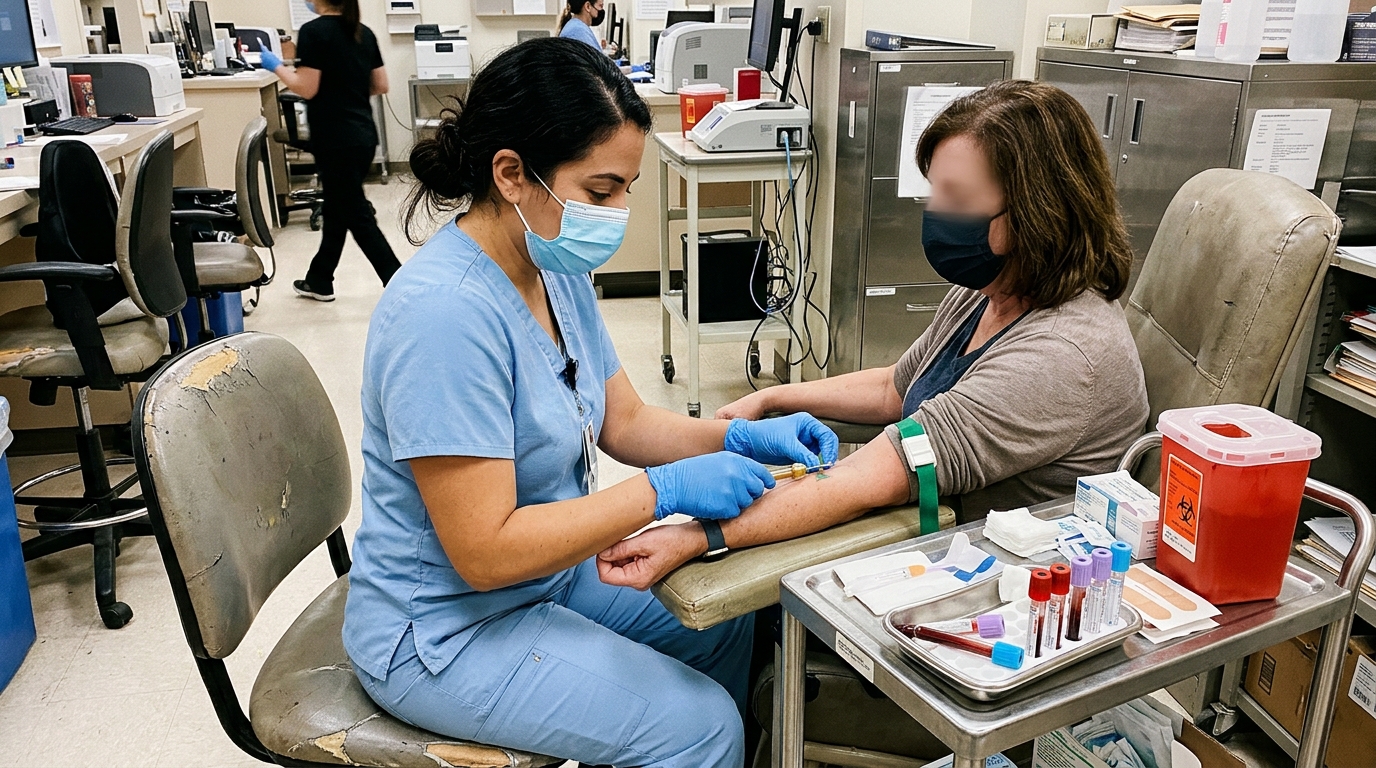
How to Become a Phlebotomist
Phlebotomy is one of the shorter routes into clinical work. The U.S. Bureau of Labor Statistics (2025) lists a high school diploma or equivalent as the typical entry-level education for phlebotomists, and training programs run from 4 to 8 weeks for online-plus-externship and hospital-based courses up to one semester of about 15 weeks at a community college (healthcareercerts.org, 2026).
Noor Abdallah · 10 min read
Top 20 Retail Interview Questions and How to Answer Them
Retail interviews are short, scenario-heavy and often held on the sales floor or in a back office between shifts. Almost everything you will be asked falls into six clusters: why this store, customer conflict, selling and add-ons, cash and math, loss prevention, and availability. Prepare one 30-second story for each cluster and you have usable material for any of the twenty questions a manager might pick from.
Wyatt Holloway · 9 min read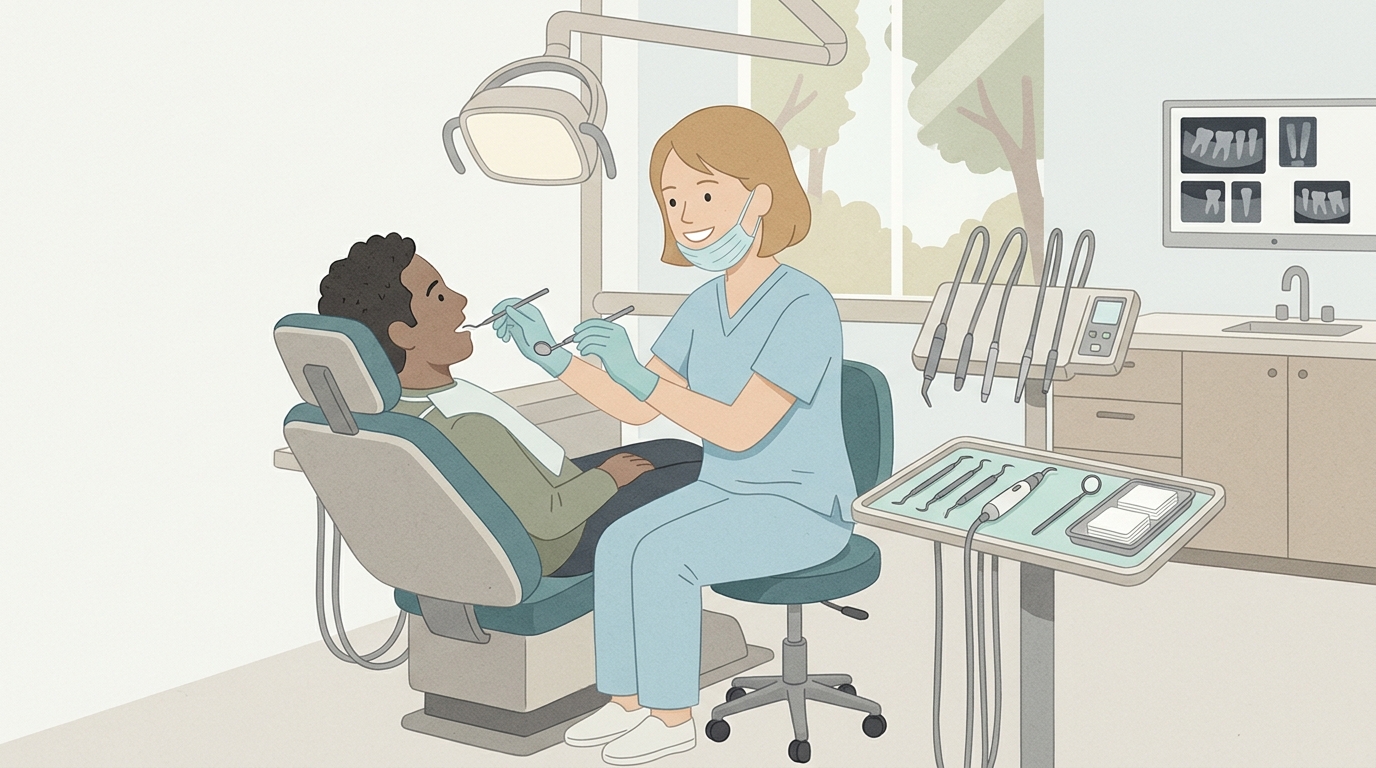
What Does a Dental Hygienist Do? A Day in the Life
A dental hygienist is the licensed clinician who examines patients for signs of oral disease such as gingivitis, removes tartar, stains and plaque, applies fluorides and sealants, takes x-rays, and teaches patients how to brush and floss (U.S. Bureau of Labor Statistics, 2026-08-27). Most of that work happens chairside: offices of dentists employ 94 percent of hygienists (U.S. Bureau of Labor Statistics, 2026-08-27).
Desmond Okafor · 8 min read
Customer Service Interview Questions: What to Expect and How to Prepare
Customer service interviews are less about your history and more about how you behave under pressure: expect scenario questions, a role-play or recorded call, and direct questions about which shifts you can cover. Hiring managers are listening for the qualities the U.S. Bureau of Labor Statistics (2025) lists for the occupation — communication, customer-service, interpersonal, listening, patience and problem-solving skills — demonstrated through real examples rather than claimed.
Noor Abdallah · 9 min read
What Does a Project Manager Do Day to Day?
Day to day, a project manager keeps a piece of work moving: confirming what the client or sponsor wants, updating the schedule and budget, chasing the people who owe deliverables, and writing down what was decided. The U.S. Bureau of Labor Statistics files this work under the title project management specialist, and summarizes it as coordinating the budget, schedule, staffing and other details of a project (U.S. Bureau of Labor Statistics, 2025).
Wyatt Holloway · 9 min read
How to Switch to a Career in Data Analysis, Step by Step
Switching into data analysis from another field usually takes 12 to 24 months from first research to a settled first year in the role, and most of that work can be done in evenings and weekends while you stay employed. The entry route is a mix of tool skills, a small portfolio of real analysis, and sometimes a credential — the U.S. Bureau of Labor Statistics (2025) notes that operations research analysts, the occupation category closest to general data-analysis work, typically enter with a bachelor's degree and no prior related work experience.
Wyatt Holloway · 9 min read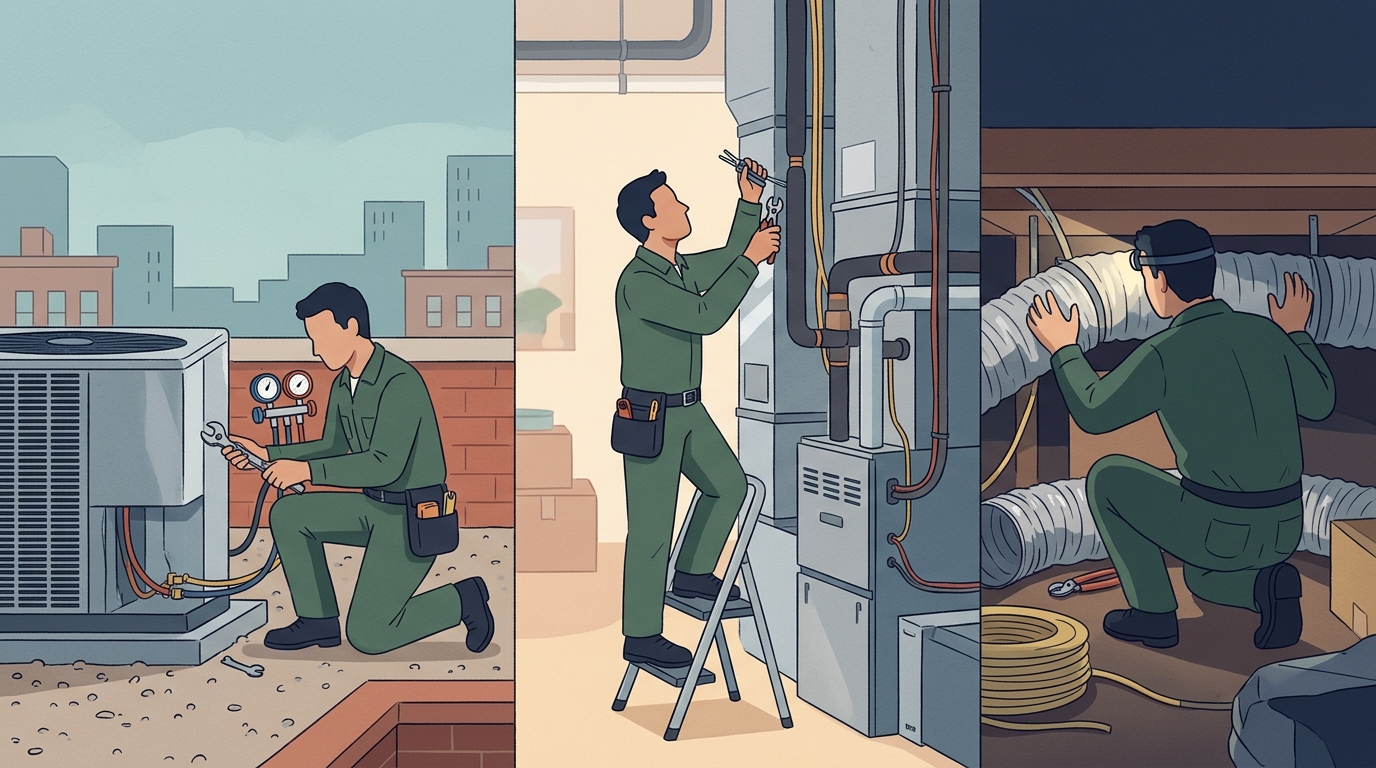
What Is an HVAC Technician? A Day in the Life
An HVAC technician installs, maintains and repairs heating, ventilation, air conditioning and refrigeration (HVACR) systems in homes, schools, hospitals and other buildings, often travelling between several jobsites in one day (U.S. Bureau of Labor Statistics, 2025). The work mixes mechanical repair with electrical wiring, system testing, customer explanations and written records of what was done (U.S. Bureau of Labor Statistics, 2025).
Marisol Tanaka-Reyes · 9 min read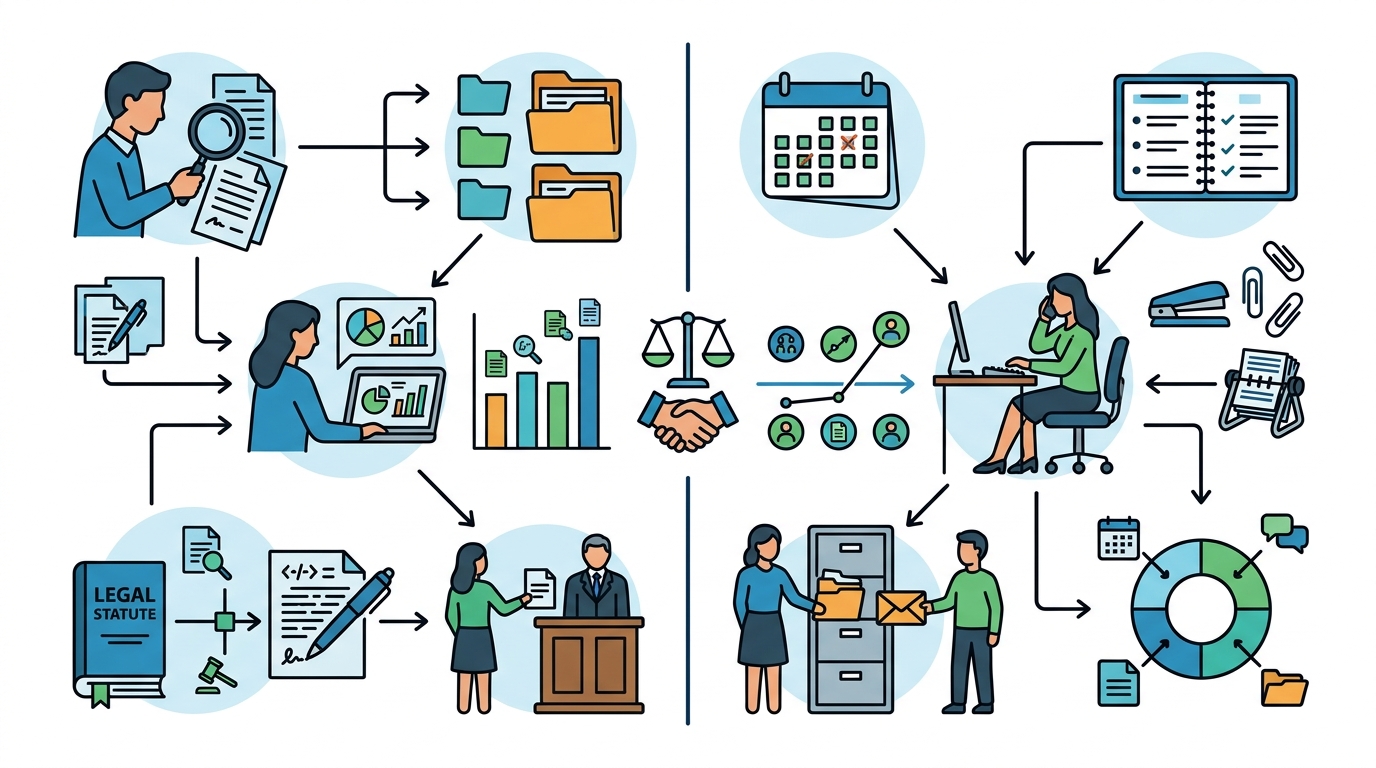
Paralegal vs. Legal Assistant: Key Differences Explained
The U.S. Bureau of Labor Statistics (2025) tracks "Paralegals and Legal Assistants" as a single occupation under code SOC 23-2011, so there is no official wage, education or outlook data that separates the two titles. Where a difference exists, it is set by the employer: many law firms use "paralegal" for substantive case work billed to clients and "legal assistant" for calendar, filing and document-production support, but plenty of offices use the two words interchangeably.
Marisol Tanaka-Reyes · 7 min read
Your Plan for Changing Careers to Nursing
Changing careers to nursing is a two-to-four-year project for most people, not a two-month one. You need prerequisite science courses, a nursing program (2 to 3 years for an ADN or diploma, 4 years for a BSN, according to the U.S. Bureau of Labor Statistics, 2025), a state license, and a passing score on the NCLEX-RN. If you already hold a bachelor's degree in something else, an accelerated BSN can compress the nursing curriculum into 11 to 19 months of full-time study (Nurse.org, 2026).
Noor Abdallah · 10 min read
Administrative Assistant Resume Tips (With Examples)
An administrative assistant resume is read for two things: whether the tools and duties named in the posting appear as words on your page, and whether your bullets show volume and outcome instead of listing chores. Most openings in this occupation are replacements — the Bureau of Labor Statistics projects about 314,400 openings a year on average from 2025 to 2035, mostly from workers transferring to other work or leaving the labor force (U.S. Bureau of Labor Statistics, 2025) — so you are usually compared against people who already do the job.
Desmond Okafor · 8 min read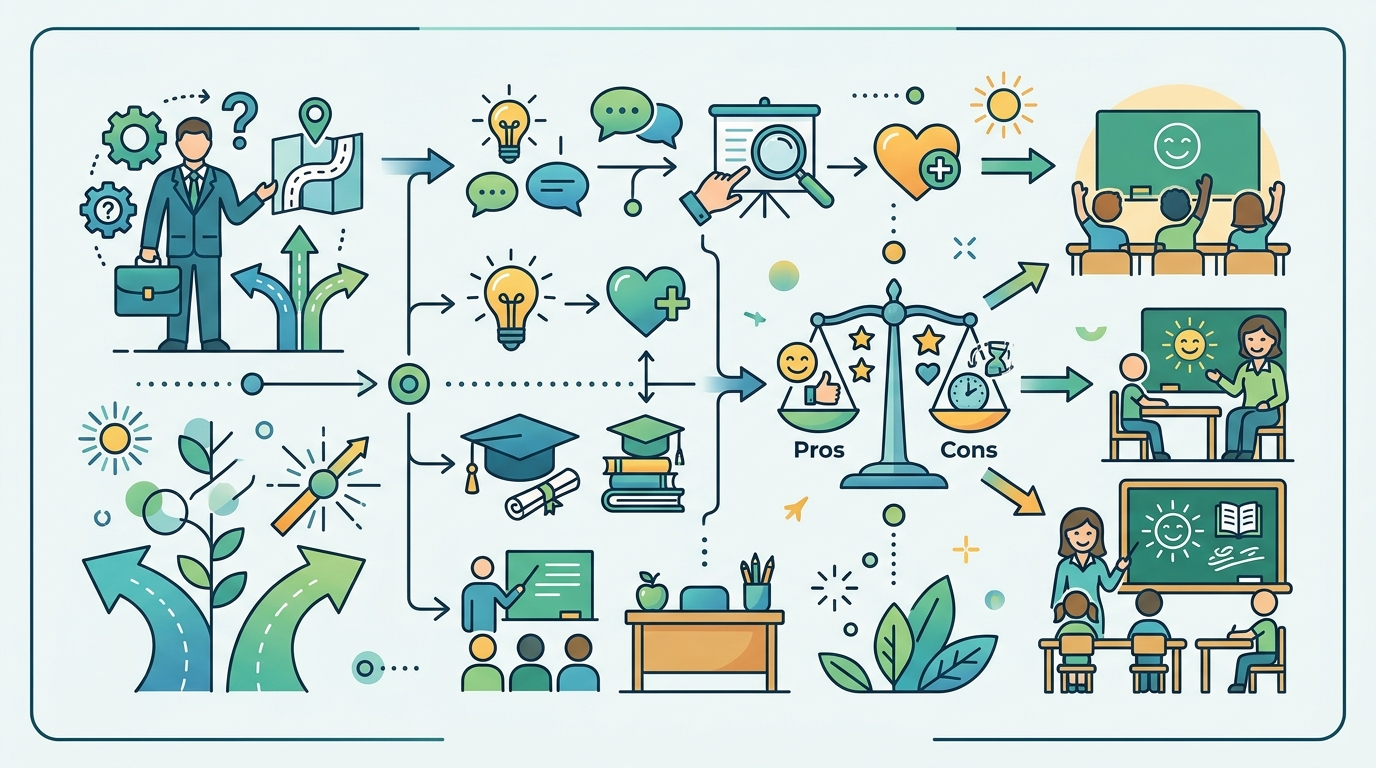
Is Becoming a Teacher a Good Career Change?
Teaching can be a strong second career if you want structured, visible work and you can absorb the cost of getting licensed — typically a bachelor's degree plus a state-issued certification for public schools (U.S. Bureau of Labor Statistics, 2025). It is a weaker fit if you need fast pay growth or a short runway, because most career changers spend between 12 months and three years getting certified, student teaching and landing a first contract.
Marisol Tanaka-Reyes · 9 min read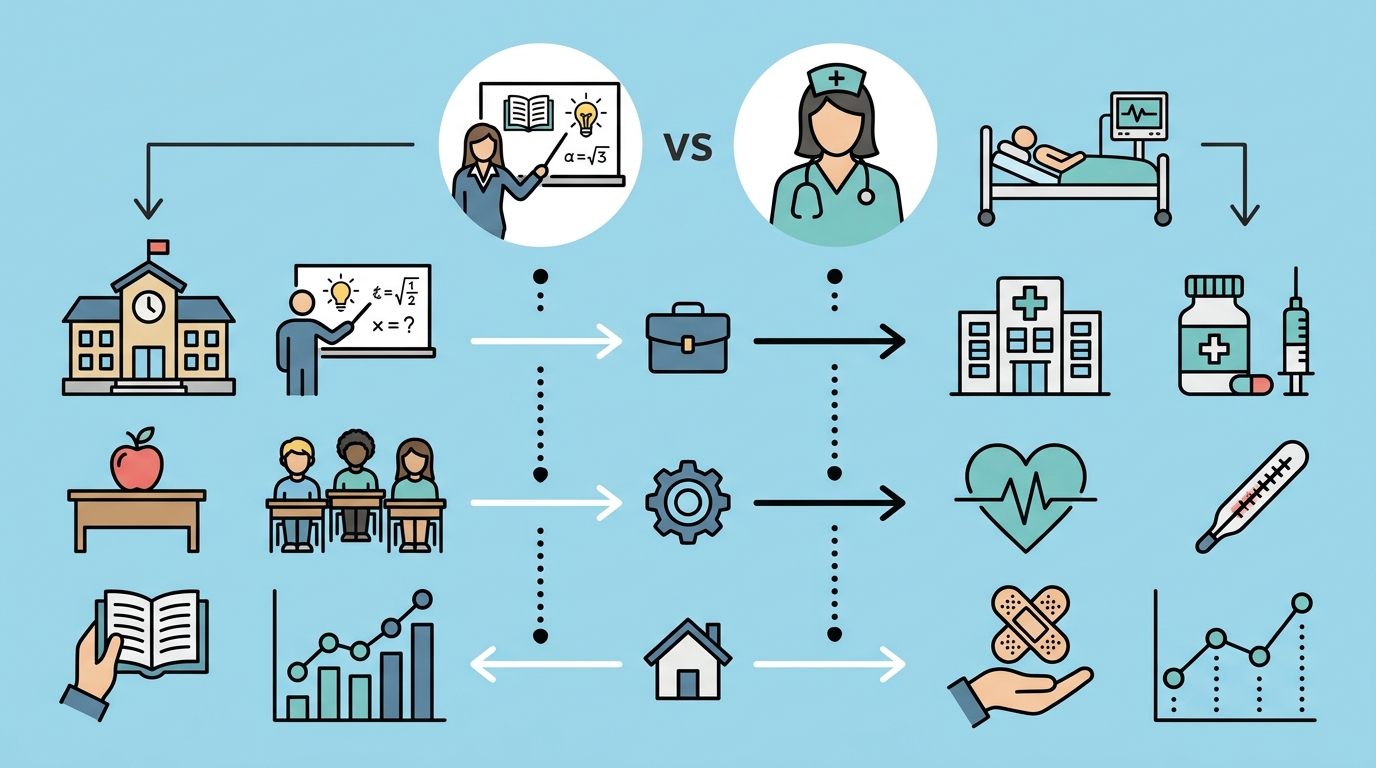
Teaching vs. Nursing: Which Career Change Is Right for You
Teaching and nursing both take career changers in their thirties, forties and fifties, and the choice usually turns on schedule and retraining time rather than subject matter. Nursing means finishing an approved program and passing the NCLEX-RN, then working shifts that can include nights, weekends and holidays (U.S. Bureau of Labor Statistics, 2025). Teaching means a bachelor's degree plus state certification, a roughly 10-month school year, and evenings spent grading and planning (U.S. Bureau of Labor Statistics, 2025).
Noor Abdallah · 9 min read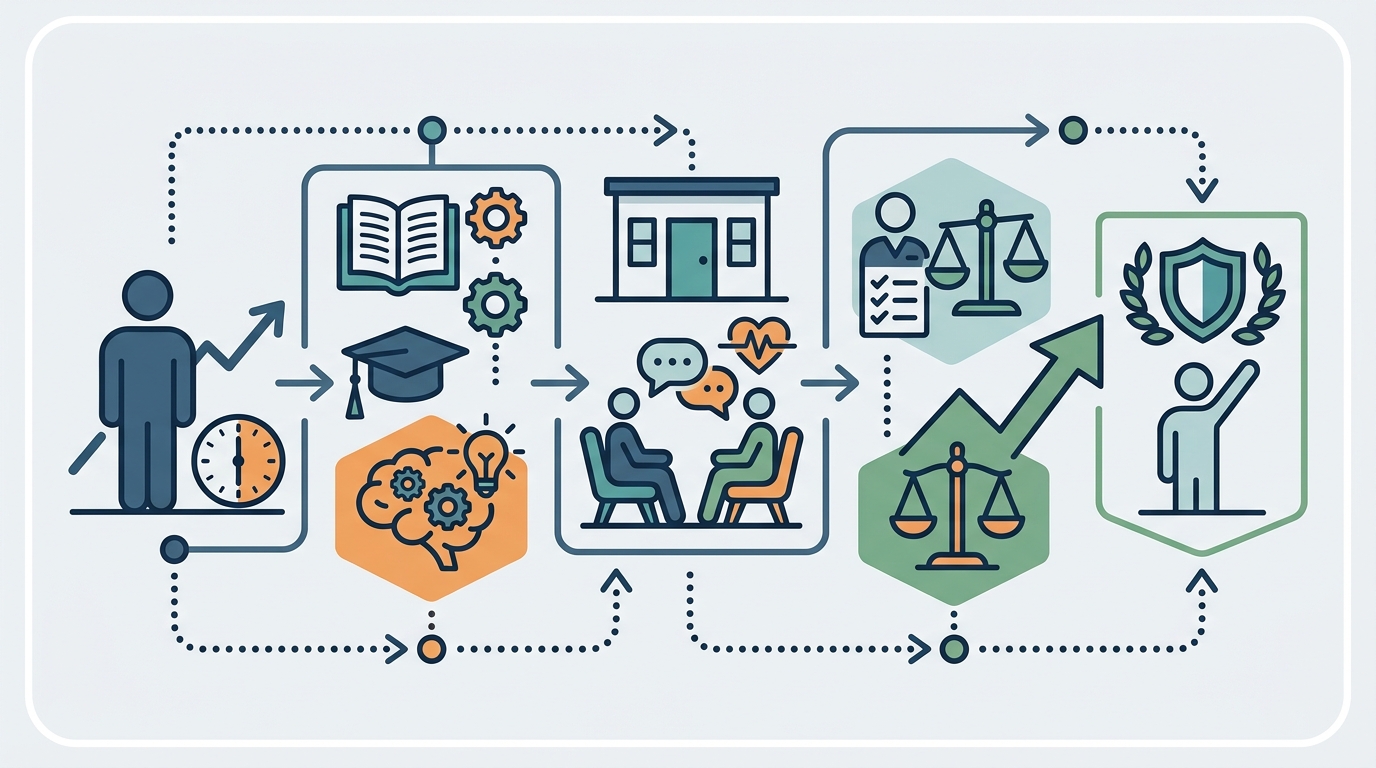
So You Want to Become a Therapist After 30
Becoming a therapist in your thirties, forties or fifties is a structured, slow path rather than a leap: a master's degree, a state-specified number of hours of postdegree supervised clinical work under a licensed counselor, a state-recognized exam, and annual continuing education to keep the license (U.S. Bureau of Labor Statistics, 2025). Plan on roughly four to seven years from first inquiry to full licensure, most of it alongside or instead of your current income.
Wyatt Holloway · 9 min read
Switching Careers to UX Design: What You Need to Know
Switching into UX design usually takes 9 to 18 months from first course to first paid project, and most of that time goes into building three or four case studies that show how you think, not just what you can draw. The federal government does not track a job called "UX Designer" — the closest official occupation is Web and Digital Interface Designers, SOC 15-1255 (ONET OnLine), profiled with web developers in the Occupational Outlook Handbook.
Priya Chandrasekaran · 10 min read
Electrician vs Plumber Salary: Which Pays More?
At the national level these two trades are almost tied. The median annual wage was $63,190 for electricians and $63,800 for plumbers, pipefitters and steamfitters in May 2025, according to the U.S. Bureau of Labor Statistics (2025) — so plumbing pays slightly more at the median, by a margin small enough that it should not decide your choice.
Priya Chandrasekaran · 7 min read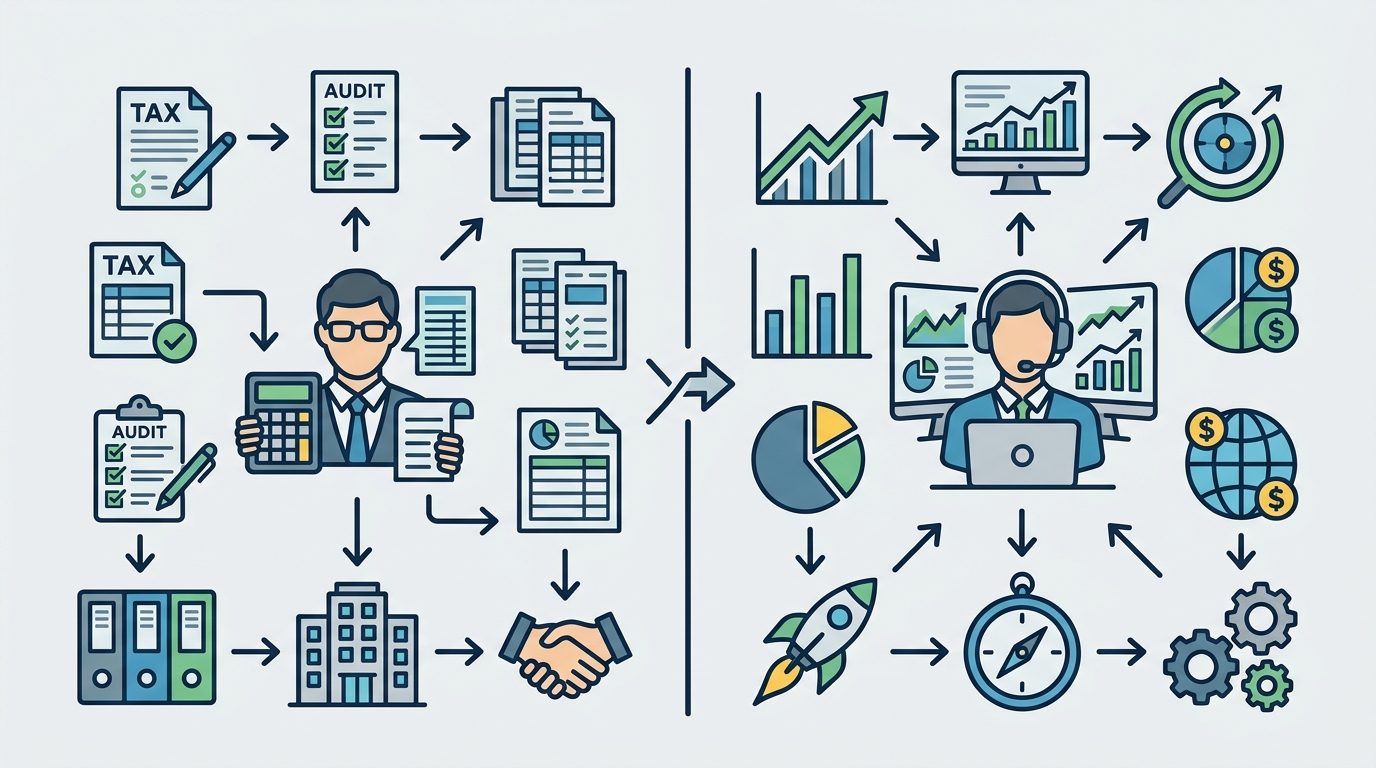
Accountant vs. Financial Analyst: Which Career Path Is Right for You?
Accountants prepare and examine financial records; financial analysts research financial data, forecast trends, and write reports recommending what a business or investor should do (U.S. Bureau of Labor Statistics, 2025). Both usually start with a bachelor's degree, but accounting has a clearer licensing ladder through the CPA, while analyst roles lean more on forecasting skill and, for some jobs, employer-sponsored FINRA licensure.
Desmond Okafor · 9 min read