What Does a Dental Hygienist Do? A Day in the Life
From scaling tartar with ultrasonic tools to charting findings for the dentist, here is how a hygienist's clinic day is structured and how licensure works.
Quick answer
- Dental hygienists typically need an associate's degree in dental hygiene, and programs usually take about 3 years (U.S. Bureau of Labor Statistics, 2026-08-27).
- Every state requires a license; the usual route is graduating from a CODA-accredited program, then passing the National Board Dental Hygiene Examination and a regional or state clinical board exam (American Dental Hygienists' Association).
- Offices of dentists employ 94 percent of hygienists, many work part time, and employment is projected to grow much faster than average with about 15,000 openings a year on average over the decade (U.S. Bureau of Labor Statistics, 2026-08-27).
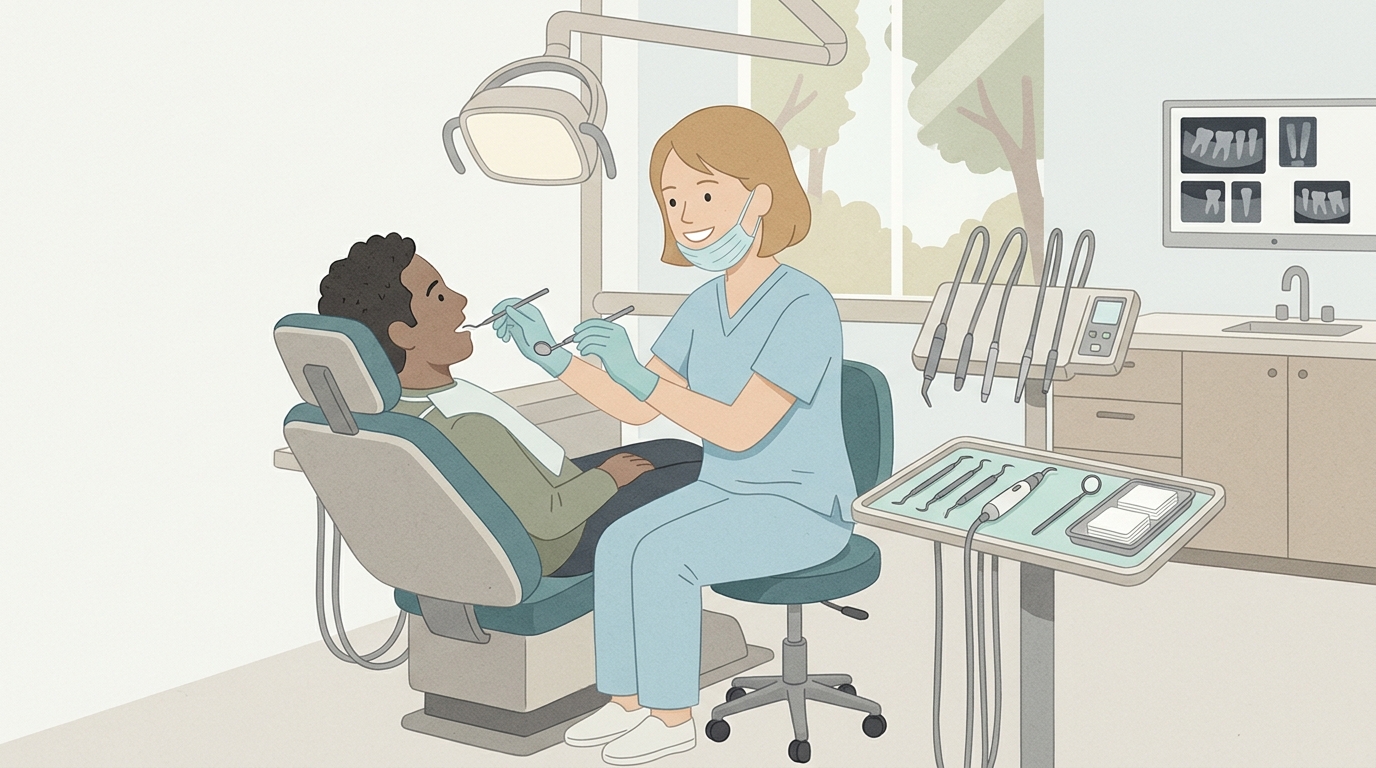
A dental hygienist is the licensed clinician who examines patients for signs of oral disease such as gingivitis, removes tartar, stains and plaque, applies fluorides and sealants, takes x-rays, and teaches patients how to brush and floss (U.S. Bureau of Labor Statistics, 2026-08-27). Most of that work happens chairside: offices of dentists employ 94 percent of hygienists (U.S. Bureau of Labor Statistics, 2026-08-27).
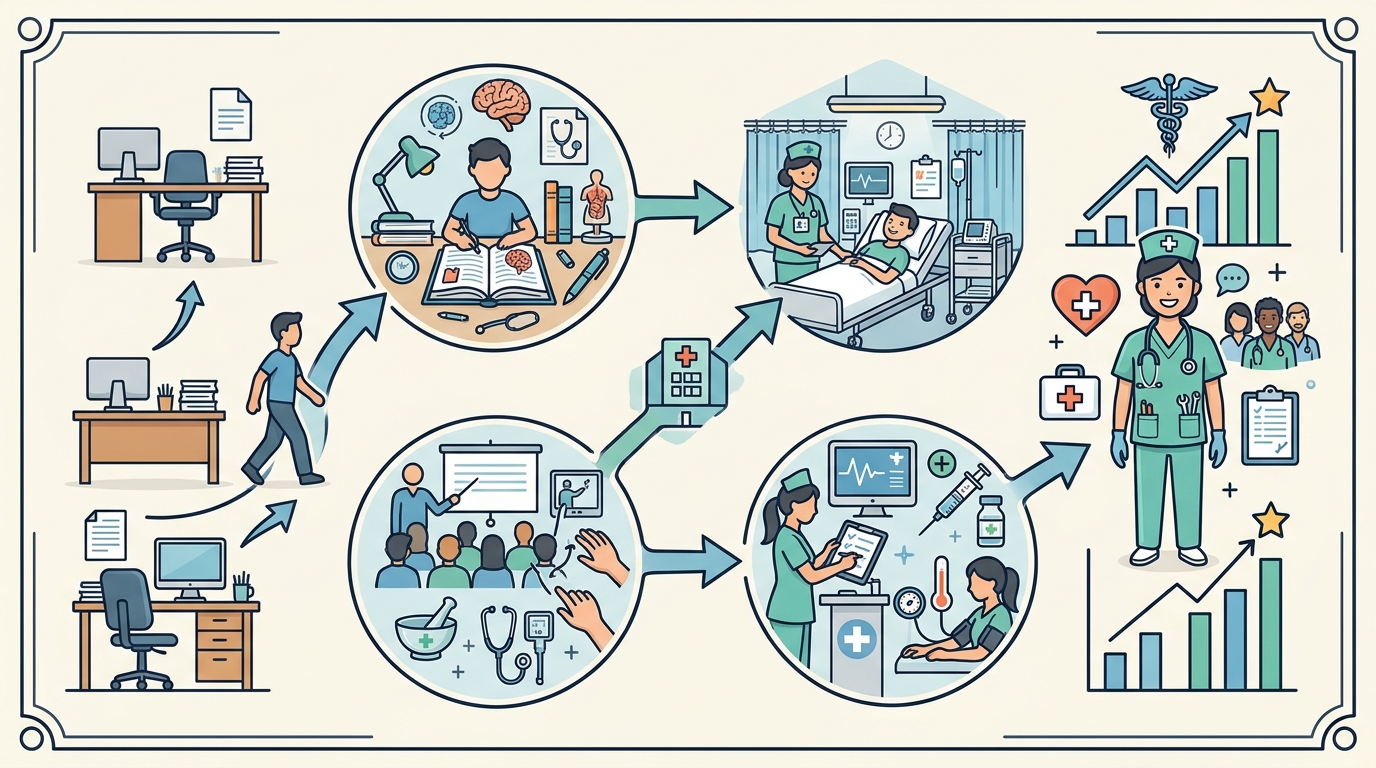
Entry runs through an accredited associate's degree program, usually about three years, followed by written and clinical board examinations and a state license (U.S. Bureau of Labor Statistics, 2026-08-27).
What a Dental Hygienist Does
A dental hygienist provides preventive oral care and screens patients for problems the dentist then diagnoses. The core tasks are consistent across employers: removing tartar, stains and plaque from teeth; applying sealants and fluorides; taking and developing dental x-rays; assessing oral health and reporting findings to the dentist; documenting patient care and treatment plans; and teaching brushing and flossing technique (U.S. Bureau of Labor Statistics, 2026-08-27).
The setting is overwhelmingly the general dental practice — offices of dentists employ 94 percent of hygienists (U.S. Bureau of Labor Statistics, 2026-08-27). Hygienists also work in pediatric and specialty dental offices, and in public or school health programs, research and teaching, though a bachelor's or master's degree usually is required for those roles, and master's programs in dental hygiene are relatively uncommon (U.S. Bureau of Labor Statistics, 2026-08-27). ONET lists Dental Hygienist, Hygienist, Licensed Dental Hygienist, Pediatric Dental Hygienist and Registered Dental Hygienist (RDH) as reported titles for the same occupation (ONET OnLine, 2026).
What you are permitted to do differs by state, because licensure requirements vary by state (U.S. Bureau of Labor Statistics, 2026-08-27). A newly licensed hygienist generally works through standard cleaning appointments in close coordination with the dentist; with experience, hygienists take on more complex periodontal maintenance, local anesthesia or laser procedures where the state permits, and a larger role in building oral hygiene care plans.
A Typical Day
- Sets up the operatory: lays out hand, power and ultrasonic instruments, checks the x-ray machine, and puts on safety glasses, a surgical mask and gloves before the first patient (U.S. Bureau of Labor Statistics, 2026-08-27).
- Reviews the day's schedule in the practice management software and pulls each patient's chart and prior radiographs.
- Records and reviews the patient's medical history, including medications that affect treatment (O*NET OnLine, 2026).
- Examines gums with a periodontal probe and charts pocket depths and conditions of decay and disease for the dentist (O*NET OnLine, 2026).
- Exposes and develops x-ray film, following radiation protection procedures for patient and operator (U.S. Bureau of Labor Statistics, 2026-08-27).
- Removes calcareous deposits, plaque and stains with hand scalers and ultrasonic instruments, uses an air-polishing device that sprays air, water and baking soda, then polishes with a power tool (U.S. Bureau of Labor Statistics, 2026-08-27).
- Applies fluoride or other cavity-preventing agents, and sealants where indicated (O*NET OnLine, 2026).
- Briefs the dentist on findings before the exam, then demonstrates brushing and flossing technique at the chair (U.S. Bureau of Labor Statistics, 2026-08-27).
- Documents care and the treatment plan in the patient record, then disinfects the operatory and resets instruments.
Schedules are not always full time: dentists may hire hygienists for only a few days a week, so some work for more than one dentist (U.S. Bureau of Labor Statistics, 2026-08-27).
Salary and Job Outlook
Pay is usually quoted hourly in private practice, sometimes as a daily rate for fill-in days, and varies by state, metro area and employer. Published figures are revised yearly, so look up the current number.
| Experience level | How pay is usually set | Where to check the current figure |
|---|---|---|
| Entry (newly licensed) | Hourly rate for scheduled clinic days; part-time schedules are common, so weekly hours matter as much as the rate | Lowest 10 percent wage boundary, BLS, 2024 |
| Mid-career | Hourly rate plus added days or a second practice; expanded duties your state permits can affect it | National percentile wage estimates, BLS Occupational Employment and Wage Statistics, May 2023 |
| Experienced | Top of the practice's hourly scale; public health, teaching and research roles are usually salaried and typically need a bachelor's or master's degree | Highest 10 percent wage boundary, BLS, 2024 |
| National median | Median annual wage for dental hygienists | BLS Occupational Outlook Handbook, 2025; state and metro figures via CareerOneStop wage percentiles |
Outlook: employment is projected to grow much faster than average, with about 15,000 openings projected each year on average over the decade, counting growth and replacement of workers who leave (U.S. Bureau of Labor Statistics, 2026-08-27).
Skills and Qualifications
Hard requirements you can obtain or verify
- An associate's degree in dental hygiene from a program accredited by the ADA Commission on Dental Accreditation (CODA); programs usually take 3 years (U.S. Bureau of Labor Statistics, 2026-08-27; American Dental Hygienists' Association).
- A passing score on the written National Board Dental Hygiene Examination (NBDHE), administered by the American Dental Association Joint Commission on National Dental Examinations (American Dental Hygienists' Association).
- A passing score on a regional or state clinical board examination, plus the state jurisprudence examination and a state license — requirements vary by state (American Dental Hygienists' Association; U.S. Bureau of Labor Statistics, 2026-08-27).
- Competence with hand, power and ultrasonic instruments, air-polishing devices, x-ray machines, and lasers where they are used (U.S. Bureau of Labor Statistics, 2026-08-27).
- Radiation safety procedures and infection control using safety glasses, surgical masks and gloves (U.S. Bureau of Labor Statistics, 2026-08-27).
- Manual dexterity: you work in tight spaces on a small part of the body with precise instruments (U.S. Bureau of Labor Statistics, 2026-08-27).
- A bachelor's or master's degree for research, teaching, or clinical practice in public or school health programs (U.S. Bureau of Labor Statistics, 2026-08-27).
Soft skills
- Interpersonal skills, because hygienists work closely with dentists and talk patients through care at the chair (U.S. Bureau of Labor Statistics, 2026-08-27).
- Problem-solving, used in developing oral hygiene care plans (U.S. Bureau of Labor Statistics, 2026-08-27).
- Detail orientation when charting findings and following treatment protocols (U.S. Bureau of Labor Statistics, 2026-08-27).
How to Get Started
- Check admission prerequisites for CODA-accredited dental hygiene programs near you — typically specific science coursework — and complete anything missing before applying.
- Complete the CODA-accredited program, usually about 3 years to an associate's degree, including its supervised clinical hours (U.S. Bureau of Labor Statistics, 2026-08-27; American Dental Hygienists' Association).
- Register for and pass the written National Board Dental Hygiene Examination through the American Dental Association Joint Commission on National Dental Examinations, usually near the end of your program (American Dental Hygienists' Association).
- Pass the regional or state clinical board examination your state accepts (American Dental Hygienists' Association).
- Pass your state's jurisprudence examination and apply to the state board for licensure; confirm documents with that board, since requirements vary by state (American Dental Hygienists' Association; U.S. Bureau of Labor Statistics, 2026-08-27).
- Apply to offices of dentists first — they employ 94 percent of hygienists — and treat part-time openings as real entry points, since some hygienists build a full week across more than one practice (U.S. Bureau of Labor Statistics, 2026-08-27).
Frequently asked questions
Do you need a degree to be a dental hygienist?
Yes. Dental hygienists typically need an associate's degree in dental hygiene, and programs usually take about 3 years (U.S. Bureau of Labor Statistics, 2026-08-27). The program must be accredited by the ADA Commission on Dental Accreditation for licensure in most states. A bachelor's or master's degree is usually required only for research, teaching, or public and school health programs.
Is being a dental hygienist physically hard?
The strain comes from posture and precision: you lean into tight spaces and work on a small part of the body with precise instruments, which demands fine motor control (U.S. Bureau of Labor Statistics, 2026-08-27). You also wear safety glasses, a surgical mask and gloves throughout clinical work to protect against infectious diseases (U.S. Bureau of Labor Statistics, 2026-08-27). Part-time schedules are common, which can limit consecutive full days in the chair.
How long does it take to become a dental hygienist?
Plan on about three years for an accredited associate's degree program, plus exam and licensing time afterward (U.S. Bureau of Labor Statistics, 2026-08-27). After graduating you still need the written National Board Dental Hygiene Examination, a regional or state clinical board exam, and a state jurisprudence exam (American Dental Hygienists' Association). Prerequisite coursework before admission can add time.
Are dental hygienist jobs in demand?
Employment of dental hygienists is projected to grow much faster than average, with about 15,000 openings projected each year on average over the decade (U.S. Bureau of Labor Statistics, 2026-08-27). Offices of dentists hold 94 percent of those jobs (U.S. Bureau of Labor Statistics, 2026-08-27). Openings in any one city depend on local practice growth, so check state and metro data on CareerOneStop.
Can you work part time as a dental hygienist?
Yes, and it is common. Dentists may hire hygienists for only a few days a week, so some hygienists work for more than one dentist to fill out a schedule (U.S. Bureau of Labor Statistics, 2026-08-27). Your total earnings therefore depend on how many clinic days you hold, not only the hourly rate.
Sources
- U.S. Bureau of Labor Statistics — Dental Hygienists : Occupational Outlook Handbook (2026-08-27)
- U.S. Bureau of Labor Statistics — Occupational Employment and Wages, May 2023: 29-1292 Dental Hygienists (2023-05)

Written by
Desmond writes about the mechanics of job searching: resumes, interviews, the long silence after applying. He's fascinated by how much of getting hired depends on luck dressed up as skill.