Physician Assistant Career Overview: Is This the Right Path for You?
A look at the clinical work, master's-level training, licensing exams and schedule tradeoffs behind one of health care's most adaptable diagnostic roles.
Quick answer
- Entry-level education is a master's degree from an ARC-PA accredited PA program (BLS, 2025).
- Median annual wage is published by BLS for May 2025 — look up the current figure before planning.
- BLS projects employment growth for physician assistants over the 2025-35 projection period.
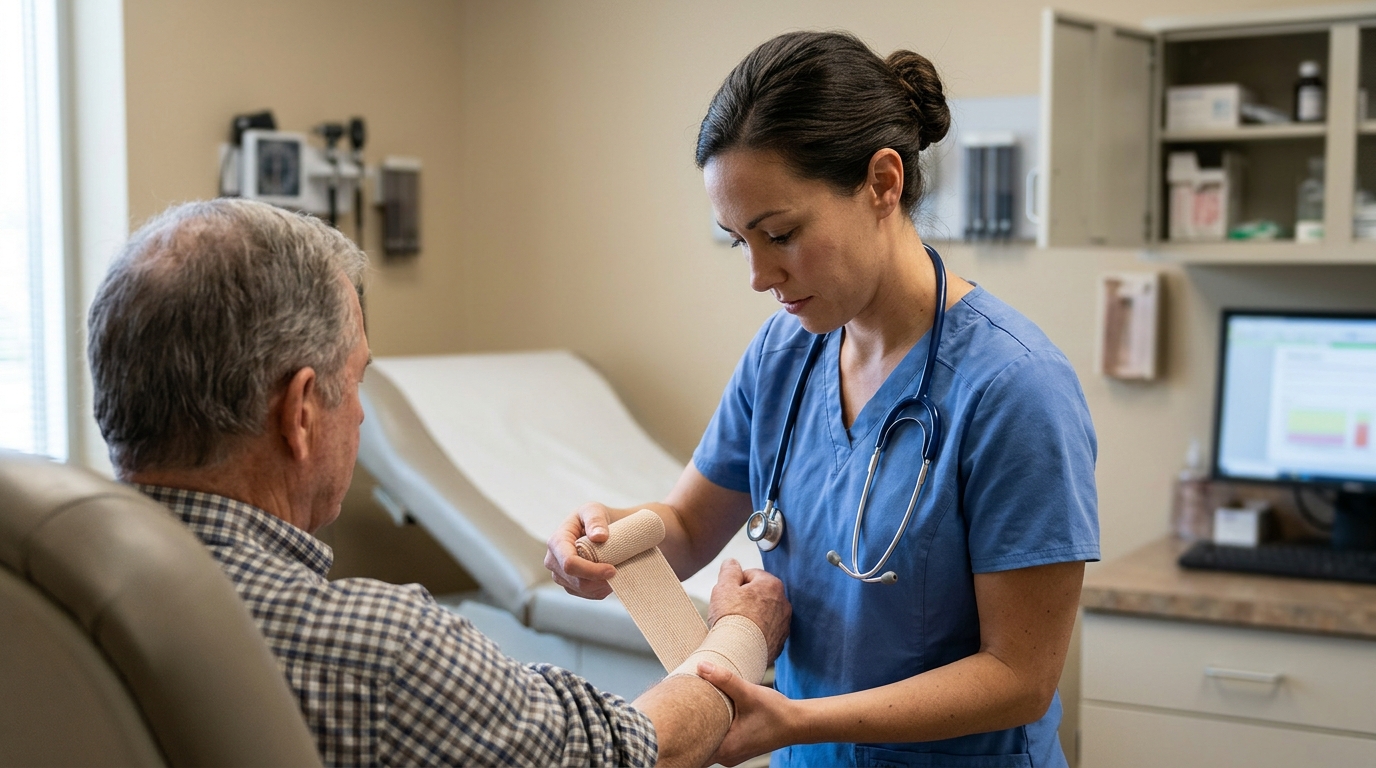
Physician assistants (also called physician associates) examine patients, order and interpret tests, diagnose illness, prescribe medicine and assist in procedures, working as part of a team with physicians and surgeons. It is a licensed clinical role that requires a master's degree from an accredited program plus a national certifying exam, so the entry route is long and structured rather than flexible.
The work suits people who want direct patient contact and broad clinical responsibility without the length of medical school and residency, and who can accept the evenings, weekends and long hours on their feet that many clinical settings require.
What This Job Involves Day to Day
No two settings look alike — a PA in a surgical practice has a different day from one in family medicine or emergency care — but a general internal medicine clinic day gives you the shape of it.
You arrive around 7:30 a.m. and open the electronic health record (EHR) system, which O*NET OnLine (2026) lists among the software PAs use on the job. You scan overnight lab and imaging results, flag an abnormal potassium for the supervising physician, and refill prescriptions through the e-prescribing module.
First patient at 8 a.m. Over the next three hours you see eight to twelve people: a sore throat where you use an otoscope and tongue depressor and send a rapid strep swab, a diabetic follow-up where you adjust medication and review a foot exam, a work injury where you document range of motion. Between each visit you chart in the EHR, order labs, and dictate or type the assessment and plan. You listen to hearts and lungs with a stethoscope, take blood pressure with a sphygmomanometer, and in some clinics use point-of-care ultrasound to check a joint or bladder.
Around noon you clear the inbox: patient portal messages, prior authorization forms, a phone call to a cardiologist to arrange an urgent referral. Afternoon brings a procedure block — a laceration repair, a skin biopsy, a joint injection — then more scheduled visits until 5 p.m. The last hour goes to unfinished notes, result letters and a handover conversation about the two patients you are least comfortable with.
In hospital and surgical settings the day starts earlier with rounds, includes operating room assisting, and may run as a 12-hour shift. BLS (2025) notes that most PAs work full time and that some work evenings, nights and weekends, and that the job can involve standing for long periods.
Common Tasks and Responsibilities
- Take patient histories and perform physical examinations, including focused neurological, cardiac and musculoskeletal exams.
- Order and interpret diagnostic tests such as blood panels, cultures, X-rays and ECGs.
- Diagnose acute and chronic conditions and develop treatment plans with the supervising physician.
- Prescribe medication and adjust dosages, within the prescribing authority your state grants.
- Perform office and bedside procedures: suturing lacerations, draining abscesses, casting and splinting, joint injections, skin biopsies.
- Assist in surgery — positioning, retracting, closing wounds — and manage post-operative recovery in surgical practices.
- Counsel patients and families on diagnoses, medication side effects, wound care and preventive steps such as immunization and screening.
- Document every encounter in the EHR, code the visit accurately, and complete referral, imaging and prior authorization paperwork.
- Coordinate care with nurses, pharmacists, physical therapists and specialists, including handover at the end of a shift.
Salary and Job Outlook by Experience Level
PA pay is usually a salary rather than an hourly wage, sometimes with shift differentials for nights and weekends, call pay, or a production bonus tied to patient volume in private practice. Where you sit in the national distribution depends on specialty, setting and state — BLS publishes wage data by state and metropolitan area as well as nationally, so check your own area rather than relying on a single national number.
| Career stage | Typical years of experience | Where current pay sits |
|---|---|---|
| Entry-level (new graduate, newly licensed) | 0-2 years | Generally near or below the national median; see the lowest decile figure published in BLS data for May 2025 |
| Mid-career | 3-9 years | Around the national median annual wage for physician assistants published by BLS for May 2025 |
| Experienced / senior (specialty, surgical first assist, lead PA) | 10+ years | Toward the upper end; see the highest decile figure published by BLS for May 2025 |
Figures: U.S. Bureau of Labor Statistics, Occupational Employment and Wage Statistics and Occupational Outlook Handbook, May 2025 data (published 2025). Look up the median annual wage, the lowest and highest deciles, and the separate median for PAs working in government (excluding state and local education and hospitals), all for May 2025.
On outlook, BLS (2025) publishes the total number of physician assistant jobs, projected employment growth for the 2025-35 projection period, and the average number of job openings projected each year over that decade. Offices of physicians and hospitals are among the largest employers of PAs by share of jobs (BLS, 2025). Check the Occupational Outlook Handbook for the current growth rate before you commit to the training.
Skills and Traits That Fit This Work
BLS (2025) lists communication, compassion, detail orientation, emotional stability and problem-solving among the important qualities for PAs. In practice they look like this:
- Clinical reasoning under uncertainty — you have 15 minutes and incomplete information to decide whether chest pain is reflux or a cardiac event, and to say out loud when you are not sure.
- Plain-language communication — explaining to a worried parent why their child's ear infection does not need an antibiotic, in words that stick.
- Detail orientation — catching that a new prescription interacts with something the patient already takes, before it leaves the room.
- Emotional steadiness — delivering a cancer diagnosis at 10 a.m. and being fully present for the next patient at 10:20.
- Manual dexterity — closing a facial laceration neatly, or holding steady retraction through a two-hour operation.
- Comfort working under supervision and collaboration — raising a disagreement about a treatment plan with the supervising physician without either backing down or escalating.
- Stamina and self-management — finishing charts after a 12-hour shift and still arriving on time for the next one.
How to Get Started
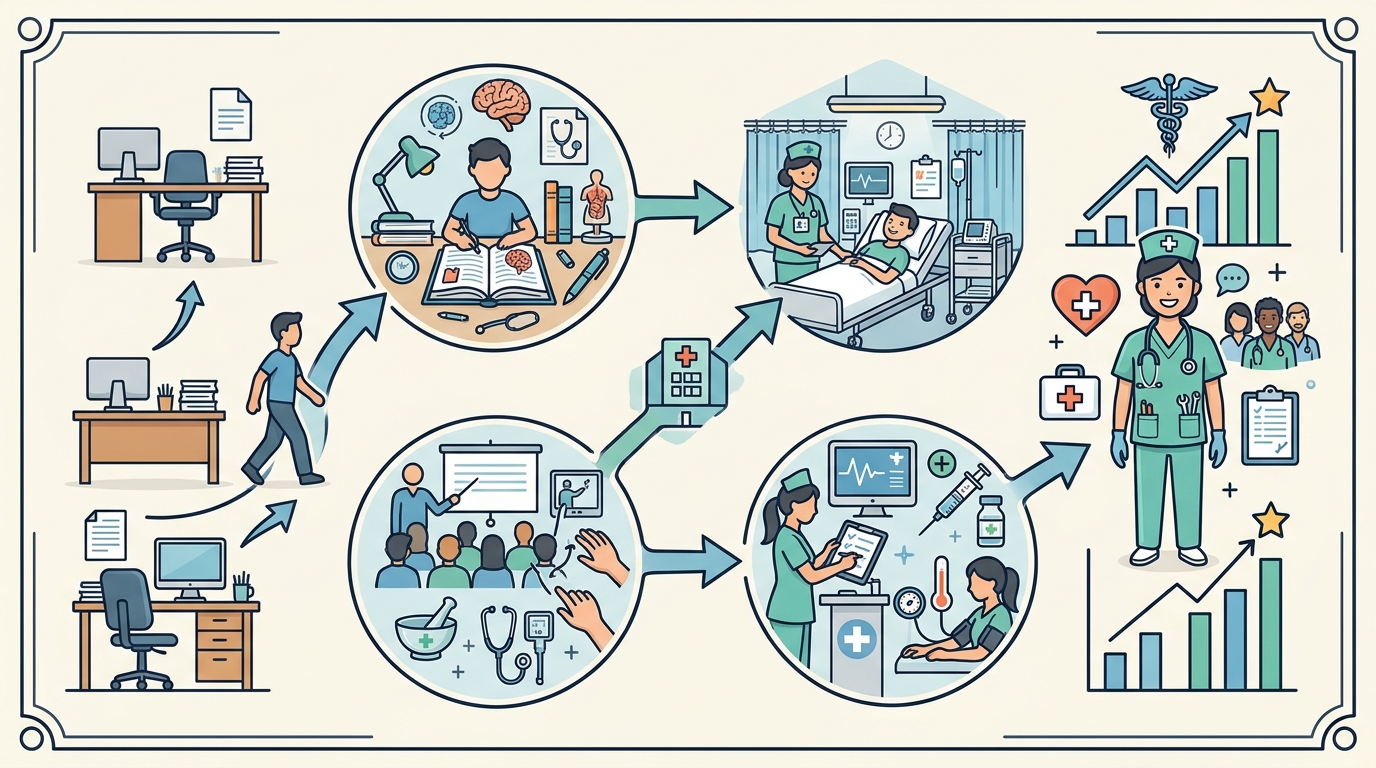
- Finish a bachelor's degree with the prerequisite science courses — typically four years, covering anatomy, physiology, microbiology, chemistry and statistics. BLS (2025) notes that PA programs expect prior health care experience, so many applicants spend one to two years working as an EMT, paramedic, medical assistant, CNA or phlebotomist while completing prerequisites.
- Complete an accredited master's degree PA program — usually about two to three years of full-time study, split between classroom and laboratory instruction and supervised clinical rotations in areas such as family medicine, surgery, emergency medicine, pediatrics and psychiatry. The Accreditation Review Commission on Education for the Physician Assistant (ARC-PA) accredits PA education programs in the United States; confirm a program's accreditation status with ARC-PA before applying.
- Pass the PANCE — the Physician Assistant National Certifying Examination, a multiple-choice exam administered by the National Commission on Certification of Physician Assistants (NCCPA). Passing it earns the PA-C credential.
- Get licensed in your state — every state requires PAs to be licensed (BLS, 2025), and requirements, prescribing authority and supervision rules differ from state to state, so apply through your state's medical or PA licensing board. Check their rules directly rather than assuming another state's apply.
- Apply for first jobs and keep certification current — new graduates commonly enter through hospital and health system career portals, physician group practices, and postgraduate PA residency or fellowship programs in specialties such as surgery and emergency medicine. NCCPA requires certified PAs to maintain certification through continuing medical education and a recertification exam on the cycle NCCPA sets. Certified PAs and PA students can also join the American Academy of Physician Associates (AAPA), which sets its own membership eligibility criteria. O*NET OnLine (2026) classifies the occupation among those requiring extensive preparation, so plan for a multi-year route.
Frequently asked questions
How does pay progress over a PA career?
Most PAs start on a salary near the lower end of the national range and move up with specialty experience, procedural skill and responsibility such as lead PA or surgical first assist. Night, weekend and call work often adds differentials. Check the median plus the lowest and highest deciles published by BLS for May 2025, and your own state's figures, since local pay differs.
What are the schedule and physical demands really like?
BLS (2025) reports that most physician assistants work full time and that some work evenings, nights and weekends, because patients need care around the clock. Hospital and emergency roles often run 10- or 12-hour shifts with on-call duty. The job can involve standing for long periods, plus lifting and repositioning patients, so the physical toll is a genuine tradeoff.
Can I become a PA without health care experience first?
Some programs admit applicants straight from a bachelor's degree, but BLS (2025) notes that PA programs generally expect previous health care experience. Patient-contact roles such as EMT, paramedic, medical assistant or nursing assistant are common routes. Check each program's stated hour requirements and which roles count, because they vary widely between schools.
How is a PA different from a nurse practitioner or a physician?
PAs train in a medical model through an ARC-PA accredited master's program and practice as part of a team with physicians and surgeons. Nurse practitioners train through nursing education and licensure. Physicians complete medical school plus residency, a considerably longer path. Scope of practice, prescribing authority and supervision requirements for PAs are set state by state.
Is demand for physician assistants growing?
BLS (2025) projects employment growth for physician assistants over the 2025-35 projection period and publishes an estimate of average annual job openings over that decade, which includes replacing workers who leave the occupation. Growth is not evenly spread: rural areas and primary care often recruit harder than saturated urban specialty markets. Read the current Occupational Outlook Handbook entry for the figures.
Can I switch specialties once I am certified?
Yes, and this flexibility is one of the role's practical advantages. The PA-C credential is general rather than specialty-locked, so moving from, say, family medicine to dermatology or orthopedics is possible with on-the-job training. Some PAs use postgraduate residency or fellowship programs to make the switch. Employers will still expect evidence you can handle the new specialty's procedures.
Sources
- U.S. Bureau of Labor Statistics — Physician Assistants : Occupational Outlook Handbook (2025)
- National Commission on Certification of Physician Assistants (NCCPA) — Become Certified

Written by
Priya tracks wages, layoffs, and the slow shifts in what counts as a stable job. She writes for readers trying to make sense of numbers that rarely match their own experience.