How to Become a Medical Coder
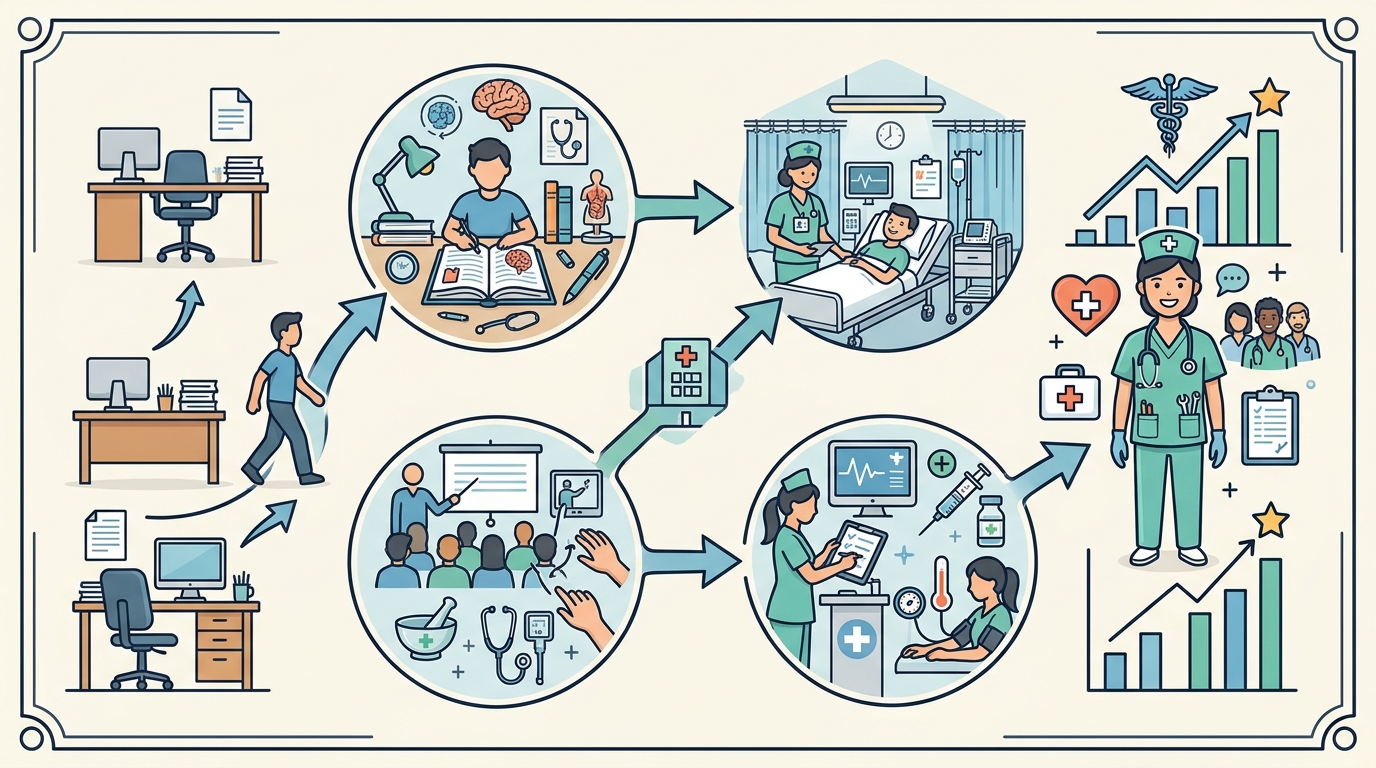
The work sits at a computer rather than at the bedside, and the route in runs through medical terminology, code sets and a certification exam.
Quick answer
- Fastest path: a high school diploma plus coding training, then the CCA exam — AHIMA requires only a high school diploma to sit it, and recommends about six months of hands-on coding experience or an approved coding program (AHIMA, undated).
- Typical timeline: under a year for a certificate route, about two years for an associate's degree in health information technology, plus exam preparation and scheduling time.
- Minimum credential: a high school diploma or equivalent; employers may prefer certified applicants or expect certification shortly after hire (U.S. Bureau of Labor Statistics, 2025).
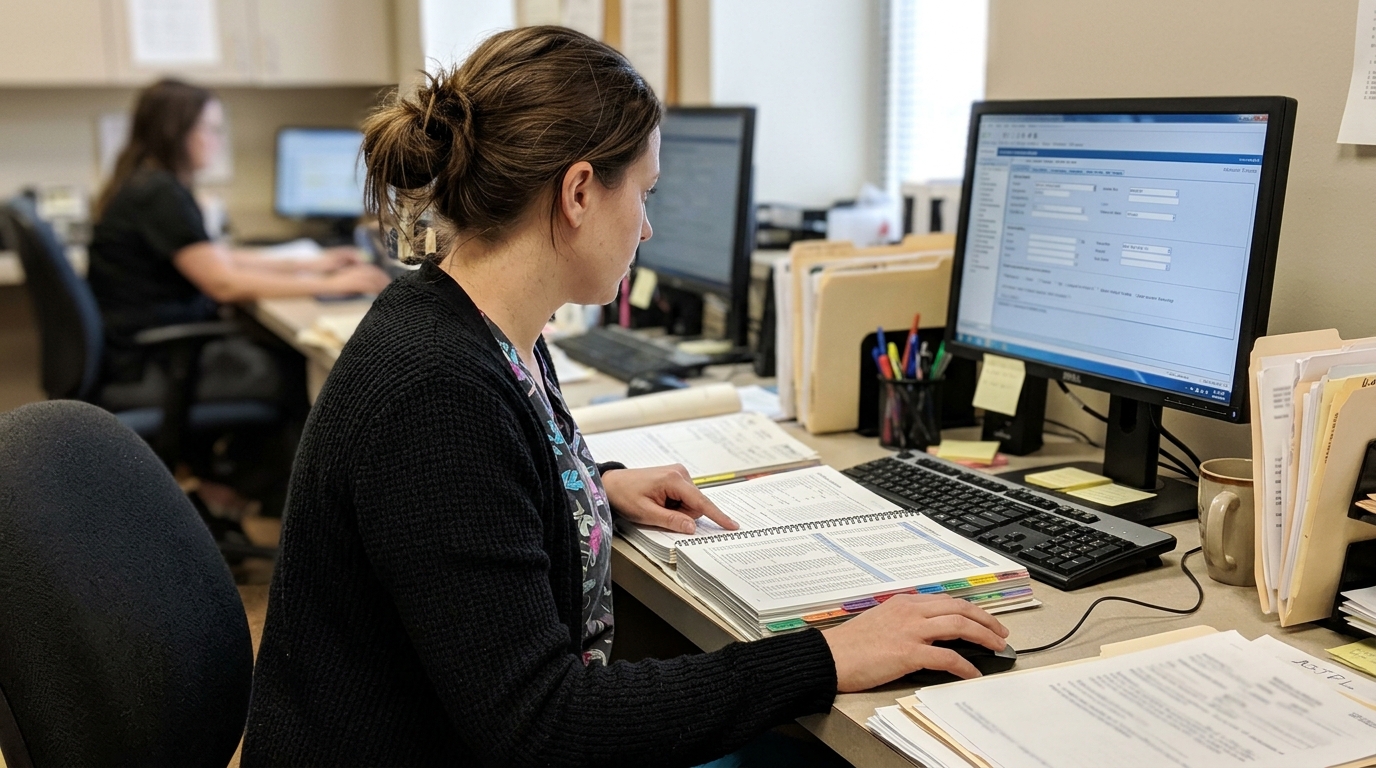
Medical coders read clinical documentation and translate diagnoses, procedures and services into standardized codes from systems such as ICD and CPT so that records and claims are accurate. The U.S. Bureau of Labor Statistics groups this work under medical records specialists, and reports that typical entry-level education is a postsecondary nondegree award — a certificate — though some people qualify with a high school diploma plus healthcare experience and other roles call for an associate's or bachelor's degree (U.S. Bureau of Labor Statistics, 2025).
Most people enter through a community college or technical school coding certificate and then sit a credential exam such as AHIMA's Certified Coding Associate (CCA) or AAPC's Certified Professional Coder (CPC).
Is This Career Right for You?
This is one of the few health-related occupations with no direct hands-on patient care, and specialists typically work at a computer (U.S. Bureau of Labor Statistics, 2025). That single fact decides it for many readers. It suits people who want to work in healthcare but not touch patients, who can hold concentration through long stretches of screen work, and who are comfortable reading physician notes, operative reports and lab results closely enough to catch a missing detail. It does not suit someone who wants patient contact, physical variety or a job that moves around a building all day.
Expect a seated role with keyboard and monitor work for most of the shift, which brings the usual risks of eye strain and repetitive strain unless your workstation is set up well. Most medical records specialists work full time, and in facilities that are always open, such as hospitals, you may work shifts including nights or weekends (U.S. Bureau of Labor Statistics, 2025). Smaller clinics and physician practices are more likely to run standard business hours.
The pressure in this job comes from accuracy and turnaround: claims cycles, coding backlogs and audits mean your work is checked, corrected and sometimes rejected. If you find it satisfying to resolve a documentation query rather than frustrating, that part of the job will read as detailed problem-solving instead of nitpicking.
Steps to Becoming a Medical Coder
- Finish high school or earn an equivalent (timeline varies). A high school diploma is the floor: AHIMA requires candidates for the Certified Coding Associate (CCA) exam to hold a high school diploma (AHIMA, undated), and a diploma plus healthcare-setting experience is enough to qualify for some coding positions (U.S. Bureau of Labor Statistics, 2025).
- Choose a training route and enrol (under a year for a certificate, about two years for an associate's degree). Community colleges and technical schools offer certificate and associate's degree programs covering medical terminology, health data standards and coding systems (U.S. Bureau of Labor Statistics, 2025). Ask each school for its published program length and current tuition before you commit — both vary by state and by institution.
- Build the knowledge the exams actually test (runs alongside your program). That means anatomy and physiology, medical terminology, and basic ICD and CPT coding — the same ground AHIMA names in its recommended preparation for CCA candidates (AHIMA, undated).
- Get hands-on coding practice (AHIMA recommends about six months). AHIMA recommends, though does not require, that CCA candidates have at least six months of experience directly applying codes, or have completed an AHIMA-approved coding program (PCAP), or other coding training covering those subject areas (AHIMA, undated). A practicum, apprenticeship or records-department job all count toward this.
- Pick your certification and prepare for the exam (allow several weeks to months of study). The CCA follows a four-step process: meet eligibility requirements, prepare, apply and schedule, then maintain the certification (AHIMA, undated). AAPC's Certified Professional Coder (CPC) exam consists of 150 multiple-choice questions over five hours and 40 minutes with two breaks, covering 24 subject areas including anesthesia, radiology and medicine, drawn from the CPT code manual and related coding knowledge (medicalbillingandcoding.org citing AAPC, 2023).
- Apply, pay the fee and sit the exam (cost varies by membership status). AHIMA publishes separate CCA exam fees for members and non-members, and AAPC charges a set CPC exam fee with a discounted rate for members plus annual membership dues, with a lower student rate (AHIMA, undated; medicalbillingandcoding.org citing AAPC, 2023). Check the current figures on each body's own site before you budget.
- Take an entry-level role. Entry-level coders usually work on shorter, more routine encounters — outpatient visits, straightforward diagnoses — with their work reviewed by a senior coder or auditor. Employers may prefer to hire specialists who already hold certification, or may expect applicants to earn it shortly after being hired (U.S. Bureau of Labor Statistics, 2025).
- Maintain your credential and specialise. Certifications require ongoing maintenance, and experienced coders move into inpatient coding, risk adjustment, auditing or denials work, where they interpret ambiguous documentation and query physicians directly rather than coding from clean notes.
- Plan advancement (one to four years of further study, depending on route). Medical records specialists may advance to health information technologist/medical registrar or medical and health services manager roles after completing a higher certification program or earning a degree in health information technology, with requirements varying by facility (U.S. Bureau of Labor Statistics, 2025).
Education and Certification Options
| Path | Typical time | Approximate cost | Required or preferred |
|---|---|---|---|
| High school diploma plus healthcare-setting experience | Varies with the job you hold | No tuition cost | Enough for some positions, but not most coding-specific roles (BLS, 2025) |
| Postsecondary certificate from a community college or technical school | Shorter than a degree; confirm length with the school | Published per-credit tuition; varies by state and institution | The typical entry-level education for the occupation (BLS, 2025) |
| AHIMA-approved coding program (PCAP) | Program-dependent | Set by the provider | Not required, but accepted by AHIMA in place of six months of coding experience for CCA candidates (AHIMA, undated) |
| Associate's degree in health information technology | About two years full time | Community college tuition rates; check the school | Required by some employers; useful for advancement (BLS, 2025) |
| Bachelor's degree in health information management | About four years full time | University tuition; check the institution | Needed for some positions and for moves into management (BLS, 2025) |
| AHIMA Certified Coding Associate (CCA) | Exam plus preparation time | Separate member and non-member exam fees published by AHIMA | Often preferred by employers, or expected shortly after hire (BLS, 2025; AHIMA, undated) |
| AAPC Certified Professional Coder (CPC) | 150 questions in 5 hours 40 minutes, plus preparation | Set exam fee with a member discount; annual AAPC dues, lower for students | Often preferred by employers; widely requested in outpatient coding roles |
Where to Find Medical Coder Jobs
- AHIMA — the association behind the CCA credential runs career resources and a job board, and lists AHIMA-approved coding programs (PCAP) that double as recruiting pipelines.
- AAPC — the body behind the CPC exam maintains a job board and local chapters, where in-person meetings are a practical way to meet hiring coding managers in your metro area.
- CareerOneStop — cited by the Bureau of Labor Statistics as a source of information on certifications relevant to medical records specialists and medical coders (U.S. Bureau of Labor Statistics, 2025); use its certification and training finders alongside its job search tools.
- Hospital and health-system career portals — hospitals are always-open facilities that staff coding and health information management around the clock (U.S. Bureau of Labor Statistics, 2025), so apply directly through the system's own careers site rather than waiting for aggregator listings.
- Physician practices, outpatient clinics and ambulatory surgery centers — smaller employers often post only locally or hire through word of mouth from a nearby college's program.
- Community college and technical school career services — programs that place students in practicums usually keep standing relationships with local records departments; ask about placement before you enrol.
- Healthcare staffing and revenue-cycle agencies — these fill temporary coding backlogs and audit projects, which is a realistic way to accumulate the hands-on coding months AHIMA recommends.
- Government hiring portals — federal, state and county health agencies post records and coding roles on their own systems, and these postings usually spell out the exact credential required.
Frequently asked questions
What does it cost to get certified as a medical coder?
The two main costs are training and the exam. AHIMA publishes separate CCA exam fees for members and non-members, and AAPC charges a set CPC exam fee with a discounted rate for members plus annual membership dues, with a lower student rate (AHIMA, undated; medicalbillingandcoding.org citing AAPC, 2023). Check both organizations' current fee pages before budgeting, and ask your college for its per-credit tuition rather than relying on a national average.
Do I need a degree, or is a certificate enough?
Typical entry-level education for the occupation is a postsecondary nondegree award — a certificate — although some people qualify with a high school diploma and healthcare-setting experience, and other employers require an associate's or bachelor's degree (U.S. Bureau of Labor Statistics, 2025). Read the postings in your own area before choosing a program, because the requirement varies by employer and by state. A degree in health information technology matters most if you want to advance into health information technologist or health services manager roles (U.S. Bureau of Labor Statistics, 2025).
Can I sit a coding exam with no work experience?
Yes, for the entry-level credential. AHIMA requires only a high school diploma to sit the CCA exam, and recommends — but does not require — at least six months of experience directly applying codes, or completion of an AHIMA-approved coding program (PCAP) or other training covering anatomy and physiology, medical terminology and basic ICD/CPT coding (AHIMA, undated). Without that background, the exam is considerably harder to pass on a first attempt.
How is pay structured, and where do I check current rates?
Coders are usually paid hourly or on a salary, sometimes with production or accuracy standards attached in high-volume settings. The Bureau of Labor Statistics publishes a median annual and hourly wage for medical records specialists, plus the figures below which the lowest 10 percent earned and above which the highest 10 percent earned (U.S. Bureau of Labor Statistics, 2025). Look those up in the current Occupational Outlook Handbook entry, and check state-level data there too, since pay varies widely by state and employer type.
Will employers run a background check?
Expect one. Healthcare employers commonly require background screening and identity verification before granting access to patient records and clinical systems, and the specific checks are set by the employer and by state law. Ask what the screening covers at the offer stage, and contact a licensed attorney in your state if you have a record and need to know how it will be treated.
Sources
- U.S. Bureau of Labor Statistics — Medical Records Specialists : Occupational Outlook Handbook (2025)
- AHIMA — Certified Coding Associate (CCA) | AHIMA

Written by
Priya tracks wages, layoffs, and the slow shifts in what counts as a stable job. She writes for readers trying to make sense of numbers that rarely match their own experience.