Career Paths
Career Paths guides on Jobladderhq.
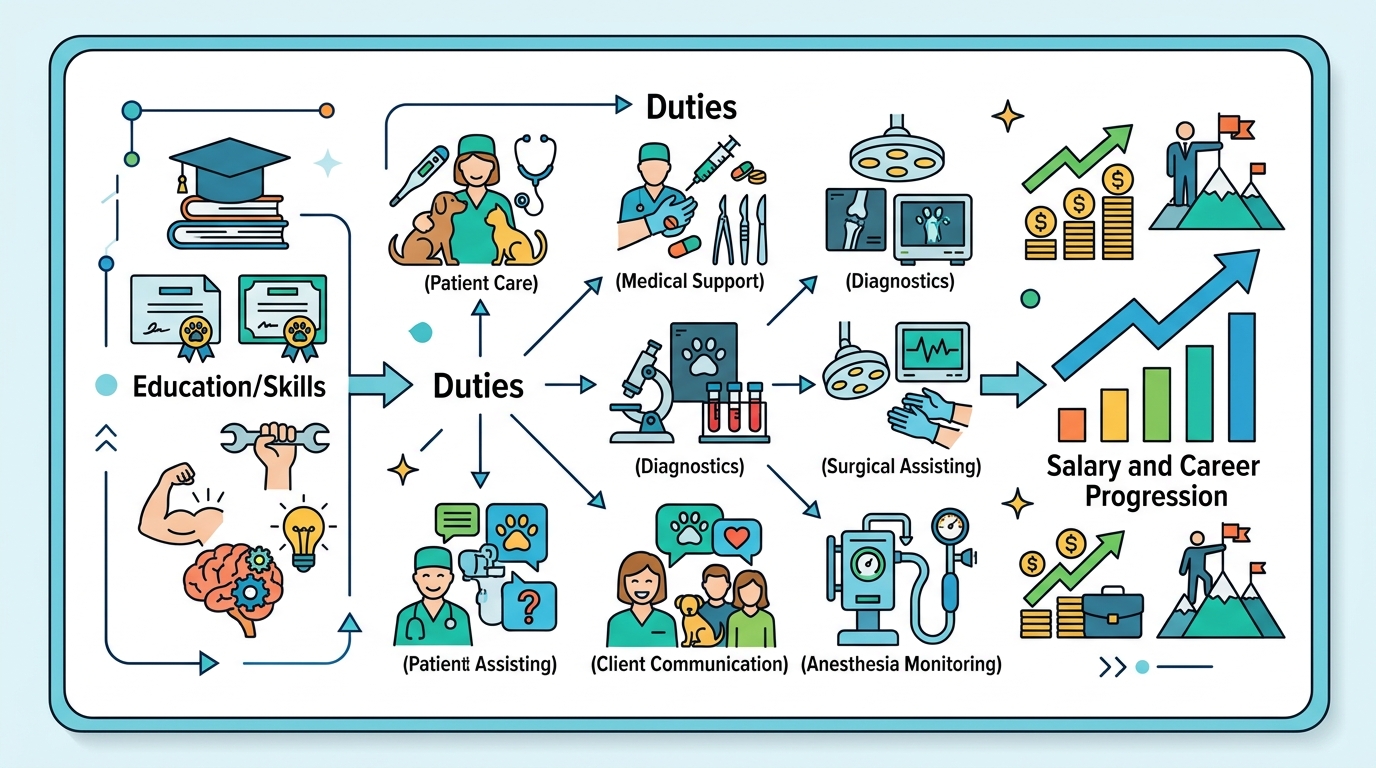
What Does a Vet Tech Do? Duties, Skills, and Salary Explained
A veterinary technologist or technician is the clinical support behind a veterinarian: you restrain and handle patients, draw blood, take radiographs, give and monitor anesthesia, prepare surgical instruments, and explain home care to owners. Most of the job is hands-on animal work in a clinic, plus a steady amount of charting in practice management software.
Marisol Tanaka-Reyes · 8 min read
Becoming a Cybersecurity Analyst: Education, Licensing, and First-Job Steps
Most cybersecurity analyst jobs are filled by people who already worked in IT. The U.S. Bureau of Labor Statistics (2025) lists a bachelor's degree in computer and information technology — or a related field such as engineering or math — as the typical entry-level education for information security analysts, and notes that these workers typically need prior work experience in a related occupation. There is no state license for this job; instead, many employers prefer candidates who hold an information security certification (U.S. Bureau of Labor Statistics, 2025).
Marisol Tanaka-Reyes · 10 min read
How to Become a Software Developer Without a Computer Science Degree
You can become a software developer without a computer science degree, but you are working against a default: the U.S. Bureau of Labor Statistics lists a bachelor's degree as the typical entry-level education for software developers, with no work experience or on-the-job training needed to enter (U.S. Bureau of Labor Statistics, 2025). What you cannot skip is proof of skill — working code someone else can read, and a route that puts you in front of employers who hire on evidence rather than transcripts.
Priya Chandrasekaran · 10 min read
UX Designer vs. Product Manager: Which Career Path Is Right for You?
UX design and product management sit next to each other on the same teams, but they are accountable for different things: a UX designer answers for whether the interface works for the person using it, while a product manager answers for what the team builds, in what order, and what gets cut. The design path usually starts with a bachelor's degree and a portfolio; the management path usually asks for a degree plus several years of related work first, which makes it hard to enter straight out of school.
Noor Abdallah · 9 min read
How to Become a Data Analyst: Step-by-Step Guide
Becoming a data analyst usually means pairing a credential employers recognise with proof that you can actually pull, clean and explain data. Most analyst job listings screen for a bachelor's degree — computer systems analysts and operations research analysts typically need one to enter the occupation (U.S. Bureau of Labor Statistics, 2025), and Business Intelligence Analysts sit in Job Zone Four, where most occupations require a four-year bachelor's degree but some do not (ONET OnLine, 2024).
Wyatt Holloway · 9 min read
How to Become an Electrician: Step-by-Step Guide
Becoming an electrician means getting hired into an apprenticeship, not graduating first and job-hunting after. Most electricians learn the trade in a 4- or 5-year apprenticeship that provides about 2,000 hours of paid on-the-job training each year plus technical instruction, and a high school diploma or equivalent is the baseline requirement (U.S. Bureau of Labor Statistics, 2025).
Noor Abdallah · 10 min read
Physician Assistant Career Overview: Is This the Right Path for You?
Physician assistants (also called physician associates) examine patients, order and interpret tests, diagnose illness, prescribe medicine and assist in procedures, working as part of a team with physicians and surgeons. It is a licensed clinical role that requires a master's degree from an accredited program plus a national certifying exam, so the entry route is long and structured rather than flexible.
Priya Chandrasekaran · 9 min read
Social Worker vs. Therapist: Which Career Path Is Right for You?
Social work and therapy overlap in the counselling room and diverge almost everywhere else. Social workers are trained to move between a person and the systems around them — benefits, housing, courts, schools, child protection — and can practise in some nonclinical roles with a bachelor's degree in social work, while every state licenses clinical social workers (U.S. Bureau of Labor Statistics, 2025). Therapists, including marriage and family therapists, need a master's degree and a state licence before they can see clients at all (U.S. Bureau of Labor Statistics, 2025).
Marisol Tanaka-Reyes · 10 min read
What It's Really Like to Work as a Project Manager
Project managers keep other people's work on schedule and on budget. The day is built around plans, status checks, cost reports and documents, with most of the technical output produced by engineers, builders, developers or analysts rather than by you. The U.S. Bureau of Labor Statistics reported a median annual wage of $102,320 for project management specialists in May 2025, and typical entry is a bachelor's degree plus experience in a related occupation.
Desmond Okafor · 9 min read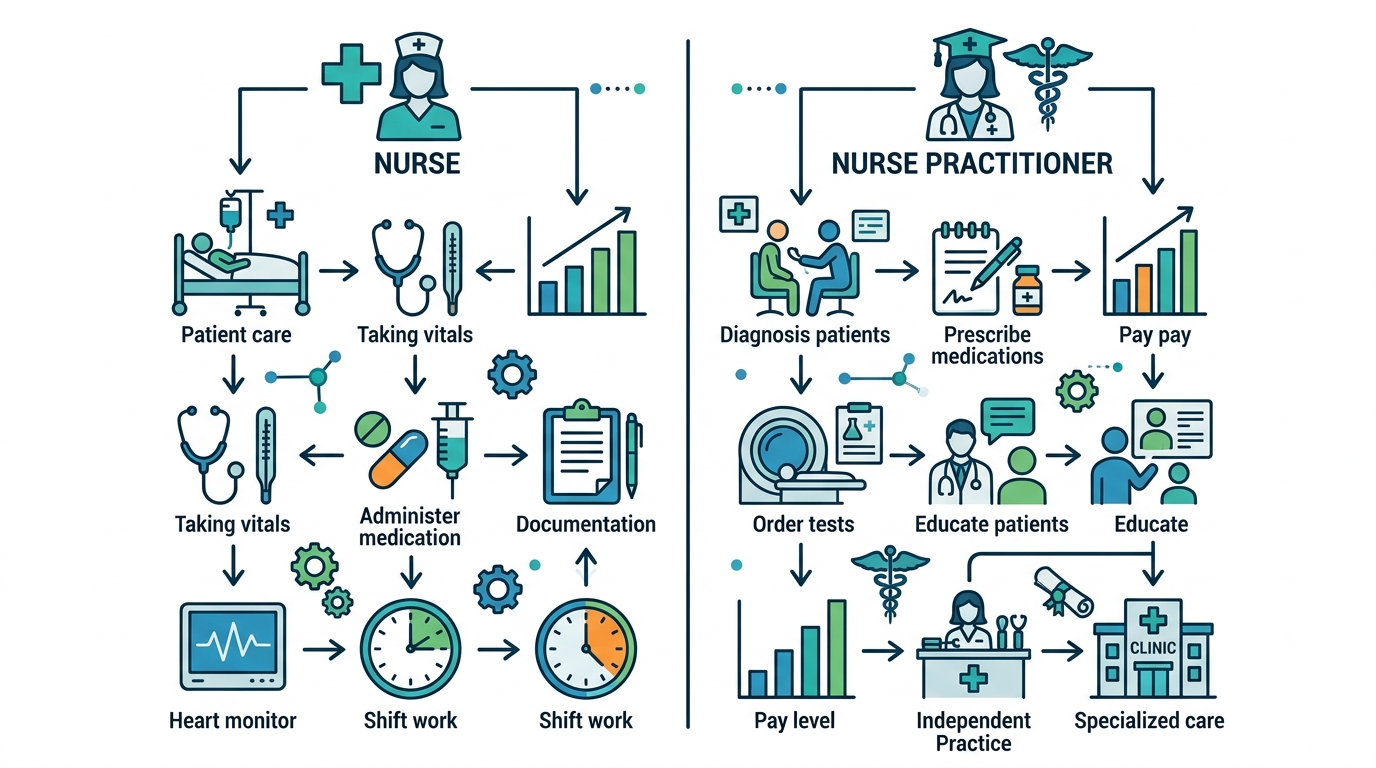
Nurse vs. Nurse Practitioner: Pay, Duties, and Day-to-Day Differences
A registered nurse assesses patients, administers medicines and treatments, and carries out and contributes to care plans; a nurse practitioner is an advanced practice registered nurse who diagnoses conditions, develops treatment plans, and delivers primary or specialty care (U.S. Bureau of Labor Statistics, 2025). The biggest practical split is authority and schooling: RNs enter with a bachelor's, associate's, or diploma nursing credential plus licensure, while NPs need at least a master's degree in an APRN role, state licensure, and a national certification exam (U.S. Bureau of Labor Statistics, 2025).
Priya Chandrasekaran · 9 min read
HR Generalist Career Overview: Is This the Right Path for You?
An HR generalist handles a bit of everything in a human resources department: recruiting and interviewing applicants, placing new hires, and often compensation and benefits, training, and employee relations as well (U.S. Bureau of Labor Statistics, 2025). It suits people who like switching between forms, systems and difficult conversations in the same afternoon, and who can keep confidential information to themselves.
Wyatt Holloway · 9 min read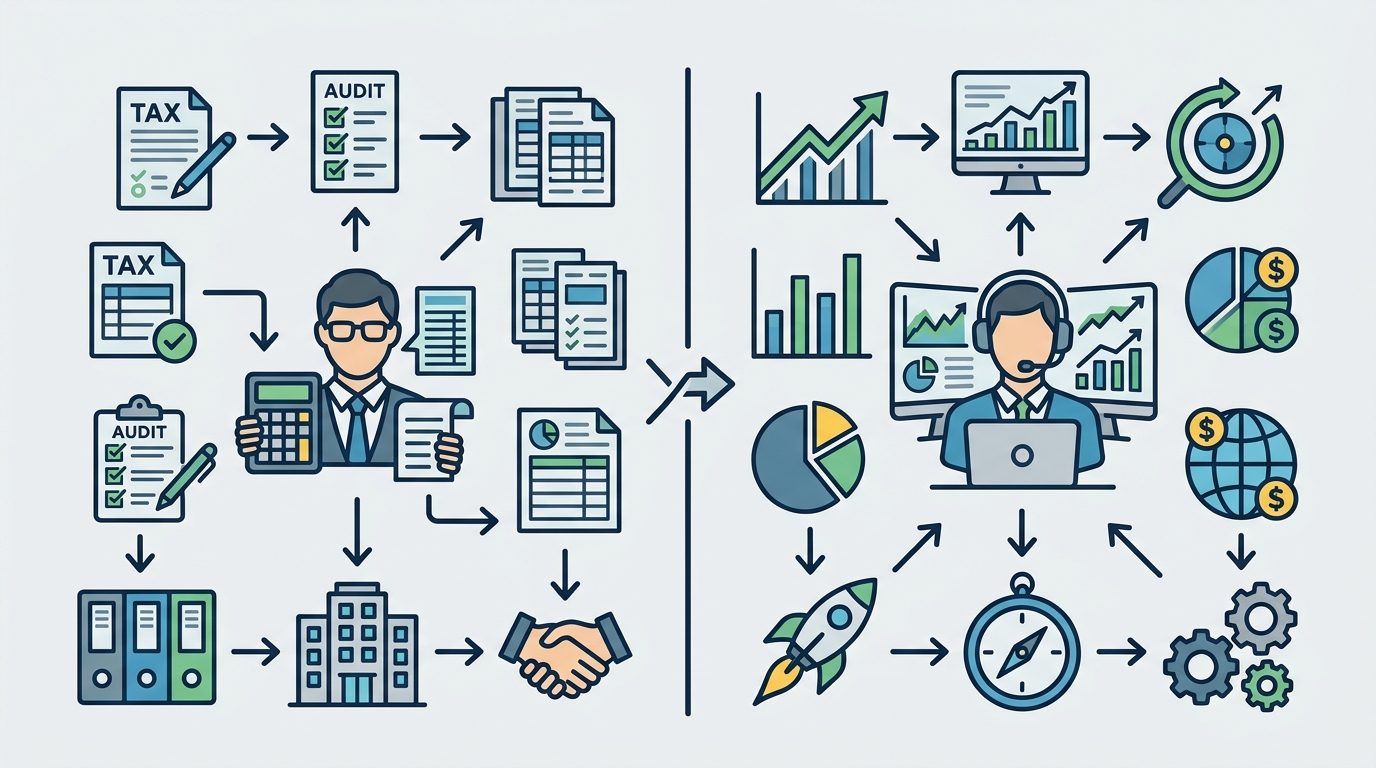
Accountant vs. Financial Analyst: Which Career Path Is Right for You?
Accountants prepare and examine financial records; financial analysts research financial data, forecast trends, and write reports recommending what a business or investor should do (U.S. Bureau of Labor Statistics, 2025). Both usually start with a bachelor's degree, but accounting has a clearer licensing ladder through the CPA, while analyst roles lean more on forecasting skill and, for some jobs, employer-sponsored FINRA licensure.
Desmond Okafor · 9 min read