Respiratory Therapist Career Path: Education, Certifications, and Experience
What the work looks like on a hospital floor, which exams the NBRC gives, and how state licensure fits in before your first shift.
Quick answer
- Fastest common path: a CoARC-accredited associate degree in respiratory care, then the NBRC exams (U.S. Bureau of Labor Statistics, 2025).
- Typical timeline: roughly 24 months of full-time study after prerequisites, or about four years for a bachelor's degree.
- Minimum credential to practice: a license in every state except Alaska, where national certification is recommended (U.S. Bureau of Labor Statistics, 2025); the CRT is described as the minimum credential for license applications (Respiratory Therapy Zone, 2026), while some employers require Registered Respiratory Therapist (RRT) certification at hire or within a set time on the job (U.S. Bureau of Labor Statistics, 2025).
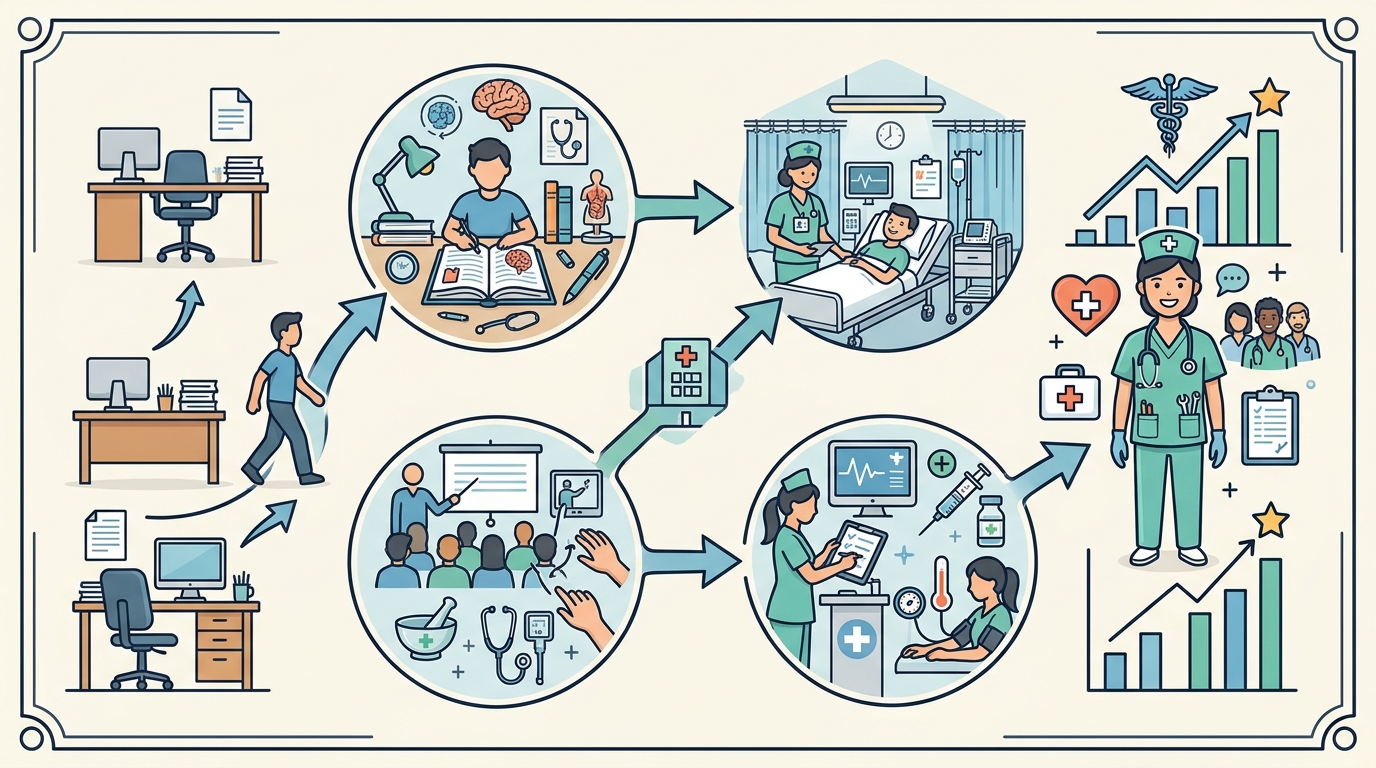
Becoming a respiratory therapist usually means finishing an associate degree in respiratory care from a program accredited by the Commission on Accreditation for Respiratory Care, passing National Board for Respiratory Care credentialing exams, and then applying for a state license. The U.S. Bureau of Labor Statistics (2025) reports that respiratory therapists typically need an associate's degree, though some employers prefer a bachelor's.
Most people reach their first paid shift in about two to four years from starting prerequisites, depending on whether they study full time and which degree they choose.
Is This Career Right for You?
Most respiratory therapists work full time, and because hospitals never close, shifts often include nights, weekends and holidays (U.S. Bureau of Labor Statistics, 2025). Twelve-hour shifts are common in hospital respiratory departments, and you may be on the rapid-response or code team, which means walking or running between units with a ventilator or transport bag for much of the shift.
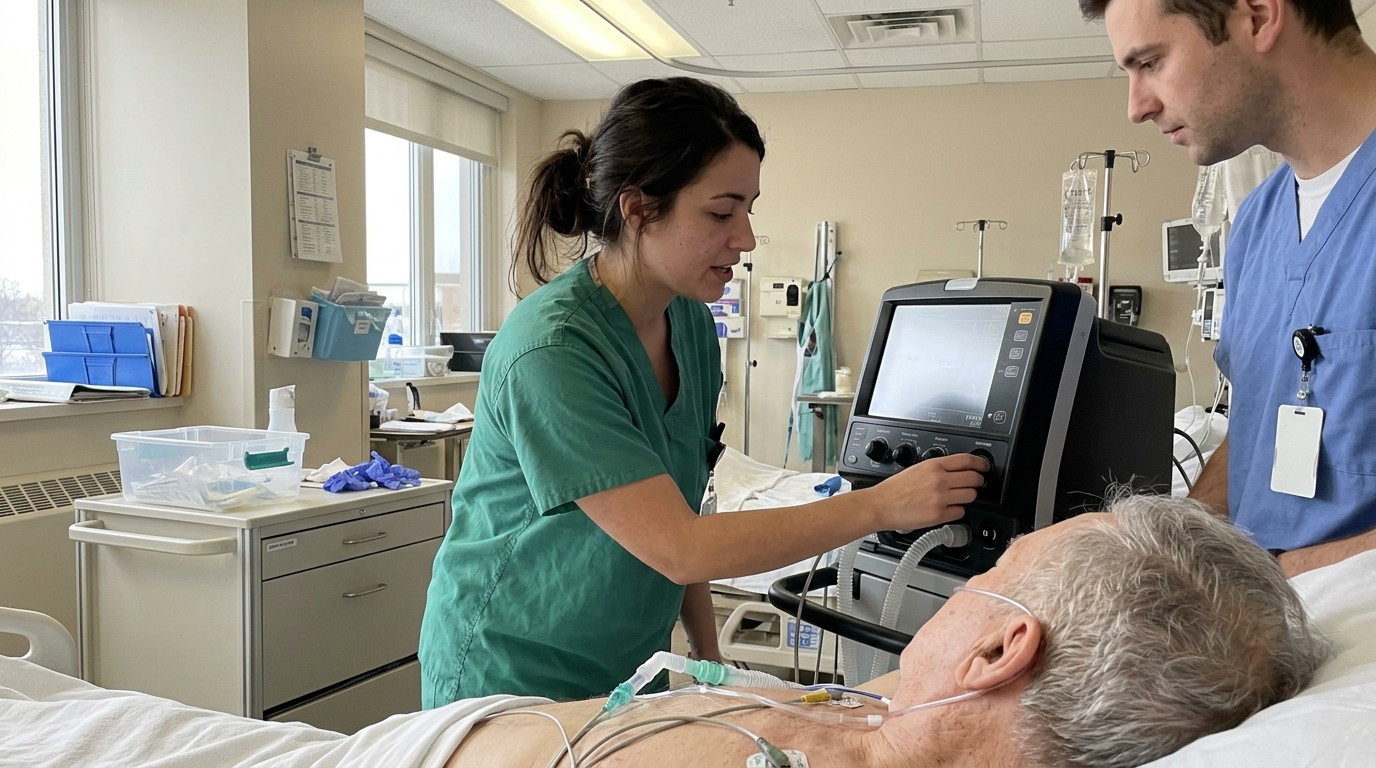
The physical side is real. You will reposition patients for chest physiotherapy to clear mucus, push ventilators and gas cylinders between rooms, draw arterial blood samples and run them through a blood gas analyzer, and connect patients to ventilators in emergency settings (U.S. Bureau of Labor Statistics, 2025). You will be in close contact with respiratory infections and will wear protective equipment for long stretches.
This work suits people who stay methodical under time pressure, who are comfortable with needles and body fluids, and who can explain an inhaler or home ventilator to a frightened patient without rushing. It is a poor fit if you need predictable daytime hours, want to avoid emergency resuscitations, or dislike documenting every treatment and reading back values to a physician.
Settings vary: intensive care and emergency departments are high-acuity and unpredictable, while sleep labs, pulmonary function testing and home care involve more scheduled appointments and patient teaching.
Steps to Becoming a Respiratory Therapist
- Finish high school or earn a GED, then complete prerequisites. Typical prerequisites include chemistry, biology and algebra; one to two semesters at a community college is common if you did not take them in high school (Respiratory Therapy Zone, 2026).
- Choose an accredited respiratory care program. Programs are offered by colleges and universities, vocational-technical institutes and the Armed Forces, and completion of a program accredited by the Commission on Accreditation for Respiratory Care (CoARC) may be required for licensure (U.S. Bureau of Labor Statistics, 2025). Associate programs generally run about two years full time; bachelor's programs about four (Mayo Clinic College of Medicine and Science, undated). Tuition varies widely by school and residency status — check the program's published cost sheet before applying.
- Complete coursework and supervised clinicals. Expect human anatomy and physiology, chemistry, physics, microbiology, pharmacology and math, plus a supervised clinical component (U.S. Bureau of Labor Statistics, 2025). Clinical rotations are usually unpaid and scheduled during hospital hours, so plan work and childcare around them.
- Sit for the Certified Respiratory Therapist (CRT) exam. Candidates typically take the CRT exam first through the National Board for Respiratory Care (U.S. Bureau of Labor Statistics, 2025; CertOutlook, 2026). The NBRC publishes current application and exam fees — budget from its fee schedule rather than an estimate.
- Take the additional exam for Registered Respiratory Therapist (RRT). After passing the CRT exam, you may take a further exam to earn RRT certification, and some employers require RRT before hiring or within a specified time on the job (U.S. Bureau of Labor Statistics, 2025). Most graduates attempt both within a few months of finishing school.
- Apply for a state license. Licensure is required in all states except Alaska, where national certification is recommended; requirements vary by state and usually include passing a state or professional certification exam (U.S. Bureau of Labor Statistics, 2025). Application processing time and fees are set by each state board.
- Start in an entry-level hospital or home care role. New therapists usually spend several weeks to a few months in orientation and precepted shifts on general medical-surgical floors, delivering aerosolized medications, running pulmonary function tests and documenting responses, before being signed off for intensive care assignments.
- Advance into specialty or senior roles. With experience, therapists take on adult critical care, neonatal and pediatric units, sleep diagnostics, lead or supervisor roles, clinical education, or home care where you teach patients and families to use ventilators and life-support equipment (U.S. Bureau of Labor Statistics, 2025). Keep up continuing education and renewal requirements set by your state board and the NBRC (Research.com, undated).
Education and Certification Options
| Path | Typical time | Approximate cost | Required or preferred |
|---|---|---|---|
| Associate degree in respiratory care, CoARC-accredited | About 2 years full time after prerequisites | Varies by college and residency status — check the program's tuition page | Required in practice: an associate degree is the typical entry credential (U.S. Bureau of Labor Statistics, 2025), and CoARC accreditation may be required for licensure |
| Bachelor's degree in respiratory therapy/respiratory care | About 4 years full time | Higher than an associate program; varies by institution | Preferred by some employers (U.S. Bureau of Labor Statistics, 2025) and common for management, education and research tracks (Mayo Clinic College of Medicine and Science, undated) |
| Armed Forces respiratory therapy training | Set by the service branch | Covered by the service | An accepted route; the Armed Forces are listed among providers of respiratory therapy education (U.S. Bureau of Labor Statistics, 2025) |
| NBRC Certified Respiratory Therapist (CRT) exam | Scheduled after graduation; study time varies | NBRC publishes current exam fees; a third-party guide lists a fee range (CertOutlook, 2026) | Required as the entry credential for license applications (Respiratory Therapy Zone, 2026) |
| NBRC Registered Respiratory Therapist (RRT) exam | Taken after passing the CRT exam | NBRC publishes current exam fees | Required by some employers before hiring or within a set period after hire (U.S. Bureau of Labor Statistics, 2025) |
| State license | Processing time set by each state board | Application and renewal fees set by the state | Required in all states except Alaska, where national certification is recommended (U.S. Bureau of Labor Statistics, 2025) |
On-the-job training alone is not a route into this occupation: you cannot be licensed without the accredited education and credentialing exams described above (Research.com, undated).
Where to Find Respiratory Therapist Jobs
- Hospital system career portals. Acute-care hospitals employ the largest share of respiratory therapists; look for postings titled "Respiratory Therapist," "Registered Respiratory Therapist (RRT)" or "Certified Respiratory Therapist (CRT)" and check whether the posting demands RRT at hire.
- Your program's clinical rotation sites. Students are often hired where they completed clinicals; ask the clinical coordinator which sites have hired recent graduates and introduce yourself to the respiratory department manager during your rotation.
- The CoARC directory of accredited programs. Use it to confirm your program's accreditation status before you enrol and to find programs with established hospital partnerships (U.S. Bureau of Labor Statistics, 2025).
- State licensing board websites. Each board lists application steps, renewal rules and, in many states, a verification lookup employers use — getting your file complete early removes a common hiring delay (Research.com, undated).
- Home care and durable medical equipment providers. These employers hire therapists to set up and teach patients and families to use ventilators and life-support equipment at home (U.S. Bureau of Labor Statistics, 2025); hours are often more scheduled than hospital shifts.
- Skilled nursing, long-term acute care and pulmonary rehabilitation facilities. These settings take ventilator-dependent patients and frequently hire therapists who want fewer emergency calls.
- Armed Forces health services. The Armed Forces both train and employ respiratory therapists (U.S. Bureau of Labor Statistics, 2025); recruiters can explain service commitments.
- Travel and per-diem healthcare staffing agencies. These fill short-term hospital contracts, usually requiring RRT certification plus one to two years of acute-care experience.
Frequently asked questions
How much does it cost to become a respiratory therapist?
The main costs are tuition for a CoARC-accredited associate or bachelor's program, NBRC exam fees, and a state licence application fee. Tuition varies sharply between public community colleges and private or four-year institutions, so compare published costs for the specific programs you are considering. The NBRC lists current fees for the CRT and RRT exams on its own site, and a third-party guide lists an exam fee range (CertOutlook, 2026); state boards publish licence and renewal fees separately.
How long does it take from starting school to working?
Plan on about two years of full-time study for an associate degree after prerequisites, or roughly four years for a bachelor's degree (Mayo Clinic College of Medicine and Science, undated). Add time for the NBRC CRT and RRT exams and for your state board to process the licence application. Part-time students and those needing a semester or two of chemistry, biology and algebra first should expect longer.
Do I need a background check or a minimum age?
Clinical rotation sites almost always require a criminal background check, drug screening and immunisation records before you can touch a patient, and state licensing boards ask about criminal history on the application. There is no single national age rule; eligibility is set by the program and the state board. Contact the respiratory care board in the state where you plan to work before enrolling if you have a record that might affect licensure.
Can I work with just the CRT, or do I need the RRT?
The CRT is described as the minimum credential for applying for a licence to practise respiratory care (Respiratory Therapy Zone, 2026), and candidates typically sit the CRT exam first. However, some employers require RRT certification before hiring or within a specified time on the job (U.S. Bureau of Labor Statistics, 2025), so read each posting carefully. Many graduates take both exams within months of finishing their program for that reason.
Where should I check pay and job outlook figures?
The U.S. Bureau of Labor Statistics Occupational Outlook Handbook publishes a median annual wage for respiratory therapists (May 2025) along with the number of jobs and projected employment change for 2025 to 2035. It also projects an average number of annual openings over the decade, mostly from workers transferring to other occupations or leaving the labor force (U.S. Bureau of Labor Statistics, 2025). Check the handbook page directly for current figures, and compare them against pay scales published by hospital systems in your state.
Sources
- U.S. Bureau of Labor Statistics — Respiratory Therapists : Occupational Outlook Handbook (2025)
- CertOutlook — Respiratory Therapist License: Salary, Requirements & Career Guide (2026) (2026)

Written by
Noor writes personal essays and interviews about career changes, burnout, and starting over. She's interested in the stories people tell themselves about what a job is supposed to mean.