How to Get Started
How to Get Started guides on Jobladderhq.
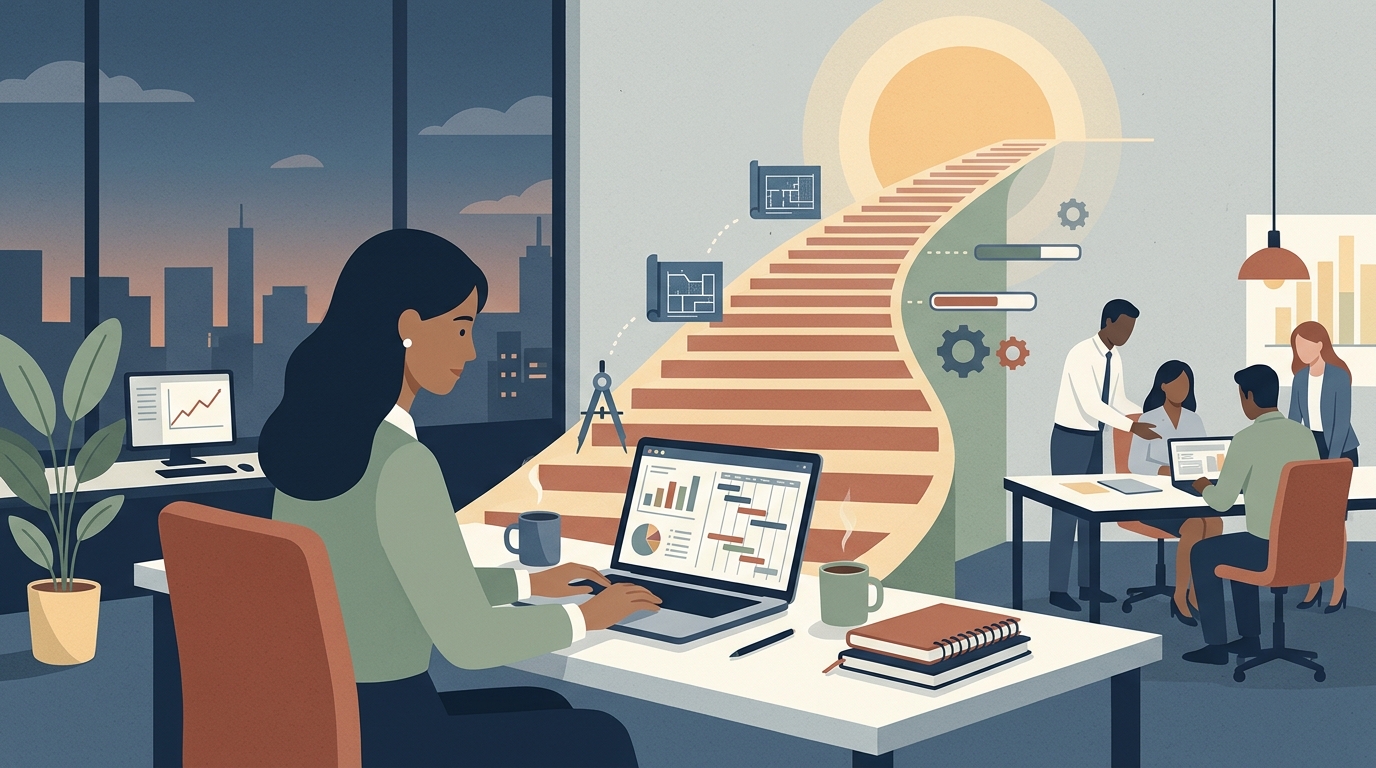
PMP Certification: Requirements and How to Get Certified
The Project Management Professional (PMP) credential is issued by the Project Management Institute (PMI), not by any state agency. To earn it you document months of leading projects, complete 35 contact hours of formal project management education (or hold PMI's CAPM), pass PMI's eligibility review, and then pass the PMP exam.
Marisol Tanaka-Reyes · 8 min read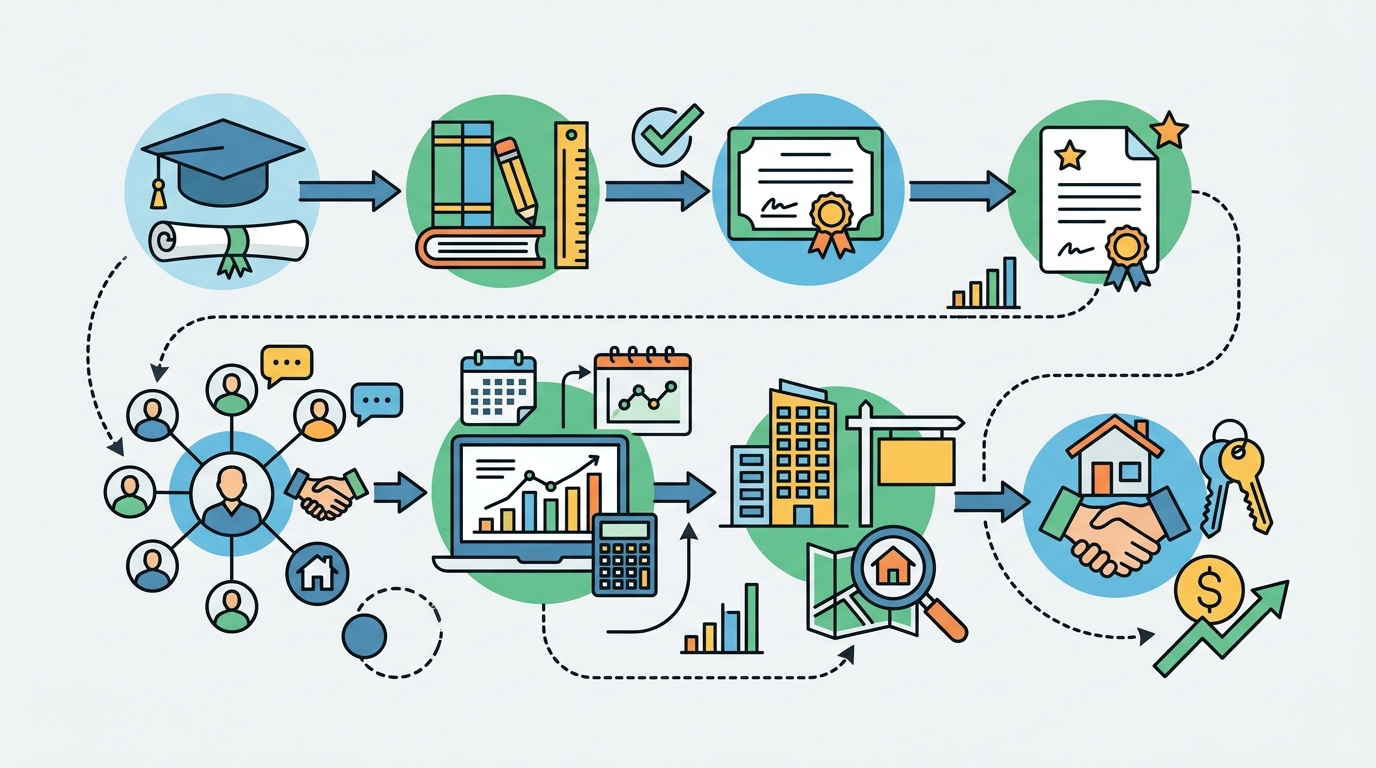
How to Start a Career as a Real Estate Agent
Becoming a real estate agent is one of the shorter licensing paths in the United States: the typical entry-level education is a high school diploma or equivalent (U.S. Bureau of Labor Statistics, 2025), and every state requires brokers and sales agents to be licensed, with minimum requirements that usually include being at least 18, holding a high school diploma or equivalent, completing prelicensing courses, and passing an exam (U.S. Bureau of Labor Statistics, 2025).
Desmond Okafor · 9 min read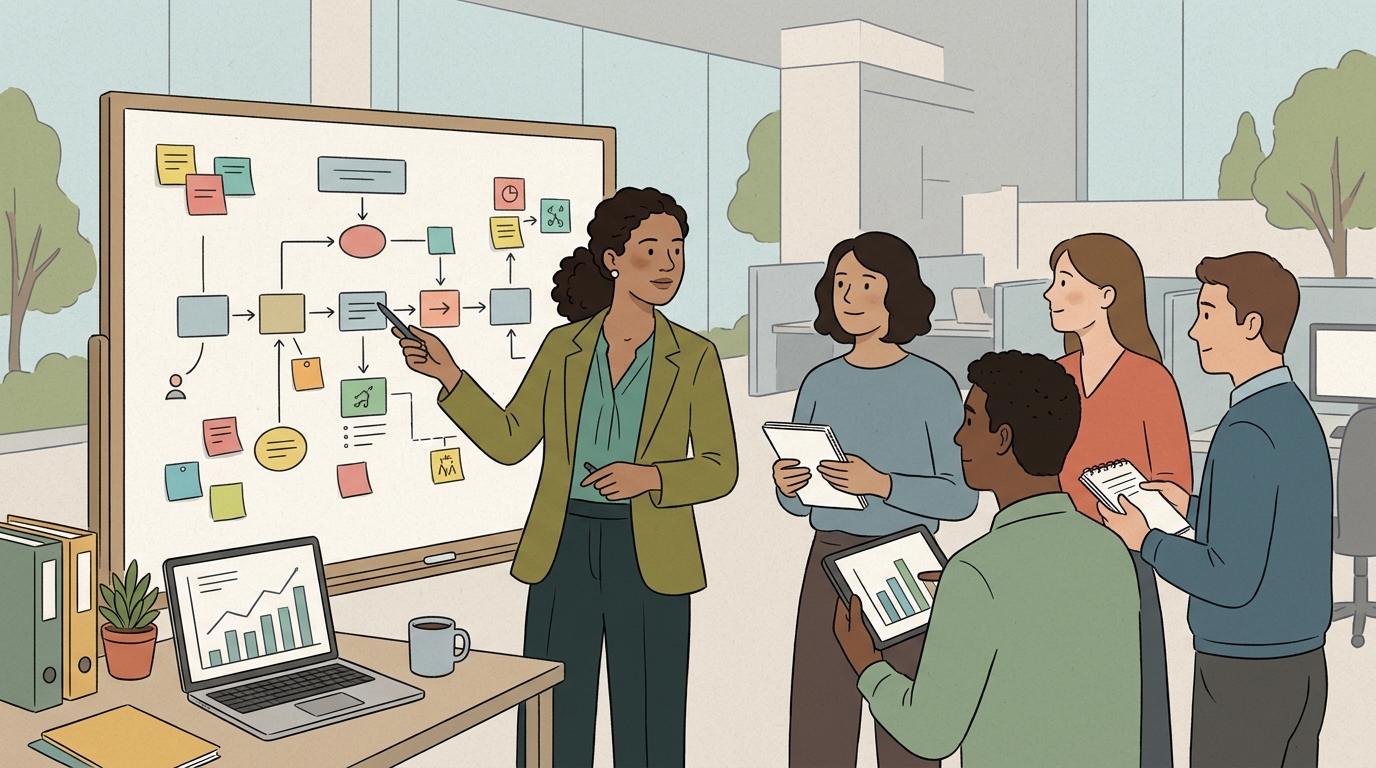
How to Become a Project Manager
Project management specialists coordinate the budget, schedule, staffing and other details of a project (U.S. Bureau of Labor Statistics, 2025). The usual route in is a bachelor's degree in business, project management or a related field — some employers prefer a technical degree such as computer/IT or engineering — followed by a few years in a related job and on-the-job training as a trainee on small projects (U.S. Bureau of Labor Statistics, 2025).
Noor Abdallah · 9 min read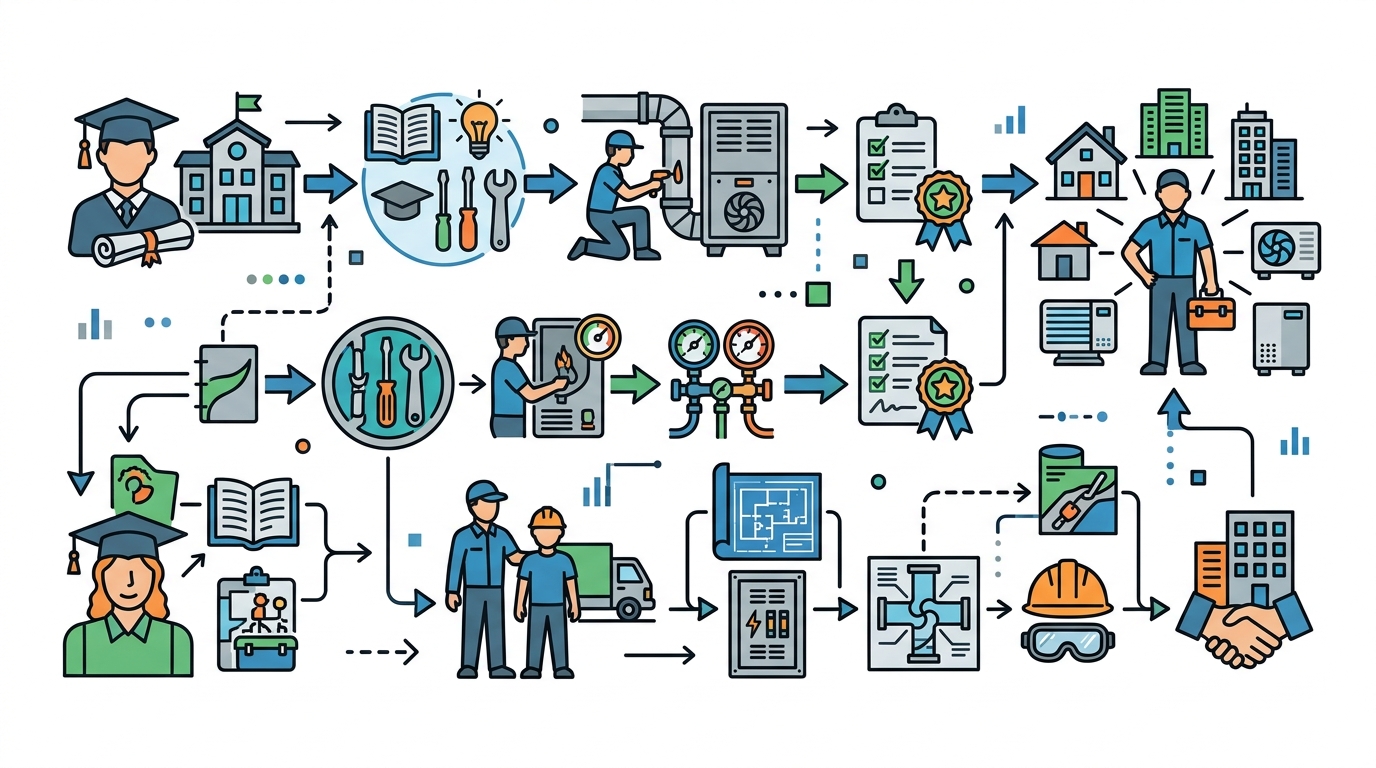
How to Become an HVAC Technician
Becoming an HVAC technician usually means finishing high school, completing either a postsecondary HVACR program or a registered apprenticeship, passing the EPA Section 608 refrigerant exam, and then learning the rest on the job. The U.S. Bureau of Labor Statistics (2025) lists a postsecondary nondegree award as the typical entry-level education and says no prior work experience in a related occupation is required.
Wyatt Holloway · 10 min read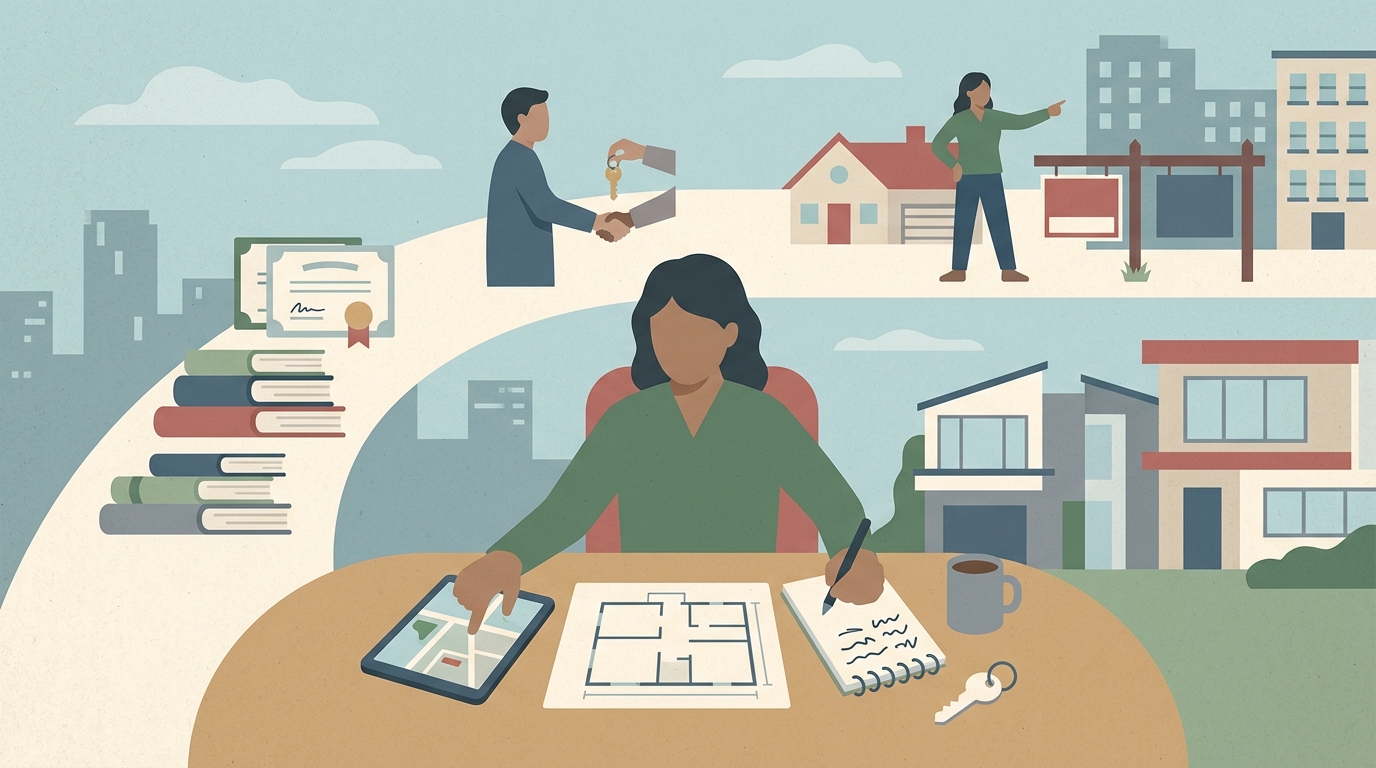
How to Become a Licensed Real Estate Agent
Every state requires real estate sales agents to be licensed, and the route is broadly the same: meet basic eligibility, finish approved prelicensing courses, pass your state's exam, clear a background check, then hang your license with a broker. The U.S. Bureau of Labor Statistics (undated) says minimum requirements vary by state but typically include being at least 18, holding a high school diploma or equivalent, completing prelicensing courses and passing an exam.
Desmond Okafor · 8 min read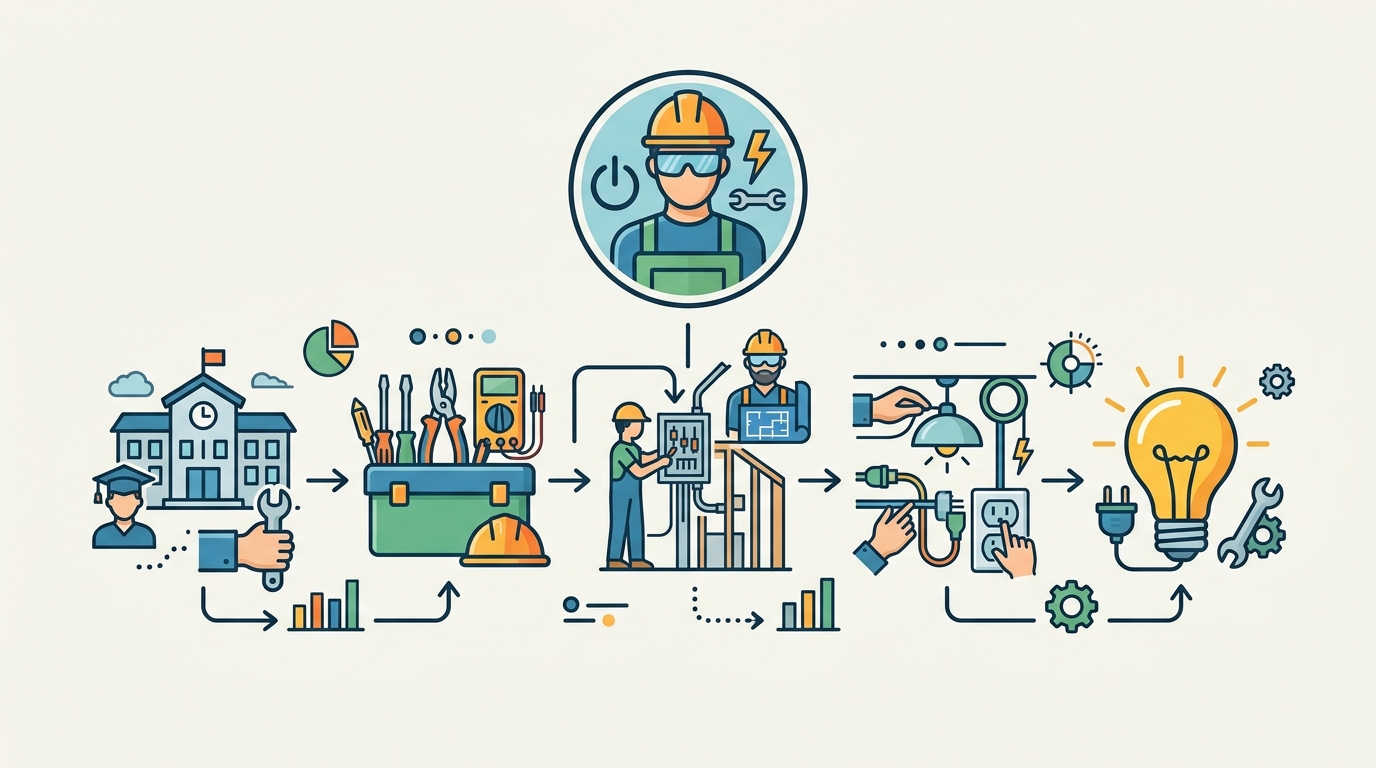
How to Become an Electrician
Most people become an electrician by getting into a paid apprenticeship after high school, working 2,000 hours a year on the job alongside classroom instruction, then passing a state licensing exam to work as a journey worker (U.S. Bureau of Labor Statistics, 2025). That route normally runs four or five years, and some people start instead at a technical school (U.S. Bureau of Labor Statistics, 2025).
Marisol Tanaka-Reyes · 9 min read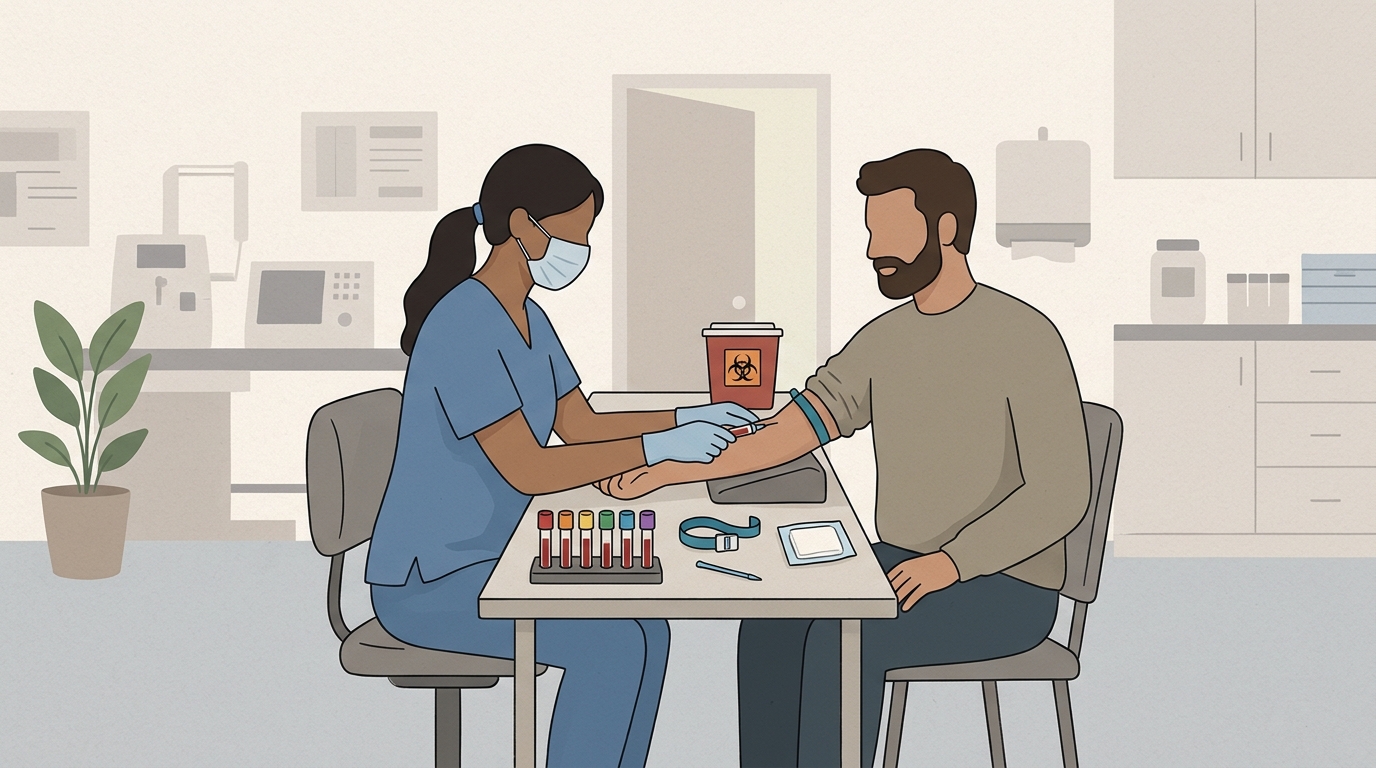
How to Get Your Phlebotomy Technician Certification
To work as a phlebotomy technician you usually need a certificate from a postsecondary phlebotomy program, though some people qualify with a high school diploma plus on-the-job training, and employers may prefer candidates who hold professional certification (U.S. Bureau of Labor Statistics, 2025). Those programs run at community colleges, vocational schools and technical schools and usually take less than 1 year, covering anatomy, physiology, medical terminology and laboratory work (U.S. Bureau of Labor Statistics, 2025).
Priya Chandrasekaran · 9 min read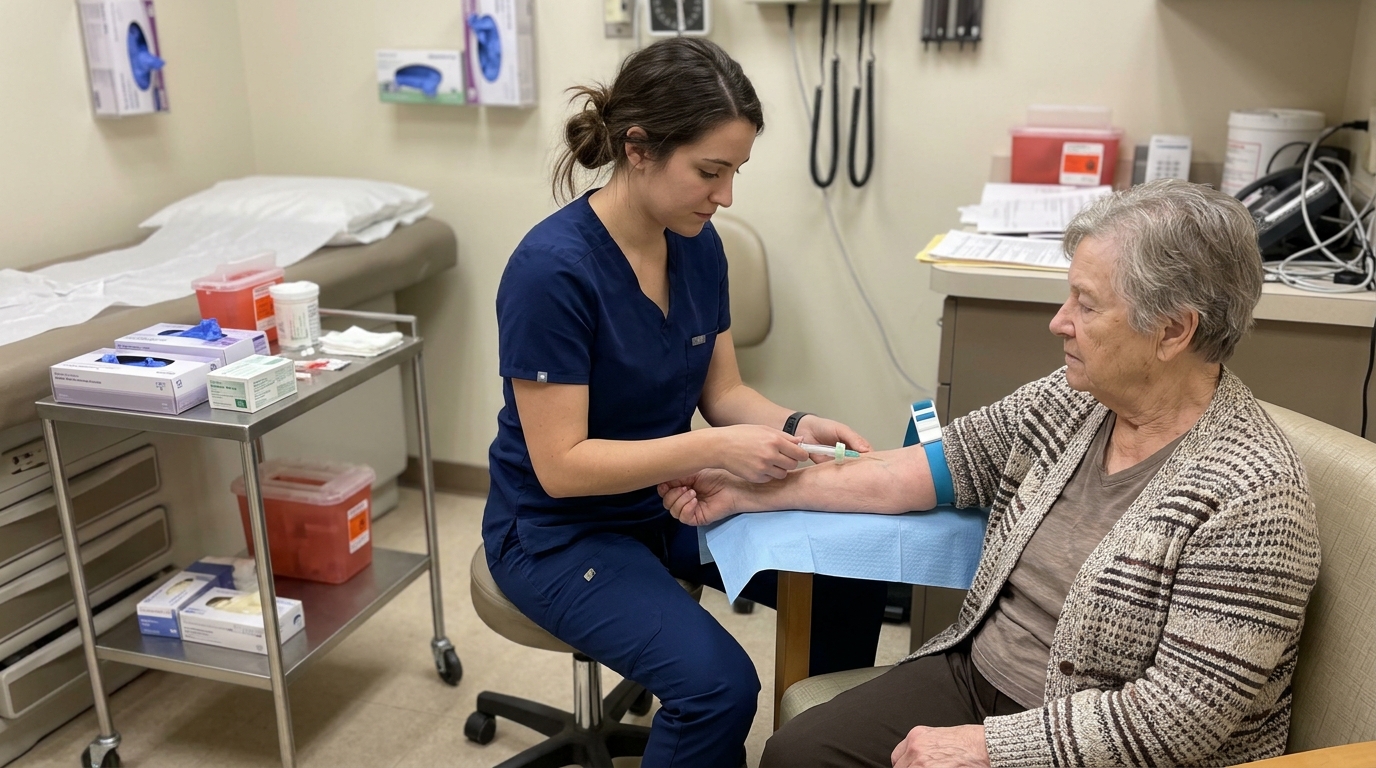
How to Become a Medical Assistant Without a Degree
You can enter medical assisting without a college degree. The U.S. Bureau of Labor Statistics (2025) states plainly that some workers enter the occupation with a high school diploma and learn through on-the-job training, and that medical assistants without postsecondary education may learn skills through on-the-job training or an apprenticeship taught by physicians or other medical assistants — training that, per BLS, "may take several months" depending on the facility.
Wyatt Holloway · 9 min read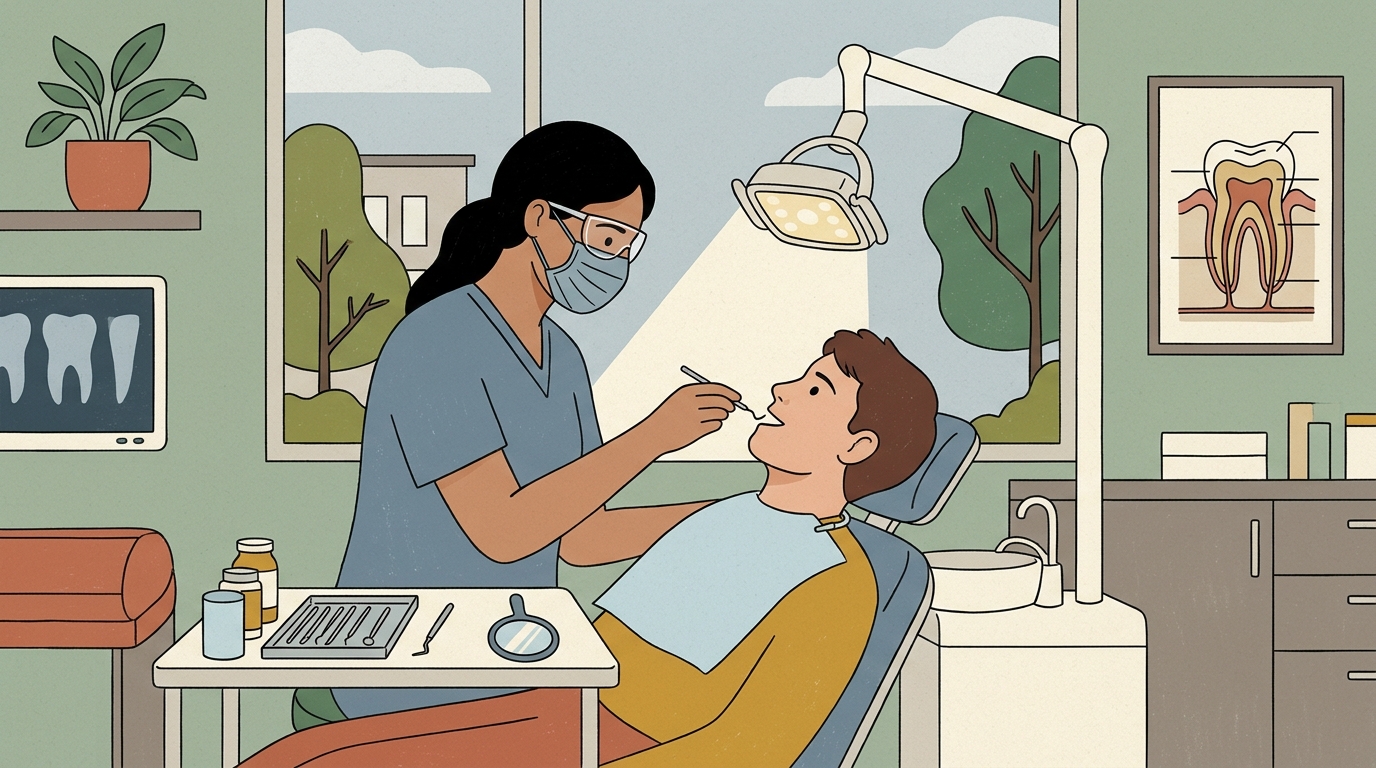
How to Become a Dental Hygienist
Becoming a dental hygienist means graduating from a dental hygiene program accredited by the American Dental Association's Commission on Dental Accreditation (CODA), passing the written National Board Dental Hygiene Examination, passing a state or regional clinical exam, and getting licensed in the state where you want to work (American Dental Hygienists' Association, undated). Most people enter with an associate's degree, which usually takes three years to complete (U.S. Bureau of Labor Statistics, undated).
Priya Chandrasekaran · 9 min read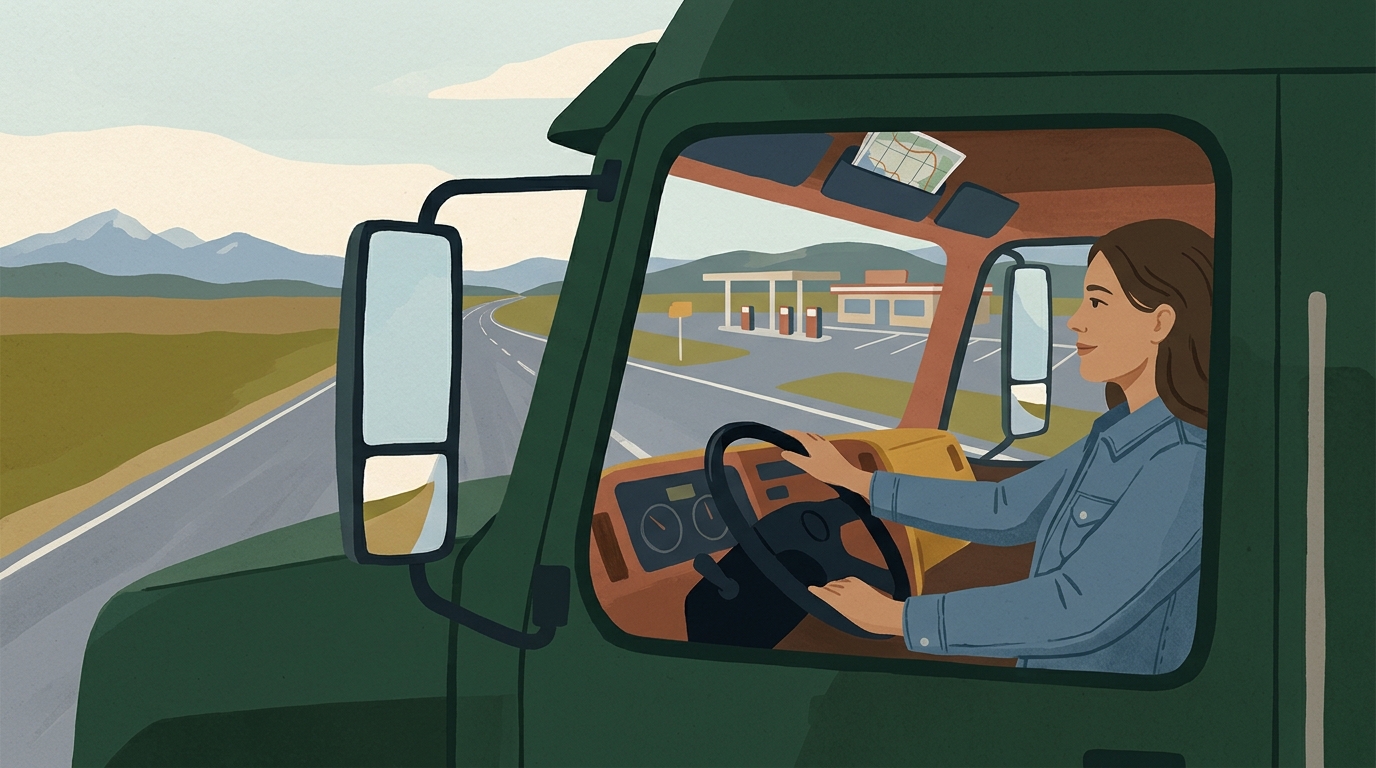
How to Become a Truck Driver With No Experience
You do not need a college degree to drive a tractor-trailer. Most heavy and tractor-trailer drivers have a high school diploma, attend a professional truck driving school, and must hold a commercial driver's license, or CDL (U.S. Bureau of Labor Statistics, 2025). The route in is a defined sequence: a medical exam, a Commercial Learner's Permit, federally mandated entry-level driver training, then the CDL skills test.
Marisol Tanaka-Reyes · 9 min read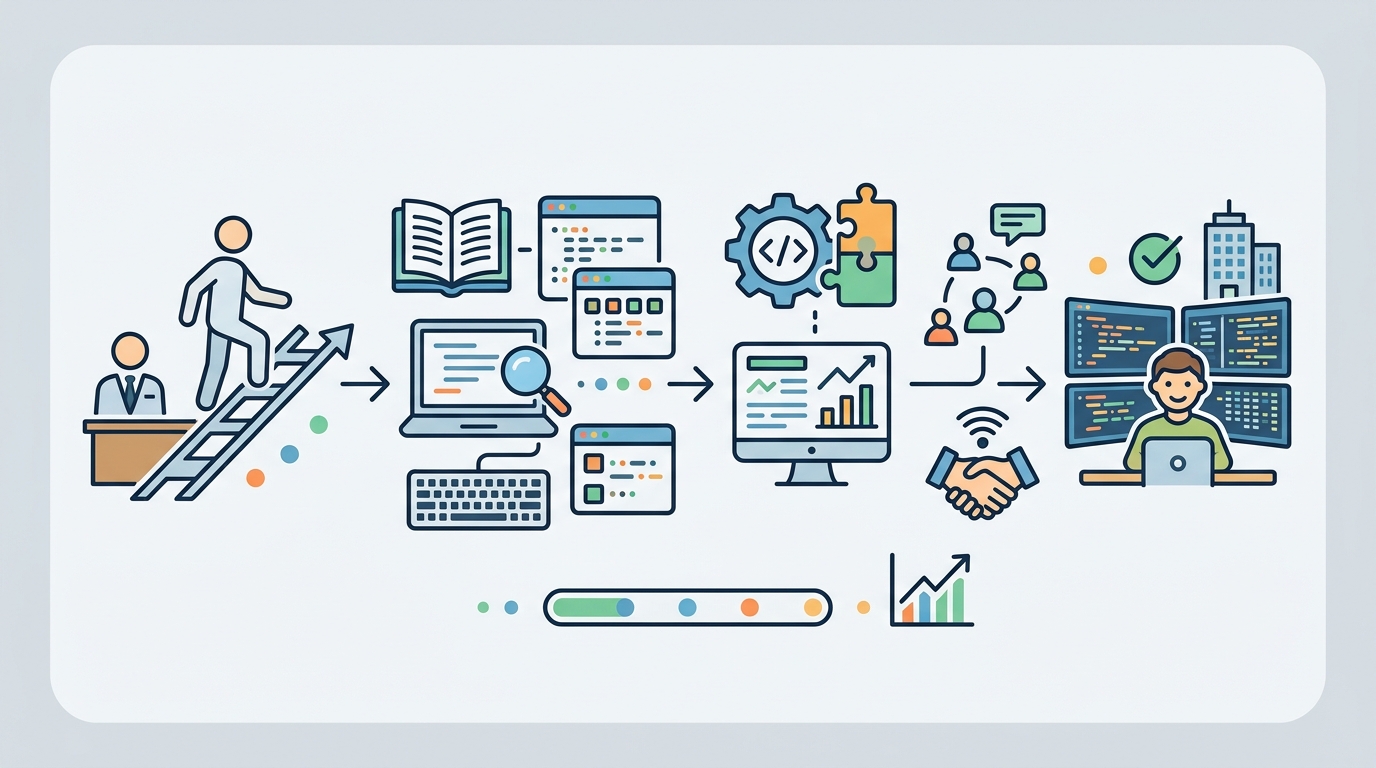
How to Switch Careers to Software Developer Without a Degree
You can move into software development without a degree, but you have to replace what a degree signals: that you can learn a technical subject in a structured way and finish things. The U.S. Bureau of Labor Statistics lists a bachelor's degree as the typical entry-level education for software developers, QA analysts and testers (2025), and some employers prefer a master's on top of that (U.S. Bureau of Labor Statistics, 2025) — but CareerOneStop (U.S. Dept. of Labor) lists no licensing requirement for the occupation, so nothing legally blocks a self-taught or apprenticeship-trained candidate.
Noor Abdallah · 8 min read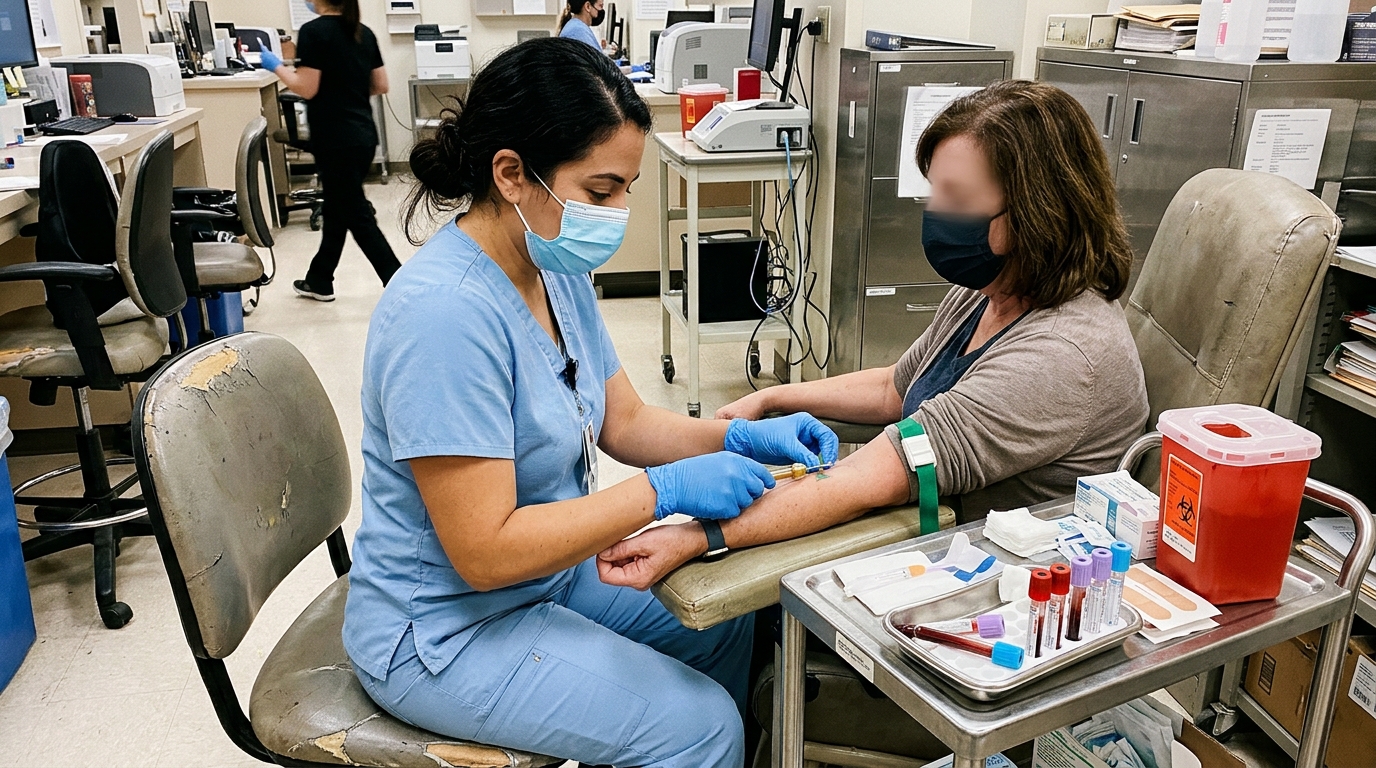
How to Become a Phlebotomist
Phlebotomy is one of the shorter routes into clinical work. The U.S. Bureau of Labor Statistics (2025) lists a high school diploma or equivalent as the typical entry-level education for phlebotomists, and training programs run from 4 to 8 weeks for online-plus-externship and hospital-based courses up to one semester of about 15 weeks at a community college (healthcareercerts.org, 2026).
Noor Abdallah · 10 min read