Changing Careers
Changing Careers guides on Jobladderhq.
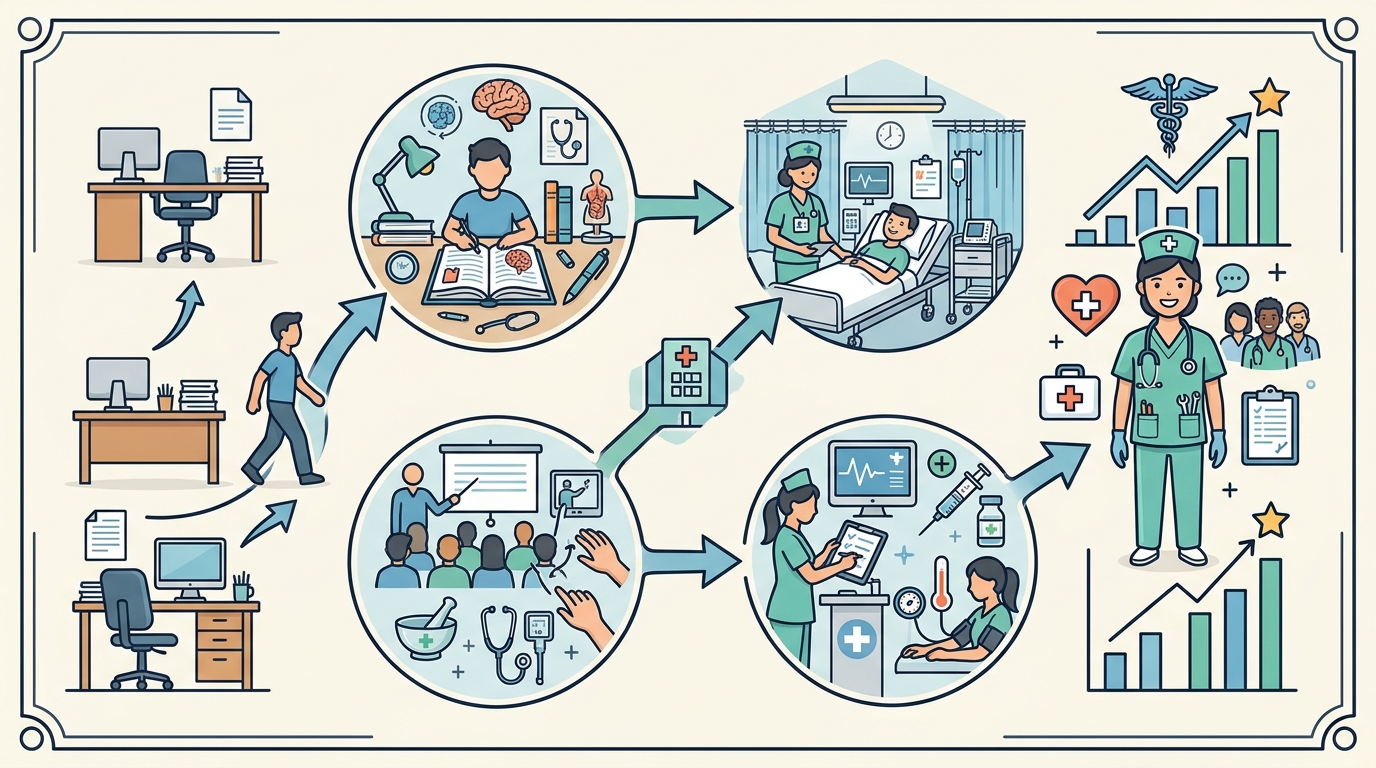
Nursing: A Guide for Career Changers
Nursing is one of the more structured mid-career switches available: the route is defined by your state's board of nursing, the credential is portable, and the demand is steady, with about 180,800 registered nurse openings projected each year on average from 2025 to 2035 (U.S. Bureau of Labor Statistics, 2025). The catch is front-loaded. You pay for school and complete 600-800 unpaid clinical hours before anyone pays you to nurse, and most career changers spend somewhere between 12 months and four years getting licensed depending on the path they pick.
Desmond Okafor · 10 min read
Project Management or Human Resources: A Second-Career Comparison
Project management and human resources are common landing spots for people changing careers in their forties and fifties, because both usually ask for a bachelor's degree plus relevant work experience rather than a fresh qualification. The U.S. Bureau of Labor Statistics (2025) lists a bachelor's degree as the typical entry-level education for both project management specialists and human resources specialists, and notes that project management specialist roles generally require work experience in a related occupation.
Desmond Okafor · 8 min read
Real Estate Career Change Roadmap for Working Adults
Switching into real estate from another job usually takes 9 to 18 months from first research to working full-time, and most of the early work — prelicensing coursework, the state exam, finding a sponsoring broker — can be done in evenings and weekends while you keep your current paycheck. Every state requires a license, and typical entry-level education is a high school diploma or equivalent (U.S. Bureau of Labor Statistics, 2025), so the barrier is rarely schooling. The barrier is cash flow: brokers and agents earn most of their income from commissions, and earnings can be irregular, especially for beginners (U.S. Bureau of Labor Statistics, 2025).
Marisol Tanaka-Reyes · 10 min read
Choosing Between Counseling and Social Work as a Career Changer
Counseling and social work overlap enough that career changers often apply to both, then find the real decision is about scope: counselors treat mental health, substance use and behavioral problems, while social workers help people prevent and cope with problems in their everyday lives (U.S. Bureau of Labor Statistics, 2025) — which often means housing, benefits, courts and family systems as well as therapy.
Priya Chandrasekaran · 8 min read
How to Switch to a Career in Teaching, Step by Step
Switching into teaching from another career usually takes 12 to 30 months from first research to your first full school year, and most of it can be done while you are still drawing a paycheck. A bachelor's degree in any subject is the usual starting point — it is the typical entry-level education for both high school and kindergarten and elementary teachers (U.S. Bureau of Labor Statistics, 2025), and every state offers an alternative route to certification for people who already hold a degree but lack education coursework (U.S. Bureau of Labor Statistics, 2025).
Priya Chandrasekaran · 11 min read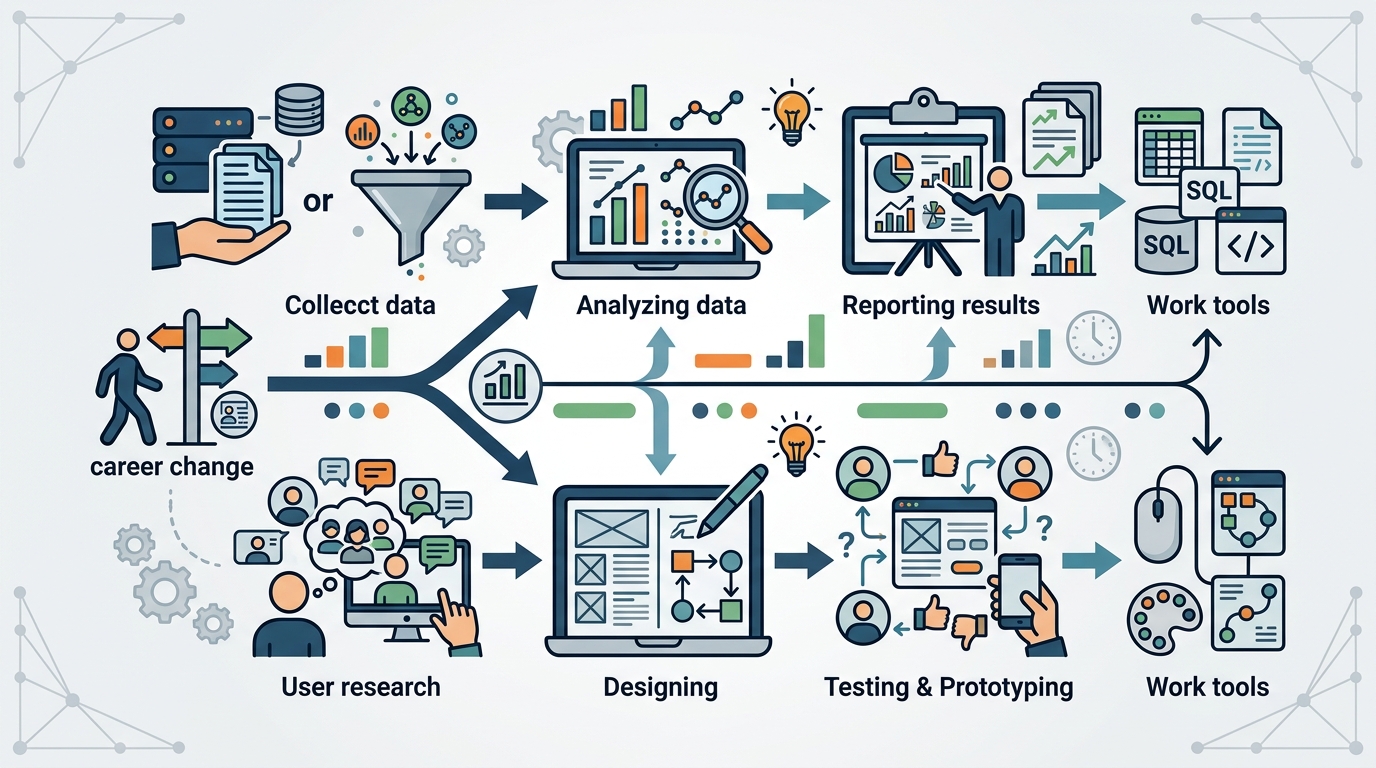
Data Analyst vs. UX Designer: A Second-Career Comparison
Both are desk careers built on a portfolio, both are commonly entered in your forties or fifties, and both sit in the same preparation tier: ONET places Data Scientists and Web and Digital Interface Designers in Job Zone Four, "Considerable Preparation Needed" (National Center for ONET Development, undated). Data pays more at the median — $120,230 for data scientists in May 2025 against $104,000 for web and digital interface designers (U.S. Bureau of Labor Statistics, 2025) — while design is more forgiving about credentials.
Marisol Tanaka-Reyes · 7 min read
How to Switch to a Career in Data Analysis, Step by Step
Switching into data analysis from another field usually takes 12 to 24 months from first research to a settled first year in the role, and most of that work can be done in evenings and weekends while you stay employed. The entry route is a mix of tool skills, a small portfolio of real analysis, and sometimes a credential — the U.S. Bureau of Labor Statistics (2025) notes that operations research analysts, the occupation category closest to general data-analysis work, typically enter with a bachelor's degree and no prior related work experience.
Wyatt Holloway · 9 min read
Your Plan for Changing Careers to Nursing
Changing careers to nursing is a two-to-four-year project for most people, not a two-month one. You need prerequisite science courses, a nursing program (2 to 3 years for an ADN or diploma, 4 years for a BSN, according to the U.S. Bureau of Labor Statistics, 2025), a state license, and a passing score on the NCLEX-RN. If you already hold a bachelor's degree in something else, an accelerated BSN can compress the nursing curriculum into 11 to 19 months of full-time study (Nurse.org, 2026).
Noor Abdallah · 10 min read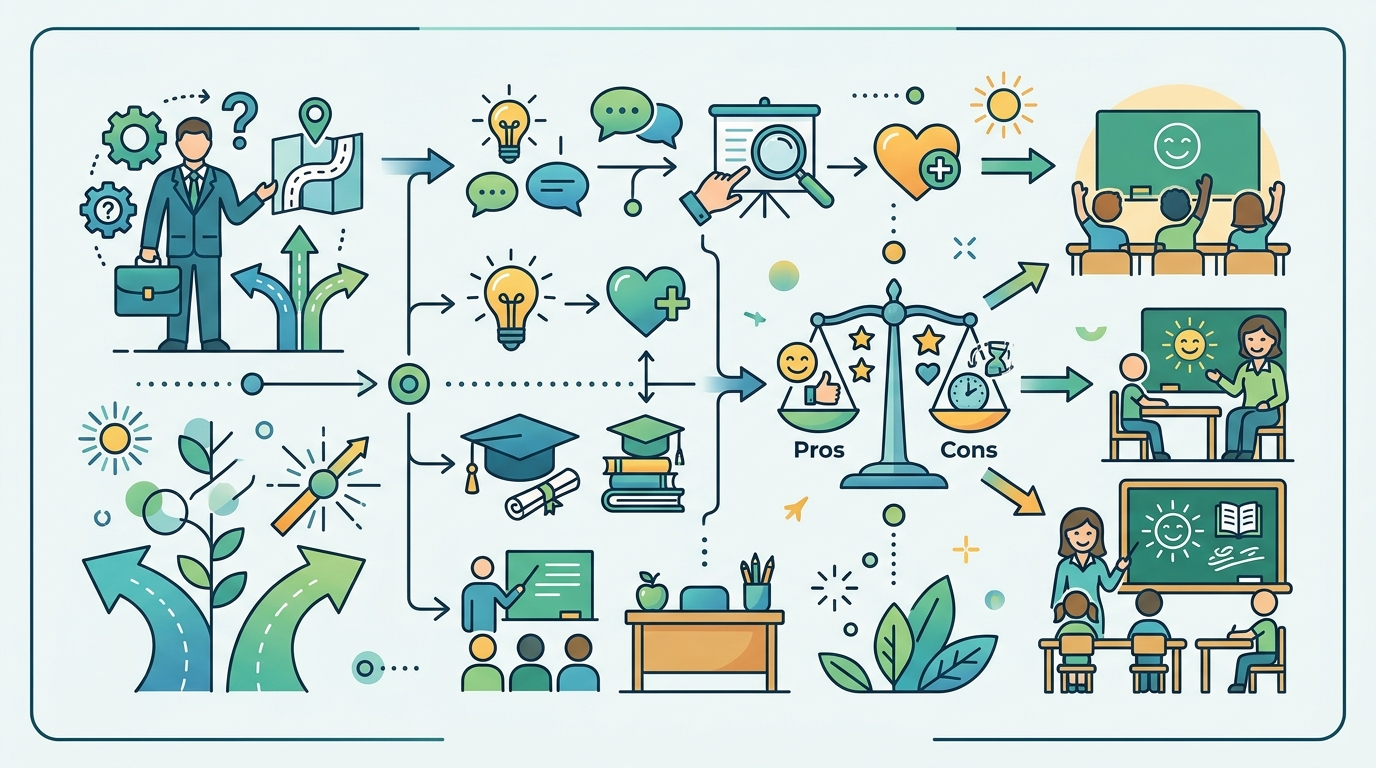
Is Becoming a Teacher a Good Career Change?
Teaching can be a strong second career if you want structured, visible work and you can absorb the cost of getting licensed — typically a bachelor's degree plus a state-issued certification for public schools (U.S. Bureau of Labor Statistics, 2025). It is a weaker fit if you need fast pay growth or a short runway, because most career changers spend between 12 months and three years getting certified, student teaching and landing a first contract.
Marisol Tanaka-Reyes · 9 min read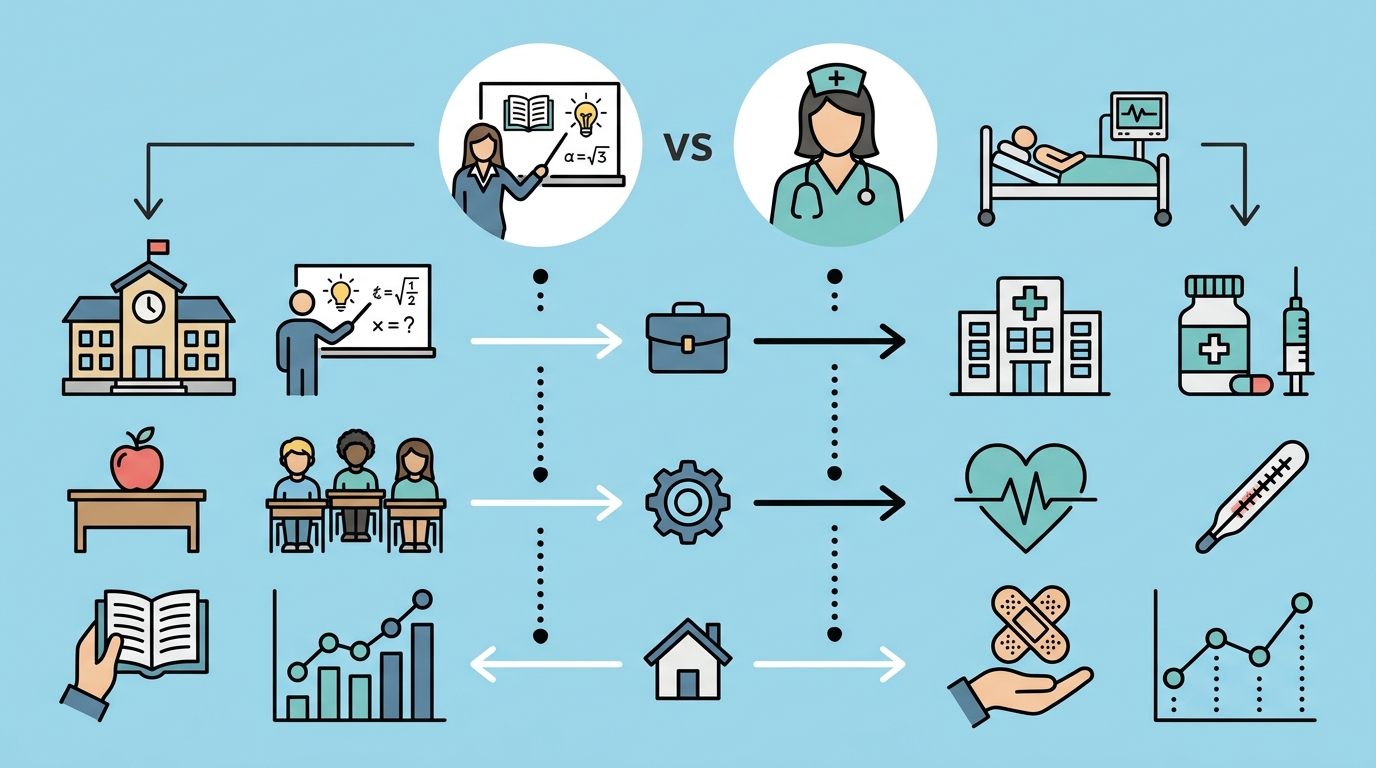
Teaching vs. Nursing: Which Career Change Is Right for You
Teaching and nursing both take career changers in their thirties, forties and fifties, and the choice usually turns on schedule and retraining time rather than subject matter. Nursing means finishing an approved program and passing the NCLEX-RN, then working shifts that can include nights, weekends and holidays (U.S. Bureau of Labor Statistics, 2025). Teaching means a bachelor's degree plus state certification, a roughly 10-month school year, and evenings spent grading and planning (U.S. Bureau of Labor Statistics, 2025).
Noor Abdallah · 9 min read
So You Want to Become a Therapist After 30
Becoming a therapist in your thirties, forties or fifties is a structured, slow path rather than a leap: a master's degree, a state-specified number of hours of postdegree supervised clinical work under a licensed counselor, a state-recognized exam, and annual continuing education to keep the license (U.S. Bureau of Labor Statistics, 2025). Plan on roughly four to seven years from first inquiry to full licensure, most of it alongside or instead of your current income.
Wyatt Holloway · 9 min read
Switching Careers to UX Design: What You Need to Know
Switching into UX design usually takes 9 to 18 months from first course to first paid project, and most of that time goes into building three or four case studies that show how you think, not just what you can draw. The federal government does not track a job called "UX Designer" — the closest official occupation is Web and Digital Interface Designers, SOC 15-1255 (ONET OnLine), profiled with web developers in the Occupational Outlook Handbook.
Priya Chandrasekaran · 10 min read